You can help your child get ready for SATs by building a calm home environment, focusing on their weaker topics, boosting their confidence, and working through practice papers together. The trick is to balance some structure with plenty of stress reduction, so your child feels supported, not pressured, as SATs approach.
Many parents feel unsure about how to support their child during Year 6 SATs preparation.
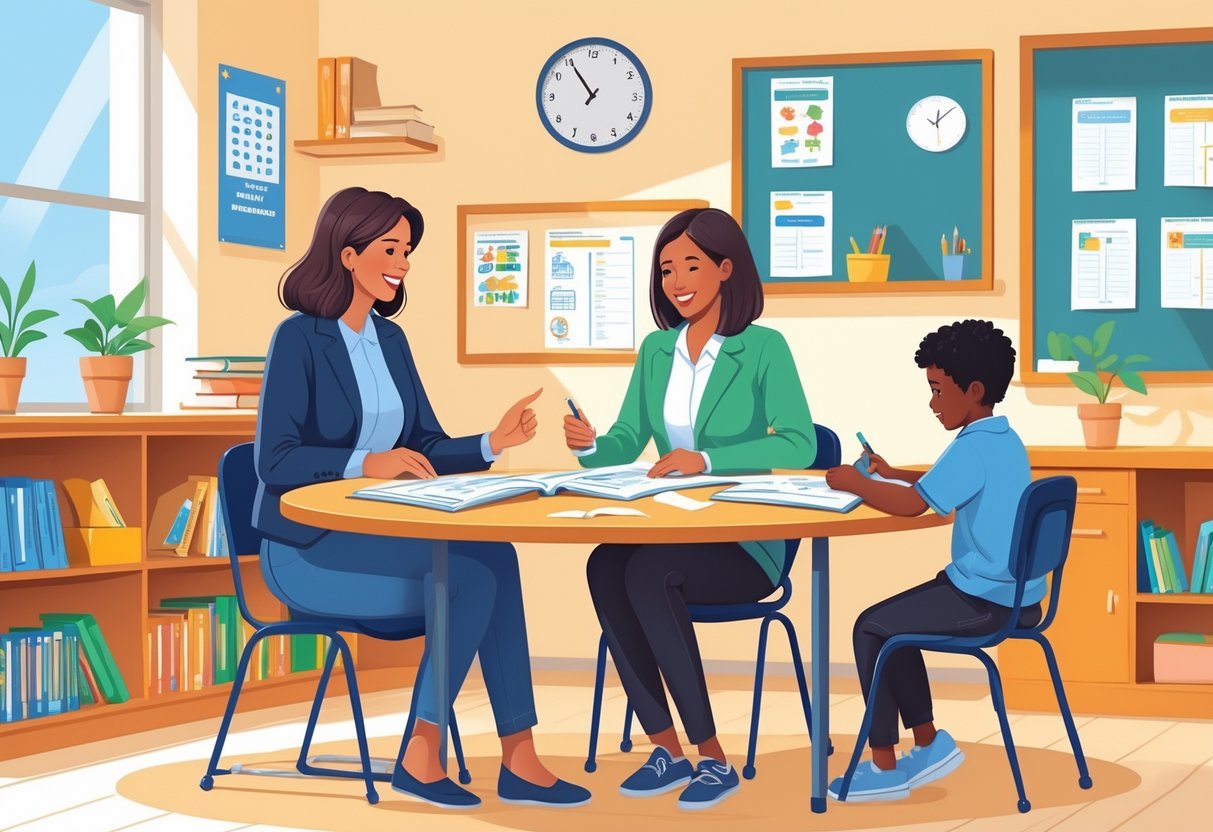
Michelle Connolly, founder of LearningMole and a former primary teacher with over 15 years’ experience, says, “The most effective SATs preparation happens when parents and teachers work together, using positive language and focusing on building genuine understanding rather than just drilling practice questions.” LearningMole shares curriculum-aligned resources for UK families to use at home.
SATs are national tests taken at the end of Key Stage 2 in English reading, grammar, punctuation, spelling and maths.
Your child will receive a scaled score between 80 and 120, with 100 as the expected standard. This guide gives practical ways to support your child’s revision, manage their anxiety, and help them do their best on test day.
Key Takeaways
Focus revision time on your child’s weaker topics rather than practising everything equally
Keep your child calm by avoiding words like pass or fail and maintaining a positive attitude
Work with your child’s teacher to understand specific areas where they need support at home
Understanding SATs and Their Importance
SATs check children’s progress in English and maths at two points in primary school.
These tests help teachers spot where pupils need support, and schools use the results to track learning.
KS1 and KS2 SATs Explained
Children in England sit SATs at the end of Year 2 (KS1) and Year 6 (KS2).
Year 2 pupils take reading, maths, and spelling, punctuation and grammar tests, though these are often spread out informally across the year.
Year 6 SATs happen in May, usually when children are 10 or 11.
Your child will sit three main tests: English reading (one hour), English grammar, punctuation and spelling (45 minutes plus a 20-word spelling test), and maths (three papers totalling 110 minutes).
Maths covers one arithmetic paper and two reasoning papers.
State primary schools must run these tests, but private schools can decide whether to take part.
The format stays the same across England for fairness.
These tests check how well children have learnt the Key Stage 2 curriculum.
Some secondary schools use Year 6 SATs results to group pupils into sets for different subjects.
These tests don’t pass or fail your child. They give a snapshot of academic progress at a certain time.
Schools also use the results to review teaching and adjust the curriculum if needed.
Parents get their child’s results before the end of the summer term in July.
What to Expect on SATs Week
SATs week follows a set timetable, with tests on specific days.
Your child will take their tests in the morning, usually in the school hall or their usual classroom.
Schools try to keep things calm while still following proper test conditions.
The tests are timed, and teachers can’t help during the assessment.
Most schools let pupils return to normal lessons in the afternoons.
Remind your child to bring a water bottle and any needed kit like pencils.
Some schools run breakfast clubs during SATs week to make sure children have eaten before the tests.
Atmosphere really depends on the school, but teachers do their best to keep things relaxed while still treating SATs seriously.
Scaled Scores and Marking
Your child will get a scaled score between 80 and 120 for each test.
A score of 100 means your child has met the expected standard for Year 6.
Scores of 110 or above show your child is working at greater depth.
Test marks are converted into scaled scores so results are fair across different years, even if the papers change slightly in difficulty.
The Department for Education sets the boundaries for meeting the expected standard.
Key scaled score bands:
80-99: Working towards the expected standard
100-109: Working at the expected standard
110-120: Working at greater depth
Your child’s teacher will talk you through the results before the summer holidays.
Remember, these scores are just one measure of progress and don’t define your child’s abilities or future.
Getting Started with SATs Preparation at Home
Starting SATs preparation early helps your child feel confident instead of overwhelmed.
The main thing is to keep things calm and positive and create routines that make revision feel manageable.
Establishing a Positive Mindset
Your attitude towards SATs really shapes how your child sees them.
Try not to use words like “pass” or “fail” when you talk about the tests, as SATs measure progress.
Swap negative phrases for encouragement.
If your child says, “I can’t do fractions”, help them rephrase it: “I don’t know the answer yet, but I’ll figure it out.” This builds resilience.
Keep SATs in perspective. They matter for tracking progress, but they don’t decide which secondary school your child attends or define their abilities.
Remind your child you’ll be proud of their effort, no matter the results.
Use revision guides for one session, online videos for another, and hands-on activities like maths games for a third.
Tracking Progress and Setting Goals
Write down which topics your child has covered and which need attention.
A chart on the fridge or in their room helps your child see progress and feel more confident.
Make a simple checklist with all Key Stage 2 topics for reading, maths, and grammar.
Tick off each topic as your child finishes it.
When you spot gaps, plan extra time for those areas.
Check in daily:
Ask your child how confident they feel (1-5 scale)
Note which questions were tricky
Celebrate topics they’ve mastered
Set weekly goals together.
Your child might aim to finish three reading comprehensions, master decimal place value, or learn ten new spelling patterns.
Keep goals clear and achievable.
Review the timetable each Friday and plan the next week as a team.
Your child will feel more invested in a schedule they helped create.
Cross off finished topics as a little boost to keep going until the tests in May 2026.
Choosing the Best SATs Practice Resources
The right resources help children build confidence and fill knowledge gaps without piling on extra stress. Choose materials that match the actual test format and let you focus on the areas your child finds tricky.
Past Papers and Practice Papers
Past papers make a huge difference for SATs preparation. They show children exactly what to expect on test day.
Official KS2 SATs papers from previous years provide the most accurate practice for reading, maths arithmetic, maths reasoning, and grammar tests. You’ll find free KS2 SATs papers online that follow the current format.
These papers help your child get used to question styles and time limits. Tackle one section at a time instead of full papers, especially at first, to avoid overwhelming them.
Review mistakes together after practice. Focus on which topics cause trouble, not just what’s right or wrong. This way, you spot knowledge gaps that need attention.
Online SATs Resources and Tools
BBC Bitesize offers interactive activities covering KS2 maths and English in short, manageable sessions. The games and quizzes keep revision feeling less like test prep, more like normal learning.
Online platforms can run diagnostic tests to show exactly which areas need work. This saves time on topics your child already understands. Look out for sites with curriculum-aligned content that matches Year 6 learning.
Lots of websites have free revision materials and paid extras. Try free resources first to see what works for your child before spending anything. Interactive tools are a winner for children who find paper revision boring.
Guides, Worksheets and Interactive Games
Revision guides break topics into clear explanations with practice questions. Choose guides that focus on one subject at a time so your child can tackle areas step by step.
Worksheets targeting specific skills like fractions or fronted adverbials help reinforce weak spots. Interactive games make revision feel less formal and take the pressure off.
Look for activities that turn maths problems or spelling into challenges or competitions. LearningMole offers curriculum-aligned videos and teaching materials covering maths, English, and science for primary school children.
Mix up resource types throughout the week. Use worksheets for focused practice, games for lighter days, and guides when starting new topics. This variety keeps children interested and stops revision feeling like a slog.
Supporting Maths SATs Preparation
Building strong maths skills for the SATs takes daily practice with mental calculations, regular times tables, and linking maths to real-life situations your child already knows.
Strengthening Mental Maths Skills
Mental maths is a big part of the maths SATs. Short, regular practice sessions work better than long cramming.
Focus on quick calculations without paper or calculators to boost your child’s confidence and speed. Set aside 10 minutes each day for rapid-fire questions on addition, subtraction, multiplication, and division.
Start with easy numbers and slowly make things harder as your child improves. Practise number bonds to 10, 20, and 100, as they come up a lot in tests.
Use question styles from KS2 SATs papers. Ask things like “What is 25% of 80?” or “What is the difference between 347 and 289?” to mimic real test questions.
Keep sessions light and positive. If your child struggles with a certain type of question, stick with it a bit longer before moving on.
Practising Times Tables
Knowing times tables speeds up problem-solving in all parts of the maths SATs, especially arithmetic and reasoning. Your child needs to know all tables up to 12 × 12 fluently before the exams.
Make practice varied to keep things interesting. Use written tests, online games, flashcards, and quick verbal quizzes during the week.
Mix up the order. Tests rarely present tables in sequence, so random order helps more.
Test both ways. Your child should know 7 × 8 = 56 and 56 ÷ 7 = 8. This helps with division questions and checking answers.
Give extra attention to the tricky tables like 6, 7, 8, and 9. Spend a few minutes each evening on these.
Using Real-Life Maths Daily
Link maths to daily activities so your child sees how it works in the real world. Measuring ingredients while cooking teaches fractions, decimals, and conversions without feeling forced.
Ask your child to work out change at the shops, calculate journey times, or measure furniture before rearranging a bedroom. These activities build confidence with money, time, and measurement.
Sharing food equally shows fractions in action. When you order pizza or slice cake, talk about how many pieces everyone gets and what fraction of the whole that is.
Tie activities to topics your child struggles with. If percentages are tricky, talk about discounts or work out what percentage of their pocket money they’ve saved.
Supporting English SATs Preparation
The English SATs cover reading comprehension, spelling, grammar, and punctuation. Regular practice with different texts and focused grammar work helps children answer questions with more confidence.
Building Reading Comprehension Skills
Reading comprehension is a big part of the English SATs. Children answer questions about unfamiliar texts under time pressure.
Your child needs to practise finding key information quickly and understanding what each question wants. Work through past papers together and encourage them to underline keywords before searching for answers.
Practise different question types separately. Some ask for facts, others want inference or interpretation. Many children find inference questions hardest, where the answer isn’t written out in the text.
Ask your child to explain how they found their answer. This shows if they really understand or are just guessing. If they get it wrong, talk about what the question wanted and where the real answer is in the text.
Spelling, Grammar, and Punctuation Practice
The grammar and punctuation paper tests specific technical skills. Your child will need to spot word classes, fix punctuation errors, and know how sentences work.
Make a list of tricky grammar terms, like subordinate clauses, modal verbs, or relative pronouns. Practise these in short bursts, maybe five minutes a day.
The spelling test gives 20 words read aloud in sentences. Prepare by learning common spelling patterns and rules, not just random word lists. Focus first on words your child often misspells.
Play quick grammar games in the car or at dinner. Ask your child to spot adverbs in conversation or challenge them to use a certain punctuation mark. This keeps grammar and punctuation fun and a bit more relaxed.
Encouraging Wider Reading
Reading widely exposes your child to the styles, vocabulary, and text types found in the SATs reading paper. The test covers fiction, non-fiction, and poetry, so variety matters more than how much they read.
Visit the library and let your child pick books that genuinely interest them. Reluctant readers often prefer non-fiction about their favourite topics instead of novels.
Newspapers, magazines, and online articles all count. Chat about what you’ve both read at meals or bedtime. Ask what your child thinks about a character’s choices or if they agree with a writer’s opinion.
Don’t stress if your child likes graphic novels or short chapter books. Any reading builds vocabulary and comprehension. The aim is to help them feel confident tackling new texts in the test.
Making SATs Revision Interactive and Enjoyable
Games and everyday activities can turn SATs preparation from a chore into something your child actually enjoys. These methods help children practise key skills like mental maths and timed practice without feeling overwhelmed.
Educational Games for Learning
Games make SATs revision more appealing by turning practice into play. Board games involving counting, strategy, or word building naturally strengthen maths and English skills.
Online platforms offer targeted SATs practice through interactive exercises. LearningMole has curriculum-aligned videos and activities matching what your child learns in school.
Digital quiz apps encourage children to beat their own scores. That little bit of competition keeps them coming back for more.
Card games are great for mental maths. Play games where your child adds up scores quickly or finds number pairs that make ten. Set a timer for fast rounds to build speed and confidence.
Word games like Scrabble or Boggle boost spelling and vocabulary without feeling like revision. Your child practises grammar and punctuation skills while having fun with the family.
Incorporating Learning into Daily Activities
Cooking together gives you real-world maths practice. Ask your child to weigh ingredients, double recipes, or work out cooking times.
Shopping trips offer chances for mental maths. Challenge your child to estimate the total cost, calculate discounts, or compare food labels. They’ll also practise reading comprehension without even realising.
Car journeys can be learning moments too. Try number plate games or spelling challenges. Ask your child to add digits on passing cars or spot words starting with each letter of the alphabet. Reading road signs aloud helps with reading fluency, which matters for the SATs reading test.
Helping Your Child Manage Exam Anxiety
SATs can feel overwhelming for Year 6 pupils. Spotting early signs of stress and keeping healthy daily habits can make a big difference to how your child copes with exam pressure.
Recognising Signs of Stress
Your child might not always say they’re anxious about SATs, but their behaviour can give it away. Physical symptoms like headaches or tummy aches often pop up in the weeks before the tests.
Watch for changes in sleep or appetite. Some children start dodging homework or revision altogether.
You might see more irritability or tears. Others go quiet or withdraw. When anxiety takes hold, children can’t think clearly, and remembering things gets harder.
Plenty of Year 6 pupils say things like “I’m stupid” or “I can’t do this” when they’re feeling anxious. These negative thoughts usually mean stress is getting too much. Children who worry about making mistakes in general tend to have stronger test anxiety during SATs.
Promoting Wellbeing and a Healthy Routine
A daily structure can really help calm Year 6 SATs nerves. Stick to regular bedtimes and wake-up times, even at weekends.
Make sure your child takes proper breaks during revision. They need time away from study materials to let their brain switch off. Physical activity matters too, as it helps release tension and boosts concentration.
Offer balanced meals at set times. If your child skips breakfast on revision or exam days, their anxiety and focus might get worse.
Set up a calm study space at home, free from distractions. Keep revision sessions short, about 20 to 30 minutes, and follow up with a break.
Let your child have time for things they love. Whether that’s football, drawing, or just hanging out with friends, these moments help them stay grounded. SATs matter, but they’re not everything. LearningMole has helpful revision videos that break topics into small, manageable bits.
Working with Teachers and External Support
Stay in touch with your child’s school so you can focus home revision on the right topics. Tutoring and study groups offer extra support if your child needs more help with certain subjects.
Communicating with School
Teachers know exactly which subjects your child finds tricky. Ask them for specific feedback after practice tests, not just general comments. Schools often use diagnostic tests to spot weaker areas, and this information saves you from going over topics your child already knows.
Ask which SATs resources the school recommends for home practice. Schools usually have favourite worksheets or online platforms that fit their teaching style. This way, revision stays consistent between home and school.
Check when parents’ evenings or SATs info sessions are happening. These meetings explain the test format and how marking works. You can also find out which question types your child struggles with most.
Some schools send out weekly revision schedules for parents. If you follow the same timeline at home, it reinforces what your child learns in class. If your school doesn’t offer this, ask if they can share a basic SATs preparation plan.
Considering Tutoring and Study Groups
One-to-one tutoring can fill specific gaps in your child’s knowledge. Look for tutors who know the Year 6 curriculum and SATs style questions. Online platforms like LearningMole cover maths, English and science topics that help with SATs revision.
Small study groups with other Year 6 pupils make revision feel less lonely. Kids often explain things to each other in ways that just click. Keep groups small, maybe three or four, so everyone gets a turn.
Ask if the school offers after-school revision sessions. Many primaries run free SATs booster classes in the spring. These use the same teaching methods your child sees in class.
AI tutoring programmes now give affordable options for extra practice. These adapt to your child’s pace and focus on their trickiest areas. Some schools already use these tools, so check what’s available before you pay for anything outside school.
Final Preparation and Test Week Tips
The last few days before SATs call for a balance between practice and rest. Timed sessions help children get used to exam conditions, while some kind words can keep their confidence up.
Simulating Test Conditions at Home
Set up practice sessions at home that feel like the real thing. Choose a quiet space where your child can work through practice papers without interruptions from siblings, phones or TV.
Use a timer for each test: 30 minutes for arithmetic, 40 minutes for each reasoning paper, and 60 minutes for reading. This builds stamina and teaches your child how to pace themselves.
Give your child the same equipment they’ll use in SATs week. Put pencils, a rubber and a ruler on the desk. Leave out calculators, as they’re not allowed in KS2 maths.
Try to run two or three full practice sessions in the weeks before the tests. After each one, go through mistakes together without piling on pressure. Treat errors as learning chances by saying, “you don’t know this yet” instead of dwelling on what went wrong.
Last Minute Reminders and Encouragement
Focus on building confidence in the days just before SATs. Remind your child of the exam techniques they’ve practised, like underlining key words and double-checking answers.
Keep your language positive all week. Swap out “don’t worry” for “you’ve prepared well for this”. Don’t talk about passing or failing, since SATs aren’t about that.
During SATs week:
Make sure your child gets enough sleep each night
Give them a filling breakfast with protein and complex carbs
Pack a healthy snack and water bottle for break time
Keep evenings calm and as screen-free as possible
Let your child know you’re proud of their effort, no matter the results. LearningMole has quick revision videos that keep things light and don’t overwhelm. The main thing to remember: these tests show just one moment of their learning, not their value or future.
Frequently Asked Questions
Parents usually have similar questions about supporting their children through SATs, from when to start revision to how to balance practice with play. Here are some practical answers to help with common challenges during this time.
What strategies can I follow to support my child’s SAT revision at home?
Set up a study spot that’s free from distractions like TV or noisy siblings. Kids focus better when they can separate work from relaxation in different parts of the house.
Break revision into small, manageable chunks. Year 6 children do well when they can see progress, like getting fractions sorted one day and decimals the next.
Mix formal revision with everyday learning. Try maths during cooking by measuring ingredients, or boost reading skills by chatting about news articles over breakfast.
When is the ideal time to start SAT preparation for my child?
Start gentle prep at the beginning of Year 6. This gives your child the whole year to build confidence and work on weak spots without pressure.
Some schools use SATs-style questions in Year 5 to get children familiar with the format. If your school does this, back it up at home but save heavy revision for Year 6.
Don’t cram in the final weeks. That just ramps up anxiety and doesn’t really help performance. Kids remember more when they’ve had months to practise and revisit topics.
Are there any recommended online resources for effective SAT practice?
LearningMole has videos and teaching materials matched to the curriculum for maths, English and science. There are free and subscription options for Key Stage 2 revision.
You can find past SATs papers online for free. They give your child a real feel for the test format. Mixing these with interactive resources keeps things interesting.
How can I make SAT revision engaging and less stressful for my child?
Focus on what your child gains by doing their best, not on what happens if they don’t get a certain score. Skip the words “pass” or “fail” when you talk about SATs, since the tests measure progress, not success or failure.
Plan something to look forward to after SATs, whatever the results. It could be a day out, a cinema trip, or just extra time doing a favourite hobby.
Turn revision into games when you can, like quizzes with siblings or reward charts for finishing practice sessions. Exercise between study helps lower stress and keeps minds sharp.
How can I track my child’s progress in SAT preparation?
Keep a simple record of what your child has revised and where they’ve struggled or done well. No need for fancy tracking, just a notebook with which papers they’ve finished and rough scores.
Go over practice test results together to spot patterns, not just individual mistakes. If your child keeps getting stuck on certain question types, like word problems in maths, you know where to focus next.
Chat regularly with your child’s teacher about classroom progress and ask which areas need extra support at home. Teachers can tell you how your child compares to expected standards.
Watch for improvements in confidence and speed, not just accuracy. If your child used to take 10 minutes on a problem and now finishes in 5, that’s real progress, even if they’re still working on getting every answer right.
Can you suggest ways to help my child manage time efficiently during the SAT?
Have your child practise with timed sessions at home. Let them get comfortable working within time limits. Use a timer with practice papers. Start with more time than needed, then slowly make the sessions shorter as your child gets faster.
Show your child how to quickly scan the test at the beginning. They should spot the easier questions and answer those first. This approach helps build confidence and lets them collect marks on questions they know well before facing tougher ones.
Encourage your child to move on if a question feels too hard. Getting stuck wastes time. They can always come back to tricky questions if they have time at the end.
Establish a calm morning routine for test days. Try practising arriving at school on time in the weeks before SATs. When children feel rushed, they get more stressed and find it harder to think clearly.
Maths Circus, an innovative platform we've crafted, presents a captivating realm where children learn mathematics through the exciting theme of a circus. The joy of juggling numbers and solving circus...
The 9 times table multiplication has a reputation for being tricky, yet it holds more mathematical magic than any other table in the primary curriculum. Every answer follows two neat...
Article Summary What this article covers: Ten differences between river otters and sea otters, from size, fur and swimming style to diet, tool use and family life, plus which otter...
Article Summary What this article covers: The nine main types of natural disasters, how each one works and how they are measured, which hazards genuinely affect the UK, and how...








Leave a Reply