Article Summary: This guide explains how to build a home learning environment for children aged 4 to 11. It covers arranging a study space and making it an interactive learning environment. It’s written for parents, carers and home educators, and for teachers who advise families on supporting school learning.
The strongest home learning environments aren’t the most expensive ones. They combine a calm, well-lit spot, a few hands-on resources and regular conversation about what children are learning. Research from the EPPE study in England found that what parents do at home matters more than who they are.
“A child doesn’t need a perfect room to learn at home. They need a predictable spot, a few good resources and an adult who asks what they found out today.” , Michelle Connolly, Founder of LearningMole and former teacher with over 15 years of classroom experience.
LearningMole, a UK educational platform founded by former primary teacher Michelle Connolly, offers free curriculum-aligned videos and resources that fit easily into home routines.
Most parents picture a home learning environment as a desk, a lamp and a pile of homework. That’s part of it. But families who get the most from home learning usually think wider. They add a reading corner, a box of counters, a wall for drawings and ten minutes of talk over tea. The space matters, and so does what happens in it.
This guide is for parents and carers of primary-aged children in the UK, and for teachers who want practical advice to share with families. It covers how to arrange a study area, how to create an interactive learning environment without spending much, and where smart technology genuinely helps. Everything links back to what children learn through the National Curriculum in EYFS, Key Stage 1 and Key Stage 2.
You won’t need a spare room or new furniture. Most of the ideas here work at a kitchen table. By the end, you’ll have a clear plan for a home learning environment that suits your child’s age, your home and your routine.
What Is a Home Learning Environment?
A home learning environment is everything at home that supports a child’s learning. That’s the space, the resources and the routine, plus the conversations and activities adults share with children. It’s far broader than a homework desk. Reading a bedtime story, counting stairs and baking a cake all count.
What the Research Says
The best-known UK evidence comes from the Effective Provision of Pre-school Education (EPPE) project, funded by the Department for Education. It followed around 3,000 children in England from the age of 3. The researchers built an index of home learning activities, such as reading together, visiting the library, painting and drawing, and playing with letters and numbers.
Their findings were striking. The quality of the home learning environment was more strongly linked to children’s intellectual and social development than parents’ occupation, education or income. Put simply, what parents do matters more than who they are. Later reports from the same study, which followed children into secondary school, reached a similar conclusion about home learning experiences.
That’s encouraging for every family. A strong home learning environment doesn’t depend on money or qualifications. It depends on regular, warm, shared activity.
How to Arrange a Home Learning Space
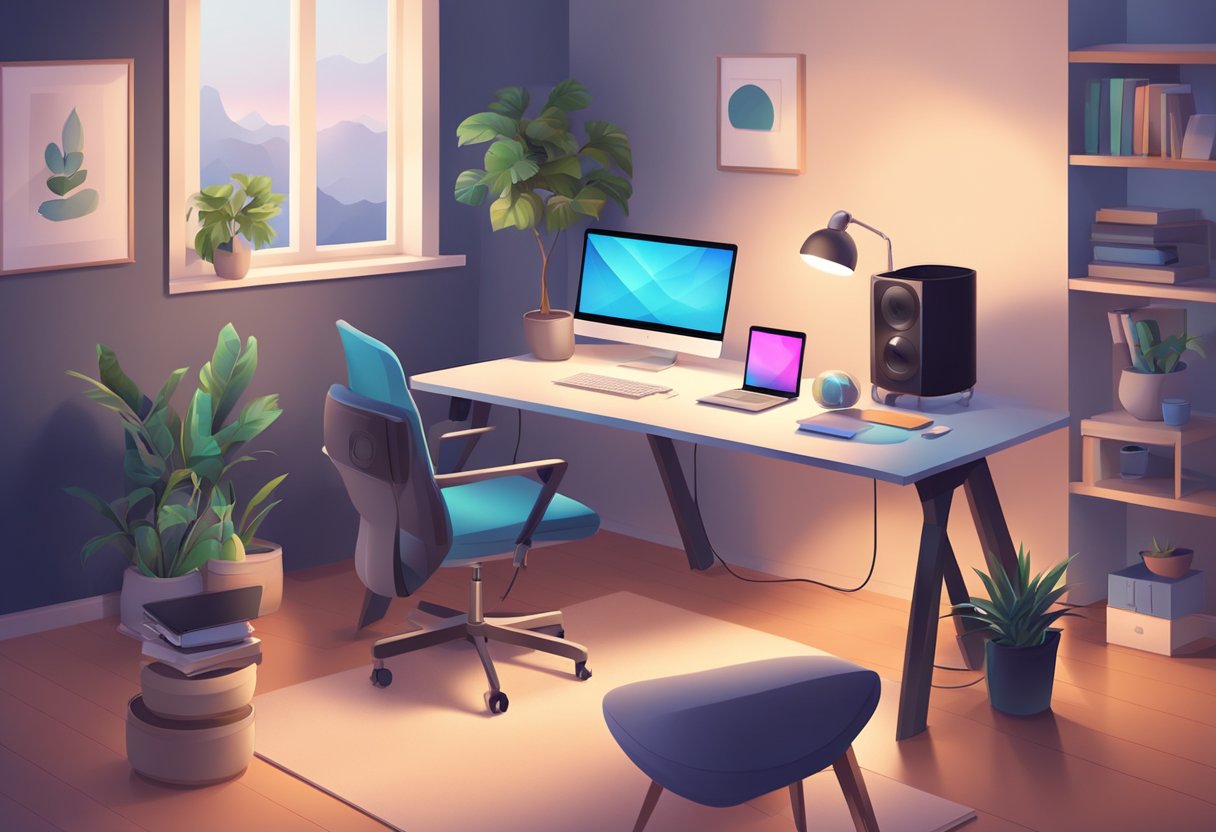
Arrange a home learning space around three things: a consistent spot, good light and everything within reach. A child who knows exactly where they work, and doesn’t have to hunt for a pencil, settles faster. The arrangement can be simple, but it should stay the same from day to day.
Choosing the Right Spot
Pick a place away from the television and the busiest route through the house. For younger children, a kitchen or dining table is often better than a bedroom desk, because an adult is nearby to help and chat. Older KS2 pupils may prefer a quieter corner as homework grows.
A bedroom works well for independent reading, but it’s harder to supervise screen use there. Many families use a shared table for homework and screens, and a bedroom nook for books. LearningMole’s guide to creating an efficient study space has more layout ideas for small homes.
Light, Seating and Posture
Daylight makes reading and writing more comfortable, so place the workspace near a window if you can. Add a desk lamp for winter afternoons. Position it on the opposite side to your child’s writing hand, so their hand doesn’t cast a shadow over the page.
Seating matters more than people think. Your child’s feet should rest flat on the floor or on a box, with the table roughly at elbow height. A cushion on an adult chair is a cheap fix. Children who fidget constantly are often just uncomfortable.
Storage and Keeping It Clear
Keep the work surface clear and the supplies close. A tray or caddy with pencils, a rubber, a ruler, glue and scissors saves countless interruptions. Label boxes for younger children using pictures as well as words.
Clutter pulls attention away from the task, and children won’t always notice it’s happening. A quick reset at the end of each session, putting everything back in the caddy, keeps the space ready for next time. It also gives children a clear signal that learning time has finished.
How to Create an Interactive Learning Environment at Home
An interactive learning environment at home is one where children handle, make, talk about and test ideas, rather than only reading or watching. The quickest way to create an interactive learning environment is to add a few hands-on zones and make conversation part of every learning session.
Set Up Small Learning Zones
You don’t need a separate room for each activity. A few small zones, even a shelf or a box each, give children choices and make different kinds of learning visible.
Zone
Purpose
What to include
Low-cost version
Reading nook
Daily reading for pleasure
Cushions, a small shelf, library books
A blanket and a crate of books by the sofa
Maths and making tray
Hands-on number work
Counters, dice, measuring jugs, dominoes
Buttons, pasta shapes, an egg box for sorting
Display wall
Celebrating and revisiting work
Drawings, spelling words, a times tables chart
A fridge door and some magnets
Discovery box
Science and curiosity
Magnifying glass, magnets, torch, notebook
Kitchen items and a shoebox of found objects
A reading nook deserves the most attention. The power of reading for young children explains why daily shared reading has such a strong effect at home. Rotate the books every couple of weeks, using the library to keep the choice fresh.
The maths tray turns abstract numbers into something children can touch. Counting buttons, sharing pasta into equal groups or measuring water for a recipe all build number sense. LearningMole’s guide to teaching aids shows how everyday objects can stand in for classroom manipulatives.
Talk Is the Most Interactive Tool
Conversation turns any space into an interactive learning environment. Ask open questions, such as “How did you work that out?” Let your child explain a school topic to you, even if you already know it. Explaining helps children notice what they understand and what they don’t.
This habit costs nothing and works for every age. Learning methods that really work describes how asking a child to explain something back, without looking, turns passive viewing into active recall.
Learning Through Everyday Routines
An interactive learning environment isn’t limited to the study corner. Shopping lists practise spelling and money. Cooking practises measuring, fractions and following instructions. A walk to school can become a hunt for shapes, numbers or words with a particular sound.
Smart technology helps a home learning environment when it supports a clear learning goal. It gets in the way when it replaces talk and hands-on activity. A single shared device, used well, is usually enough for primary-aged children.
Technology Worth Having
Tool
Useful for
Watch out for
Tablet or laptop
Videos, reading apps, homework platforms set by school
Drifting into entertainment apps
Headphones
Listening to phonics or reading audio without distraction
Volume levels and long listening sessions
Smart speaker
Spelling checks, timers, music, audiobooks
Answers that skip the thinking
Printer
Worksheets, practice sheets, photos for the display wall
Ink costs; many tasks work fine by hand
Reliable Wi-Fi
Streaming videos and school platforms
Keep devices in shared spaces for safety
Adaptive apps can adjust the difficulty to your child’s answers, which is useful for practising facts. The strongest apps also explain mistakes rather than just marking them wrong. LearningMole’s guide to educational apps covers what to check before downloading, and choosing the right educational games sets out seven checks for any game.
Screen Time and Online Safety
UK health guidance doesn’t set a single daily screen time limit for school-age children, so focus on purpose and balance. Short, focussed sessions work better than long stretches. Keep devices in shared rooms, turn on parental controls, and agree simple family rules together.
A home learning environment works best with a predictable routine, and it doesn’t need to be long. Children settle faster when they know when learning happens, how long it lasts and what comes next. What matters is that it’s regular.
Most primary children concentrate best in short bursts, and that’s normal. A younger child might manage ten minutes of focussed work before needing a change. Older KS2 pupils can usually stretch further, especially with a clear plan. Build in a snack and a movement break after school before sitting down.
“The routine matters more than the room. When children know that reading happens after tea every day, the arguing stops and the learning starts.” , Michelle Connolly, Founder of LearningMole and former teacher with over 15 years of classroom experience
Schools in England set their own homework policies, so expectations vary. Ask your child’s teacher what’s expected and how long it should take. A study routine that works for your child helps you plan the week around homework, clubs and rest.
Praise effort and strategies, not just correct answers. Specific comments, such as “You checked that sum twice, well done”, help children see what good learning looks like. The power of feedback explains why this kind of response works.
Adapting the Home Learning Environment for Different Needs
Every home learning environment should fit the child and the home, not a picture from a catalogue. Small changes can make a big difference for children with additional needs, for siblings sharing space and for families with limited room or technology.
Children with SEND
Children with special educational needs and disabilities often benefit from extra structure. A visual timetable with pictures shows what happens and when. A timer helps children see how long is left. Noise-reducing headphones or a screened-off corner can help children who find sound or movement distracting.
Keep the home learning environment calm and uncluttered, with only a few choices at once. LearningMole’s SEN teaching resources include ideas that translate well to home, and your child’s school SENCO can suggest strategies that match their support plan.
Siblings and Small Spaces
When siblings share a table, give each child a defined area, even a placemat or a tray. Stagger sessions if possible, so one child reads while another plays. Older children can sometimes help younger ones, which strengthens their own understanding too.
In small homes, portable is better than permanent. A crate of supplies that comes out for learning and goes away afterwards creates a clear start and finish without taking over the living room.
Access to Technology
Not every family has a device for each child, and that’s fine. Much primary learning happens best with books, paper and conversation. Public libraries offer free computer access and books, and many schools can advise on support if a child needs a device for homework.
Teaching Resources and Support
A home learning environment works best when it’s stocked with good resources, and LearningMole provides many of them free. LearningMole is a UK educational platform providing curriculum-aligned videos and teaching resources for primary schools. It covers maths, English, science and more for children aged 4 to 11.
Supporting Learning at Home
For parents, LearningMole’s short videos explain topics the way teachers do in class, so home support matches school learning. Watch a video together, then ask your child to explain it back or try a related activity from their maths tray. Phonics resources suit younger children, and phonics matching games for young children use items you already have at home.
Teachers can share LearningMole’s free videos with families as homework or revision, knowing they align with National Curriculum objectives. They also show parents what a topic looks like in class, so home and school can use the same methods.
Three Home Activities to Try
Sound hunt (EYFS and KS1). Choose a sound your child is learning, such as /ch/. Hunt around the house for objects containing that sound, then draw and label three of them for the display wall.
Kitchen fractions (KS1 and lower KS2). Share a pizza, sandwich or pile of grapes equally between family members. Ask your child to name the fraction each person gets, then write it down.
Teach the teacher (all ages). Once a week, your child teaches you something from school using the whiteboard or display wall. You play the pupil and ask questions. It’s quick, fun and a strong check on understanding.
Frequently Asked Questions
What is a home learning environment?
A home learning environment is the combination of space, resources, routines and activities at home that support a child’s learning. It includes a place to work, but also reading together, talking about the day, cooking, playing games and visiting the library. Research from the EPPE project in England found these shared activities were more strongly linked to children’s development than family income or parental education. That means every family can build a strong home learning environment, whatever their circumstances.
How should I arrange a home learning space for my child?
Choose a consistent spot away from the television, ideally with daylight and an adult nearby for younger children. Make sure your child can sit with feet supported and the table near elbow height. Keep supplies in a caddy within reach and the work surface clear. Younger children often do best at the kitchen table, while older KS2 pupils may prefer a quieter corner. Reset the space at the end of each session so it’s ready next time.
How do I create an interactive learning environment at home?
Add a few hands-on zones, such as a reading nook, a maths tray with counters and dice, a display wall and a discovery box. Then make conversation part of every session by asking open questions and letting your child explain their thinking. Everyday routines like cooking, shopping and walks can become learning moments too. Technology can help, but talk and hands-on activity do most of the work in an interactive learning environment.
Does my child need their own desk or bedroom study space?
No. Many primary children learn better at a shared table where an adult is nearby to help, chat and supervise screens. A bedroom desk becomes more useful in upper KS2, when homework grows and children work more independently. What matters most is a consistent spot, good light and comfortable seating, not the furniture itself.
How much time should children spend learning at home?
It depends on age and on your child’s school, as schools in England set their own homework policies. Short, regular sessions work better than long ones, especially for younger children. Daily reading together is one of the most useful habits at any age. Ask your child’s teacher what’s expected, and balance learning time with play, rest and outdoor activity.
What technology does a home learning environment need?
A single shared tablet or laptop, reliable internet and a pair of headphones cover most primary needs. A printer is handy but not required. Choose apps and games that explain mistakes and match what your child is learning at school. Keep devices in shared rooms and turn on parental controls. LearningMole’s free videos work on any device and align with the National Curriculum.
How can I adapt a home learning space for a child with SEND?
Use a visual timetable and a timer so your child can see what happens and when. Keep the space calm and uncluttered, with fewer choices at once. Noise-reducing headphones or a screened corner help children who are sensitive to sound or movement. Ask your child’s school SENCO for strategies that match their support plan, so home and school use the same approach.
A Space That Grows With Your Child
The best home learning environment isn’t finished on day one. It changes as your child grows, from a floor full of playdough and picture books to a desk with a planner and revision cards. What stays the same is the mix that matters: a predictable spot, a few good resources and regular conversation.
Start small. Pick a spot, fill a caddy, add a reading nook and agree a simple routine. Then build an interactive learning environment one habit at a time. That might be a weekly “teach the teacher” session or ten minutes of reading after tea.
LearningMole was founded in Belfast by Michelle Connolly, a former primary teacher, to give families and teachers free, curriculum-aligned resources that make learning clearer. Pair a well-arranged space with short LearningMole videos and plenty of talk. Your home learning environment then becomes one of your child’s best classrooms.
Maths Circus, an innovative platform we've crafted, presents a captivating realm where children learn mathematics through the exciting theme of a circus. The joy of juggling numbers and solving circus...
Asia Facts for Kids: Asia is the largest continent on Earth, covering around 30% of the world's land and home to about 4.8 billion people. It has 47 United Nations...
Feedback with digital portfolios works best in primary schools when teachers keep comments brief and expect every child to act on them. A voice note of about a minute on...
Singers use their voices as musical instruments to perform songs in theatres, recording studios, choirs and at events. Most of their working day, though, is spent practising, learning music and...





Leave a Reply