10 Fascinating Facts About Hippos for Kids
Table of Contents
Have you ever wondered about the giant creatures that roam the rivers of Africa? Meet the hippo, one of the largest and most fascinating animals on Earth! These magnificent creatures spend most of their time in the water, but don’t let their calm, slow-moving nature fool you. Hippos are full of surprises!
So, let’s dive into the world of hippos and learn all about their cool habits, what they eat, and why they’re such a big deal in the wild! Here r 8 fascinating facts about hippos.
Hippos
While it carries this cute, short, nice-sounding name, the hippo is known among scientists as hippopotamus, a name that comes from the Greek words hippos (meaning “horse”) and potamos (meaning “river”). So, the name hippopotamus literally means “river horse.” However, this name might not be very accurate for this animal is a lot more like whales and dolphins than horses!
Hippos first appeared in Africa, where they have lived for millions of years. The modern hippopotamus that we know now is believed to have evolved from a now-extinct ancestor called Kenyapithecus—don’t try to pronounce it—which lived around 15 to 20 million years ago during the Miocene epoch.
This Miocene epoch was a period in Earth’s history that started about 23 million years ago and lasted 17.7 million years. This period witnessed significant changes in our planet’s climate, landscapes, and animal life. It was also when many modern living species began to appear, including our modern hippo’s ancestor.
The first true hippos, similar to the ones we know today, started out in Africa as land-dwelling animals that evolved around 8 to 10 million years ago. Over time, these creatures adapted to their environment, spending much of their lives in rivers, lakes, and wetlands. Then, they spread out and even lived in parts of Europe and Asia during certain periods. However, today, they are mostly found in parts of Africa where they thrive in the warm, wet environments.
Let’s now learn some eight fascinating facts about those creatures.
Hippos Are Really Big!
Hippos rank third on the “largest animals on Earth” list right after elephants and rhinos.
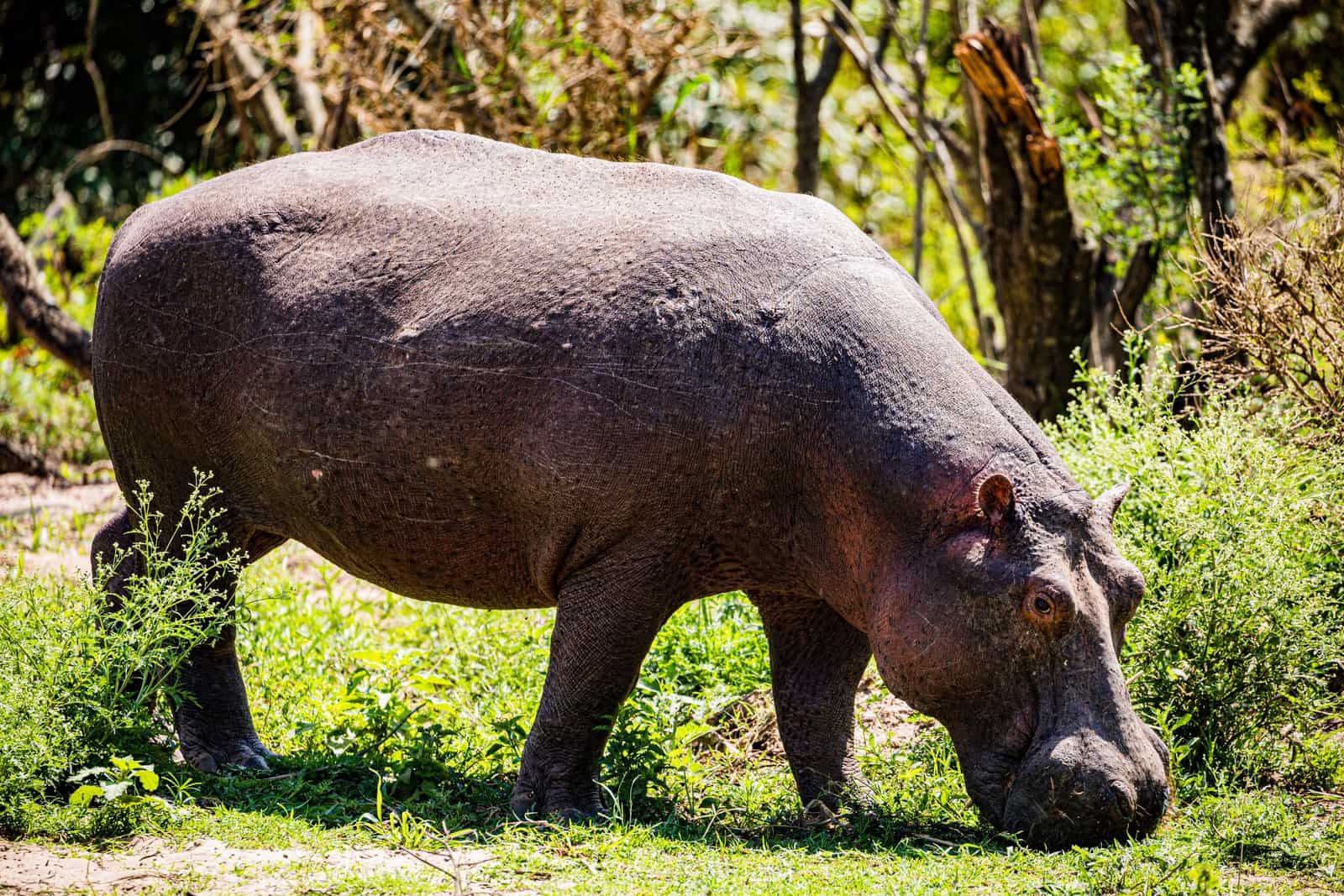
Hippos have massive, barrel-shaped bodies that are stocky and round, which gives them an impressive and powerful look. They can weigh between 3,000 to 4,500 kilogrammes (6,600 to 9,900 pounds) and can grow to be about 3 to 5 metres. They have large heads and wide, powerful mouths that can open up to 150 degrees.
When it comes to legs, they’re also thick, through short, ending in four webbed toes. Despite their size, hippos can move surprisingly fast both on land and in the water when they need to.
They Love Water

As we mentioned earlier, ancient hippos were originally land-dwelling animals. Yet, a few million years ago, one individual was probably wandering around some time in the middle of a boiling African summer when it may have come across a lake and decided to wet its legs. Apparently the refreshing feeling was so mesmerising that the animal decided to go further and take a swim.
Or something like that.
One way or another, those ancestors gradually adapted to life in and around water and evolved to the ones we know today which love water and spend most of their time in it! For them, water is actually so important for:
- Cooling Down: Hippos don’t have sweat glands, so they rely on water to keep their massive bodies cool, especially in the hot climates of Africa. Submerging themselves helps regulate their body temperature.
- Protection: They have sensitive skin that dries quickly, so submerging helps prevent dehydration and sunburn, while their unique “blood sweat” acts as a natural sunscreen. Water also provides safety, especially for young calves, by keeping them hidden from predators.
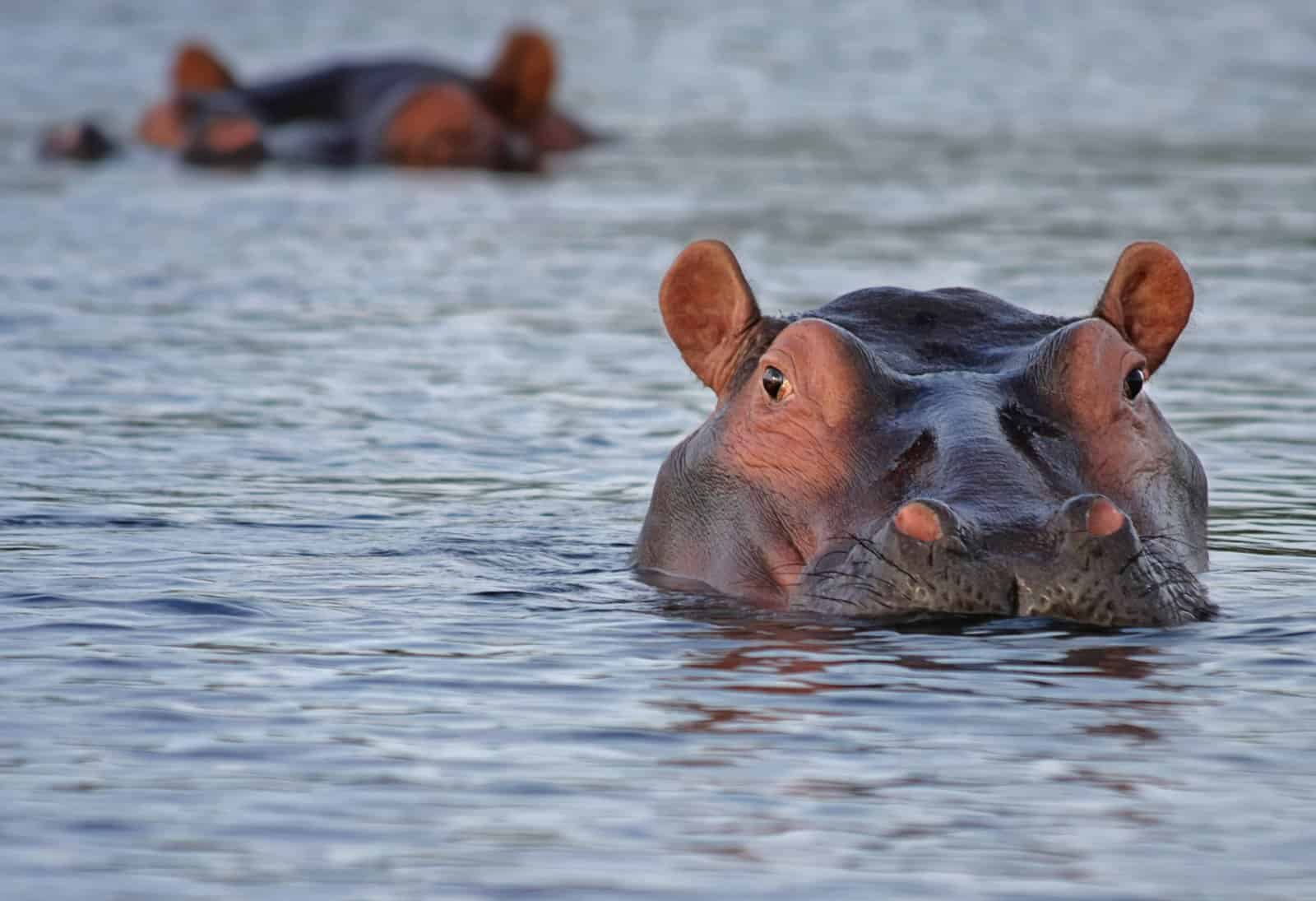
- Sleeping and Resting: Hippos often sleep in the water, with their bodies almost fully submerged. They have a natural reflex that allows them to rise to the surface to breathe every few minutes without waking up.
- Social Life: Water is also where those animals socialise. They often gather in groups called pods or bloats, which can consist of a few individuals to as many as 30 or more hippos. These groups use water as a safe space for bonding and communicating through grunts, snorts, and other sounds.
They Can Run Fast
Despite their gigantic bodies and bulky appearance, hippos are no way slow walkers. In fact, they can run surprisingly fast for their size. On land, they can reach speeds of up to 30 kilometres per hour over short distances. Enabled by the their powerful legs and muscular bodies which give them the ability to charge with incredible force, this speed allows hippos to escape if they feel threatened or need to defend their territory.
That being said, hippos cannot sustain these speeds for long and typically use them for short bursts when necessary.
Hippos Have Big Teeth
The fourth terrific fact about hippos is their teeth.
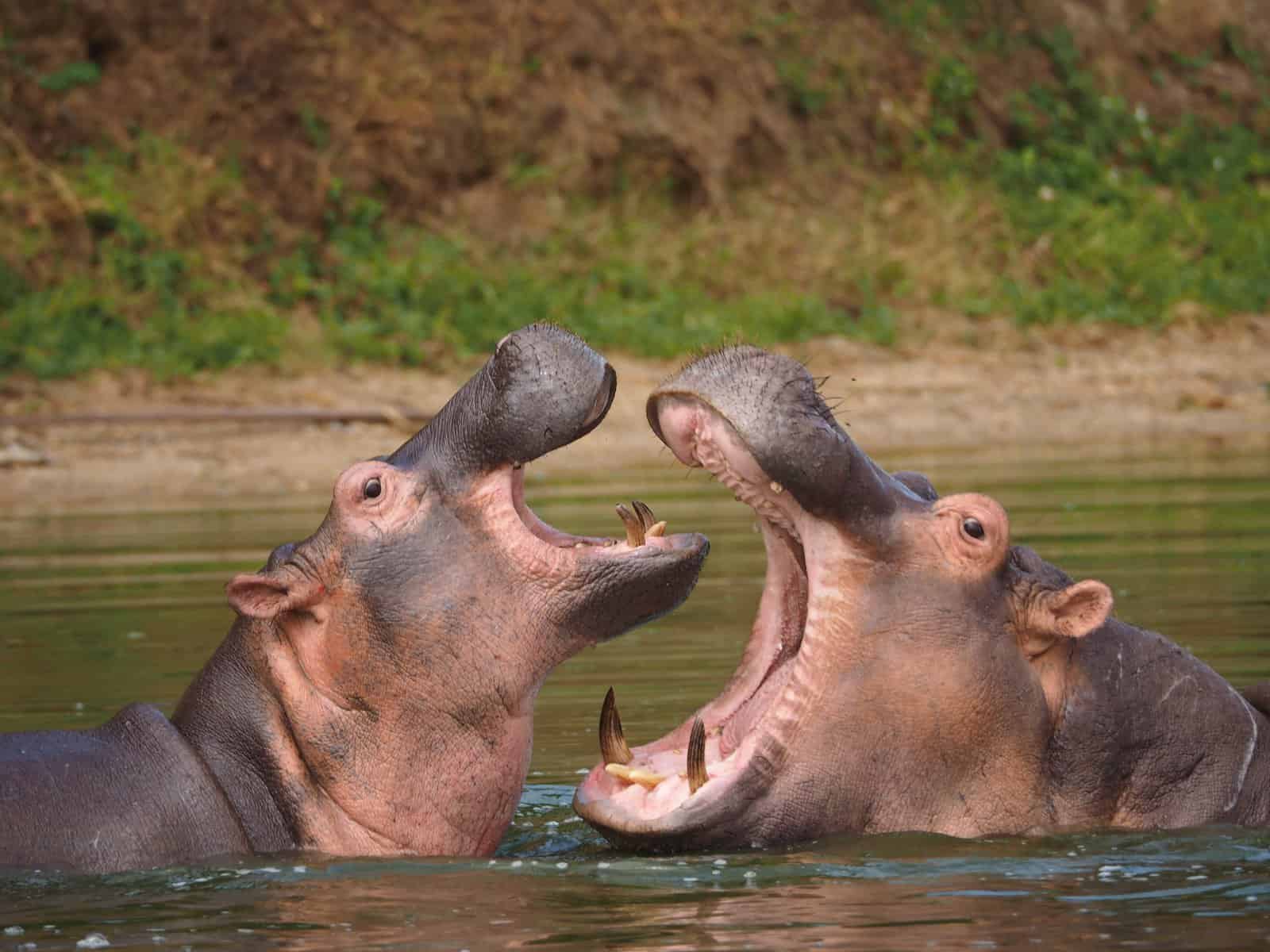
Hippos have wide, powerful mouths that can open up to 150 degrees, showcasing very large teeth! The most notable of them are their canine and incisor teeth, which can grow impressively long.
- Canines (tusks): These can reach up to 50 cm in length. They are sharp and used mainly for defence and fighting but not eating.
- Incisors: These front teeth can also grow to be quite long, adding to their formidable appearance.
The rest of a hippo’s teeth are used for grinding down their plant-based diet. Their large, powerful jaws and long teeth help them defend their territory and establish dominance. These teeth, combined with their very wide mouths, make hippos one of the most dangerous animals in their natural habitat.
Their Babies Are Adorable

Baby hippos are often considered extremely adorable! With their round, chubby bodies, curious eyes, and small, floppy ears, they have a cute and playful appearance that many find endearing. Babies, called calves, are born weighing around 25 to 50 kilogrammes and are typically about 1.2 metres long at birth.
Calves are known for staying close to their mothers, who are very protective. They can nurse both on land and underwater, thanks to the unique way their nostrils and ears close up to keep water out. Baby hippos often rest on their mother’s back when they are in deeper water and can sometimes be seen playfully nudging and interacting with other youngsters in the pod.
Their playful behaviour and bond with their mothers add to their charm, making baby hippos one of the most delightful sights in the animal world.
Hippos Make Noises
Hippos are quite vocal animals and make a variety of noises that they use to communicate with each other, both on land and underwater.
For instance, they produce deep grunts and growls, which can be powerful and resonate over long distances. These sounds are often used for communication within their groups or to assert dominance. They also make loud honking noises, similar to a foghorn, to signal their presence or ward off intruders.
When threatened or feeling aggressive, hippos can roar loudly to display their strength and frighten their opponents or enemies. For social communication, they make a unique sound that’s a combination of wheezing and honking. Those giants also make clicking or bubbling noises underwater to interact without needing to surface.
These vocalisations are essential for maintaining social structures and territory within hippo pods, with sounds travelling long distances over water.
Their Skin “Sweats” Sunscreen
A hippo’s skin is one of its most unique features, specially adapted to its semi-aquatic lifestyle. It is thick, tough, and nearly hairless, which helps protect the animal from various environmental factors.
The skin is up to 5 centimetres thick in places and acts as a barrier against physical harm, such as scrapes or bites from other animals. Such thickness also prevents excessive water absorption when hippos are submerged, keeping their bodies from becoming waterlogged.
Besides, the hippo’s skin has a special ability to protect hippos from the sun. If you remember from above, hippos can’t sweat, so their skin would dry out and crack without some form of moisture. To prevent this, hippos secrete a natural, oily substance often referred to as “blood sweat,” which acts as both a sunscreen and a moisturiser. This secretion is pinkish in colour and helps keep the hippo’s skin hydrated, preventing sunburn and reducing the risk of skin infections.
Hippos Walk Underwater
While it is not a strong swimmer, the hippo is excellent at moving in the water. It can walk or “gallop” along the riverbed or lake floor, using their strong legs to push off the bottom. This is why it is considered semi-aquatic animals.
Hippos can stay submerged for several minutes, and while underwater, they typically move with surprising agility, even in deeper areas. They don’t swim like most animals; instead, they rely on their ability to walk on the bottom, using their buoyancy to help them move. They also have a unique way of breathing, with their nostrils and ears closing automatically when submerged.
They Live Long
Hippos have a relatively long lifespan. In the wild, they typically live for 40 to 50 years, although some individuals can live even longer in captivity, sometimes reaching up to 60 years. The longest living hippo ever recorded was a female Bertha, who lived at the Manila Zoo in the Philippines, and died in 2017 at the estimated age of 65.
Such a long lifespan is supported by the hippos; ability to adapt to both land and water environments, where they can find food, stay cool, and avoid predators. However, their life expectancy can also be influenced by factors such as habitat quality, human interference, and the presence of natural threats.
They Are Territorial

When an animal is territorial, it means that it actively defends a specific area or space from others of the same species, typically to protect resources like food, water, or mating opportunities, and hippos are highly territorial, especially when it comes to the areas of water they inhabit.
Male hippos, in particular, defend specific stretches of water, such as rivers, lakes, or ponds, which they consider their own. These water territories are essential for their feeding, resting, and socialising, and they will fiercely guard them against intruders.
To mark their territory, hippos use their feces. They defecate and then flick the feces around with their tails, creating a scent mark that signals their presence and defines their boundaries. This behaviour is an important way for hippos to communicate their dominance over a specific area.
Male hippos are also known for their aggressive behaviour when defending their territory. They may engage in intense fights with rival males, charging and biting to assert dominance. These fights can be physically demanding and sometimes result in injury, but they are crucial for maintaining control over the best water resources.
In addition to protecting waterholes, especially during dry seasons when water is scarce, male hippos will ensure that their group has access to vital resources. The social structure within hippo groups further reinforces territoriality, with dominant males holding the best territories while younger males or females settle in less favourable areas. This territorial behaviour helps maintain order and ensures that hippos have the space and resources they need to survive.
We hope you enjoyed learning more things about the hippo as much as we loved teaching you about them. Now that you know how majestic these animals are, you can move on to learn about other ones like: Octopuses, Seals, Weasels, Dolphins, Kangaroos, Reindeer, Leopards and Jaguars, Rabbits and Flamingos.
Why not subscribe to our LearningMole Library for as little as £1.99 per month to access over 2800 fun educational videos.


Leave a Reply