Ask a Year 4 class to name the Egyptian goddess of health and healing, and you will get two answers, both defensible. Ancient Egypt had no single goddess of health and healing, and the reason why teaches children more about ancient medicine than any list of names ever could. Sekhmet, the lioness who sent sickness and lifted it again, stood behind the temple physicians.
Isis, the mother of magic, protected the sick at home and at the bedside. Between the two of them worked a real profession of priest-physicians called the wabu, people who prescribed honey and prayer in the same breath and saw no contradiction in it.
This guide is written for UK primary teachers covering ancient Egypt as their depth study in the KS2 History National Curriculum, and for parents whose children have come home full of questions about mummies, gods and pharaohs. LearningMole is a UK educational platform founded by a former primary teacher, producing curriculum-aligned video resources and teaching materials for British schools.
Ancient Egypt remains one of the most requested topics in our library. Everything here is pitched for Year 3 upwards, with the harder material flagged so you can decide what to include. You can start with our [Ancient Egypt for children hub] if your class is new to the period.
You will find the stories children remember: the goddess who drank a lake of red beer, the seven scorpions who walked behind Isis, the eye that Thoth pieced back together. You will also find the evidence that turns retelling into a historical enquiry, because ancient Egyptian medicine is unusually well documented. There is a comparison table for the two goddesses, a breakdown of who actually treated the sick, a curriculum mapping table, and two ready-to-use classroom activities.
Who Was the Goddess of Health and Healing in Ancient Egypt?
Sekhmet was the goddess most directly linked to health, healing and disease in ancient Egypt, and her priests formed the closest thing Egypt had to an organised medical profession. Isis was the goddess most often called on by ordinary families when a child fell ill. Both were worshipped for centuries, and Egyptians saw no conflict in appealing to both.
The confusion in modern sources comes from a genuine difference in what “healing” meant. Sekhmet governed epidemic disease, fever, plague and the kind of illness that arrives without warning and takes whole households. Her temples at Memphis and Karnak trained the specialists who dealt with it. Isis governed protection, childbirth, poison, snakebite and the daily business of keeping a family safe. She was the goddess of the household spell and the amulet worn around a child’s neck.
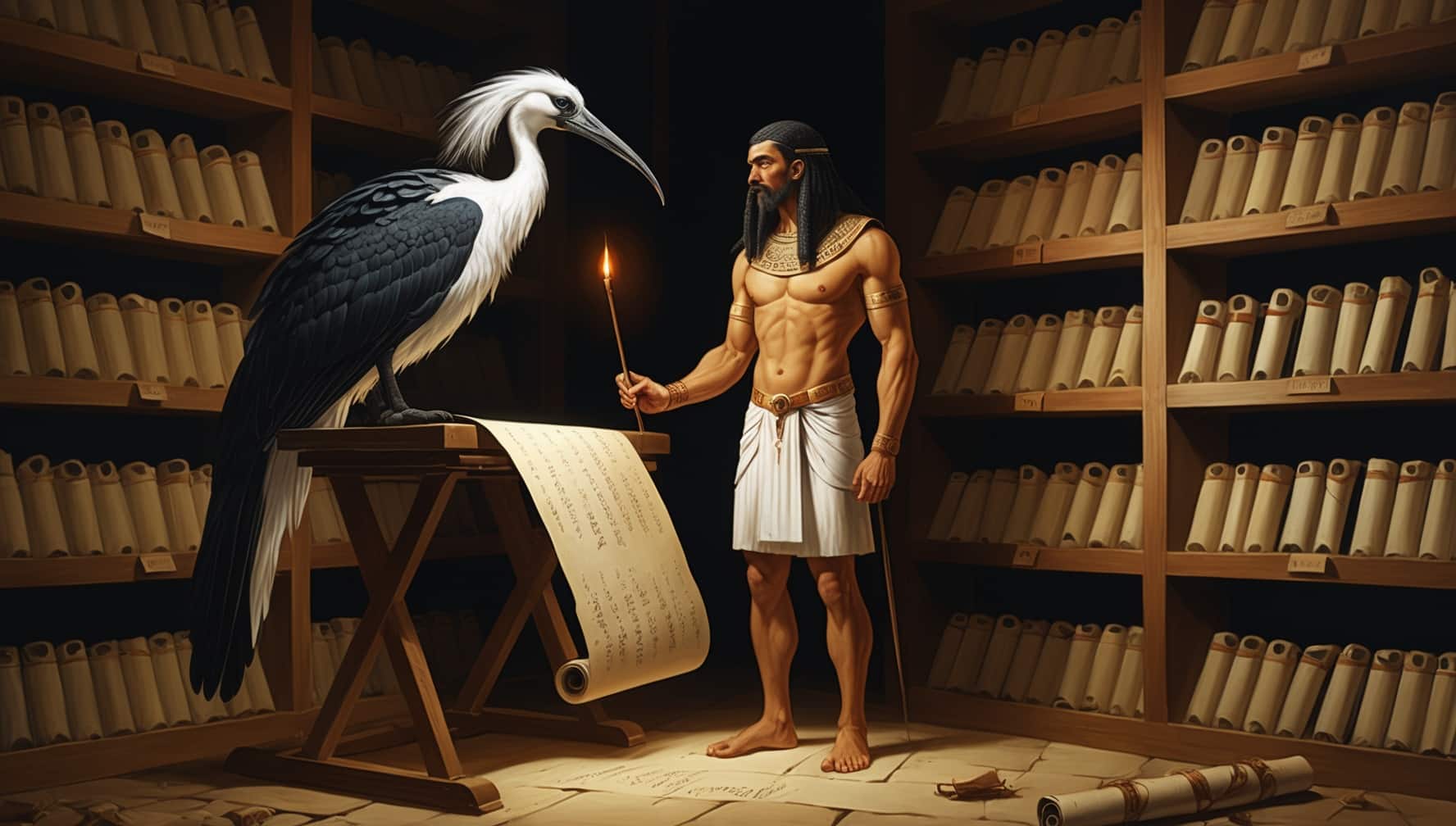
A third strand runs alongside both. Thoth, the ibis-headed god of writing, was credited with the medical texts themselves, and Heka personified the force of magic that made any treatment work at all. Egyptian medicine drew on all four figures at once. A physician might diagnose using a written case study attributed to Thoth, prescribe a herbal remedy, recite a spell invoking Isis, and serve in a temple of Sekhmet.
For teaching purposes, the honest answer to “who was the goddess of healing?” is that Egypt distributed the job. That distribution is the interesting part, and it maps neatly onto how children already understand modern healthcare: a GP, a surgeon, a pharmacist and a hospital are all “medicine”, and none of them is the whole of it.
Isis and Sekhmet: The Two Faces of Egyptian Healing
Sekhmet and Isis represent the two halves of ancient Egyptian medical thinking, the curative and the protective. Setting them side by side gives children a framework they can actually use rather than a list of names to memorise.
Sekhmet
Isis
Form
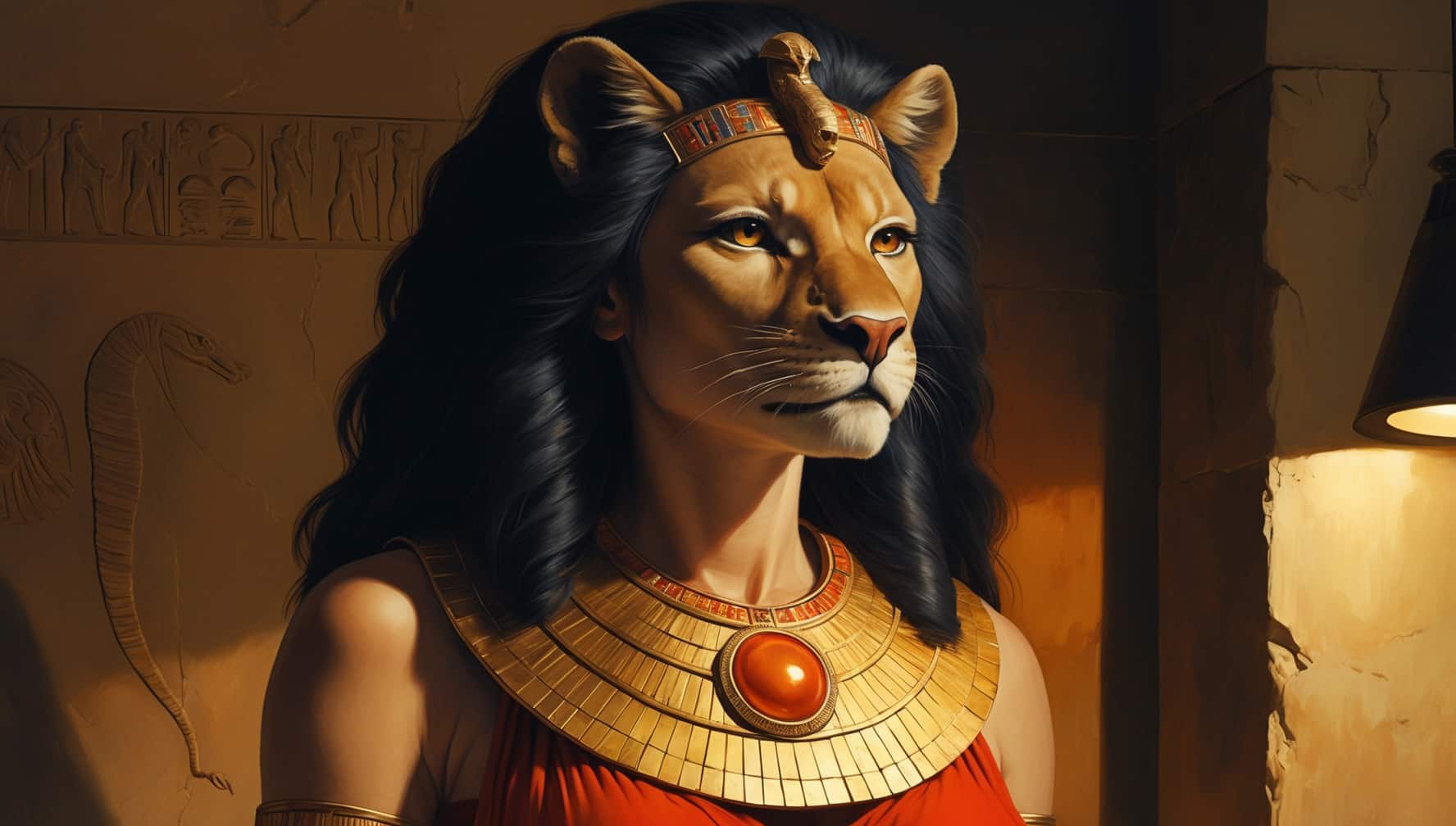
Woman with a lioness head, sun disc above
Woman with a throne headdress, sometimes cow horns
Nature of healing
Curative: plague, fever, epidemic disease
Protective: childbirth, poison, snakebite, children
Method
Temple treatment, surgery, ritual by trained priests
Spells, amulets, words spoken over the sick
Key symbol
The lioness and the solar disc
The tyet knot, sometimes called the knot of Isis
Where do you meet her
The temple at Memphis or Karnak
The home, the birthing room, the roadside
Closest modern parallel
Hospital consultant and A and E
GP, midwife and community pharmacist
Also known for
War, protection of the pharaoh, plague
Magic, motherhood, resurrection of Osiris
The parallel in the final row is a teaching device rather than a historical claim, and it is worth saying so to the class. Egyptians did not think in terms of primary and secondary care. What they did think, consistently and across three thousand years, is that illness had causes in both the physical world and the divine one, and that a serious treatment had to address both.
Sekhmet: The Lioness Who Sent Plague and Cured It
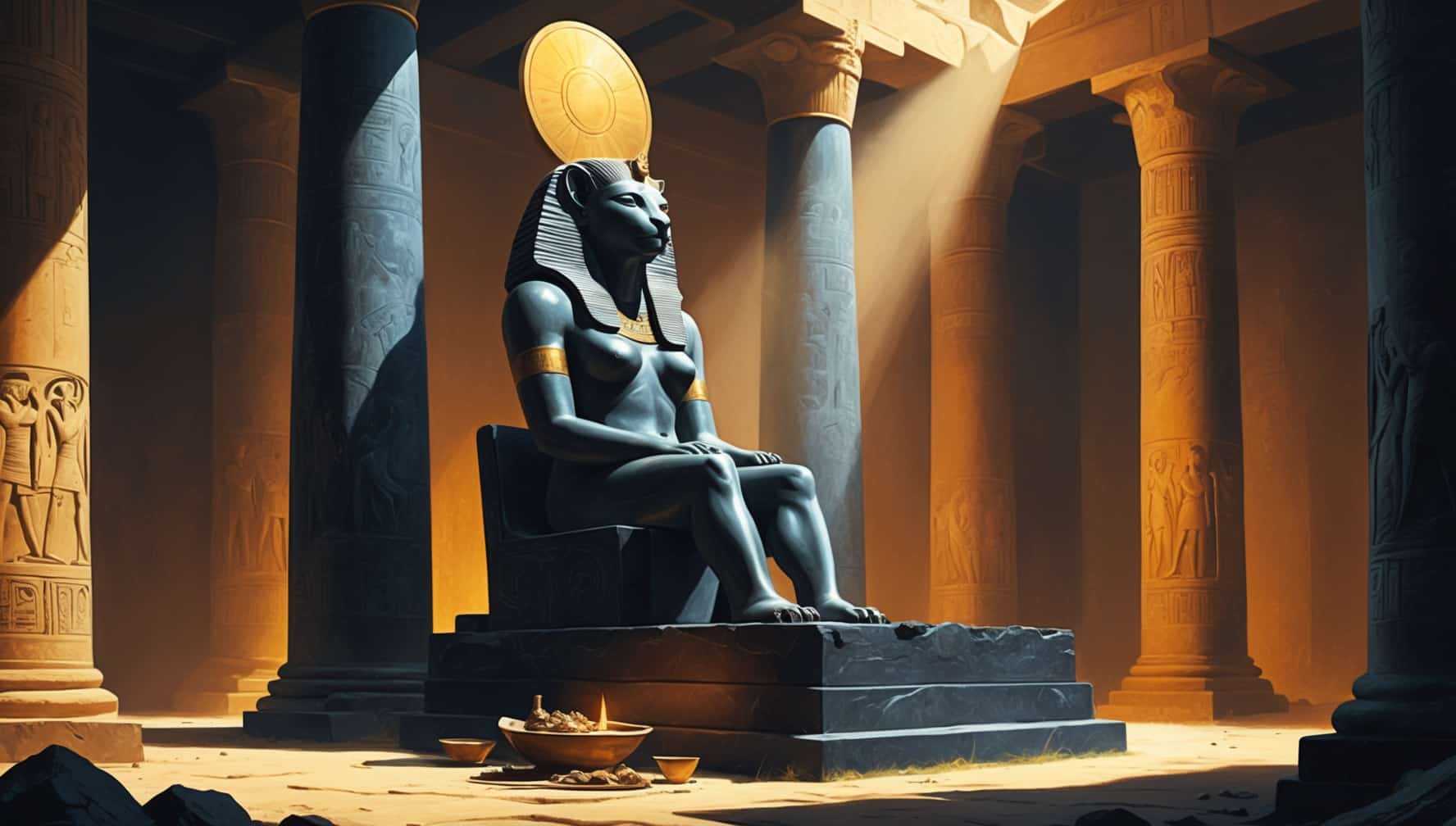
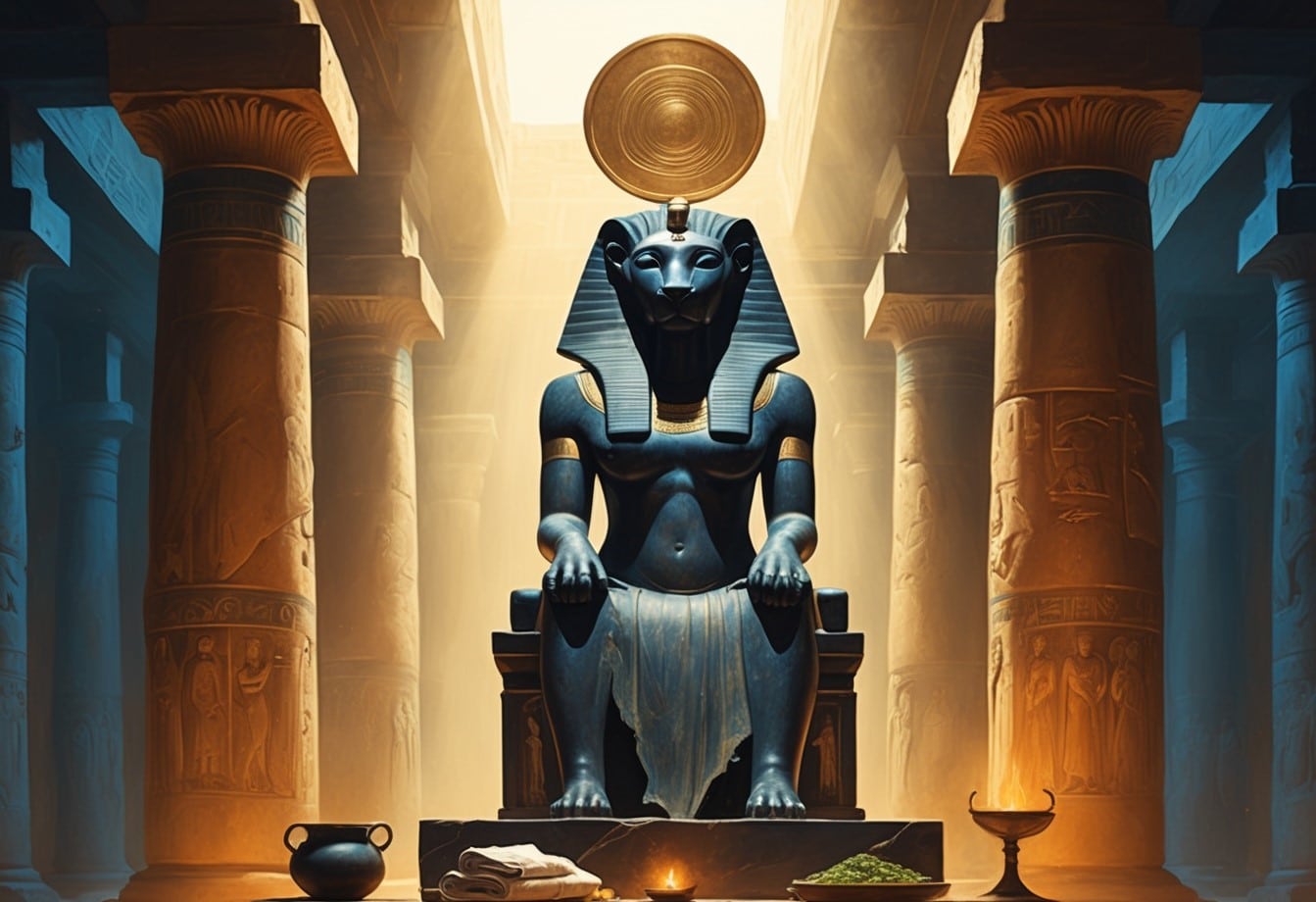
Sekhmet was worshipped as the goddess who both caused and cured epidemic disease, which is why her priests became physicians. Her name comes from the Egyptian word sekhem, meaning power, and she is almost always shown as a woman with the head of a lioness, a solar disc resting above her.
The Myth of the Red Beer
The best-known Sekhmet story explains her double nature, and children love it. The sun god Ra had grown old, and humanity had stopped obeying him. In his anger, he sent out his Eye in the form of the goddess Hathor, who transformed into Sekhmet and began destroying people across Egypt. Ra then changed his mind, but Sekhmet could not be called off.
Ra’s solution was a trick. He ordered beer to be brewed and dyed red with ochre, then poured across the fields until the ground looked flooded with blood. Sekhmet, believing she had found what she wanted, drank until she fell asleep. She woke calm, and humanity survived.
The story sits inside a longer New Kingdom text often called the Book of the Heavenly Cow, versions of which appear in royal tombs, including Tutankhamun’s. For a class, it does two jobs at once. It explains why a goddess of slaughter was also asked for cures, and it shows children how Egyptians used stories to explain a real observation: that plague arrives suddenly, kills without pattern, and then stops.
Mistress of Dread, Lady of Life
Egyptian texts give Sekhmet titles that pull in opposite directions. She is the Powerful One and the Mistress of Dread. She is also invoked in medical spells as the one who can drive sickness out of a body. Some texts describe her seven arrows, which carried disease, and her messengers, who were thought to bring epidemics as the year turned.
Egyptians responded with ritual rather than resignation. Hundreds of granite statues of Sekhmet were commissioned by the pharaoh Amenhotep III and set up around Thebes, and Egyptologists have long connected the scale of that project to attempts to appease her. Whether the motive was plague, royal health or something else is still debated, and that uncertainty is itself useful in the classroom.
The lesson for children is that Egyptians did not separate the harmful from the healing. The goddess who sent the fever was the goddess you asked to take it away. That logic is closer to modern thinking than it first appears: a surgeon’s knife cuts and cures with the same edge.
Isis: Mother of Magic and Protection
Isis was the goddess ordinary Egyptian families turned to when a child was sick, and her healing power came from her mastery of magic and her role as a mother. Her Egyptian name, Eset, is usually translated as throne, and the throne sign sits on her head in most images of her.
The Legend of the Secret Name
Isis gained her healing power through cunning rather than inheritance. In one well-known myth, she shaped a serpent from earth mixed with the saliva of the ageing sun god Ra, and left it on the path he walked each day. The serpent bit him, and no god could cure the poison because the creature was not part of creation.
Isis offered to heal Ra, but only if he told her his secret name, the hidden name that held his power. Ra resisted, then gave in. Isis spoke the name, drew out the poison, and became Weret-Hekau, Great of Magic.
The myth explains something Egyptians took seriously: that knowing the true name of a thing gave you power over it. Egyptian healing spells regularly name the illness, the demon thought to carry it, and the god being called on. Naming was the mechanism. Children who have met this idea in fairy tales will recognise it immediately, and it opens a good discussion about why the Egyptians wrote so much down.
The Seven Scorpions and the Poor Woman’s Son
A second story tied Isis directly to poison and to fairness. Fleeing from Seth with her infant son Horus, Isis travelled with seven scorpions guarding her. She knocked at a wealthy woman’s door and was turned away. A poor woman took her in instead.
The scorpions, angry at the insult, combined their venom into the sting of one of them and struck the wealthy woman’s child. The child died. Isis, hearing the mother’s grief, chose to heal the boy anyway, speaking the names of all seven scorpions and drawing the poison out.
Egyptian mothers recited versions of this spell over children who had been stung, substituting the child’s name for Horus. That is a genuinely striking detail for a KS2 class, because it shows a myth being used as a practical medical text. The story was the treatment, delivered by a parent rather than a priest, and it turns Isis from a distant figure into something recognisable.
The Wabu: Ancient Egypt’s Priest-Physicians
Egyptian healers were not divided into religious and medical professionals, and the same person often did both jobs. The wabu were priests attached to temples, and the word means “the pure ones,” from a root related to cleansing. Priests of Sekhmet, in particular, are described in surviving texts as treating the sick.
Three Kinds of Healer
Egyptologists generally identify three overlapping roles in Egyptian healing, though real practitioners often held more than one title.
Title
Rough translation
What they did
Sunu (swnw)
Physician
Diagnosis, prescriptions, bandaging, setting bones, minor surgery
Wab (plural wabu)
Pure one, priest
Temple service, ritual purification, treatment under a god’s authority
Sau
Magician or amulet-maker
Protective spells, amulets, and charms against poison and demons
A senior figure might be described as sunu and wab Sekhmet together, physician and priest of Sekhmet, treating patients with both a remedy and a rite. Some of these healers specialised. Egyptian titles survive for practitioners of the eyes, the teeth, the stomach and what was described as the hidden parts of the body.
One name worth putting in front of a class is Peseshet, an Old Kingdom woman whose title is usually translated as Overseer of Female Physicians. She appears on a stele from Giza, and she is frequently cited as the earliest named female doctor in the historical record. The evidence is a single inscription, and translations of her title vary, so this works best as a lesson in how much historians can build from how little.
What Treatment Actually Looked Like
Ancient Egyptian treatment ran along two tracks at once, and children usually assume it was all magic until you show them otherwise. A patient with an infected wound might receive honey and mouldy bread applied as a dressing, a genuine antibacterial approach, while a priest recited a spell over them. A broken arm was splinted with wood and linen. A stomach complaint was treated with a measured herbal preparation.
The papyri record willow, honey, garlic, juniper, castor oil, and dozens of other substances, some with measurable effects and some without. Egyptians also got a great deal wrong, most obviously in their understanding of the heart, the brain and the internal channels they called metu. Working out which parts hold up and which do not is exactly the kind of evaluation the KS2 curriculum asks for.
Thoth, Heka and the Other Gods of Egyptian Medicine
Sekhmet and Isis shared the field with several other figures, and knowing the cast helps children make sense of the spells they will see quoted.
Thoth earned his medical role through the myth of the Eye of Horus. Horus fought his uncle Seth to avenge his father Osiris, and in the fight, his eye was torn out and broken apart. Thoth gathered the pieces and restored them. The restored eye, the wedjat, became one of Egypt’s most widely worn protective symbols.
God or goddess
Form
Link to healing
Sekhmet
Lioness-headed woman
Plague, epidemic disease, temple physicians
Isis
Woman with throne headdress
Magic, poison, childbirth, protection of children
Thoth
Ibis-headed man
Writing, medical texts, restoring the Eye of Horus
Heka
Man carrying serpents
The force of magic itself, invoked in every spell
Imhotep
Seated man reading a scroll
Deified architect later worshipped as a god of medicine
Serqet
Woman with a scorpion on her head
Scorpion stings, snakebite, and venom
Taweret
Standing hippopotamus
Pregnancy, childbirth, and protection of infants
Bes
Dwarf figure with a lion’s mane
Household protection, driving off harm from children
Heka deserves more attention than he usually gets. Egyptians used the same word for the god and for the power he personified, and heka was understood as a real force present at creation, something a trained person could direct. Our separate article on Heka, the Egyptian god of magic and medicine, covers this in more depth.
Imhotep is the outlier and the most interesting to older pupils. He was a real man, chief architect to the pharaoh Djoser and builder of the Step Pyramid at Saqqara around 2650 BCE. Centuries after his death, Egyptians worshipped him as a god of medicine, and the Greeks later identified him with their own healing god. A real person becoming a god of healing is a strong hook for a discussion about how reputations grow.
How Do We Know? Evidence and Artefacts
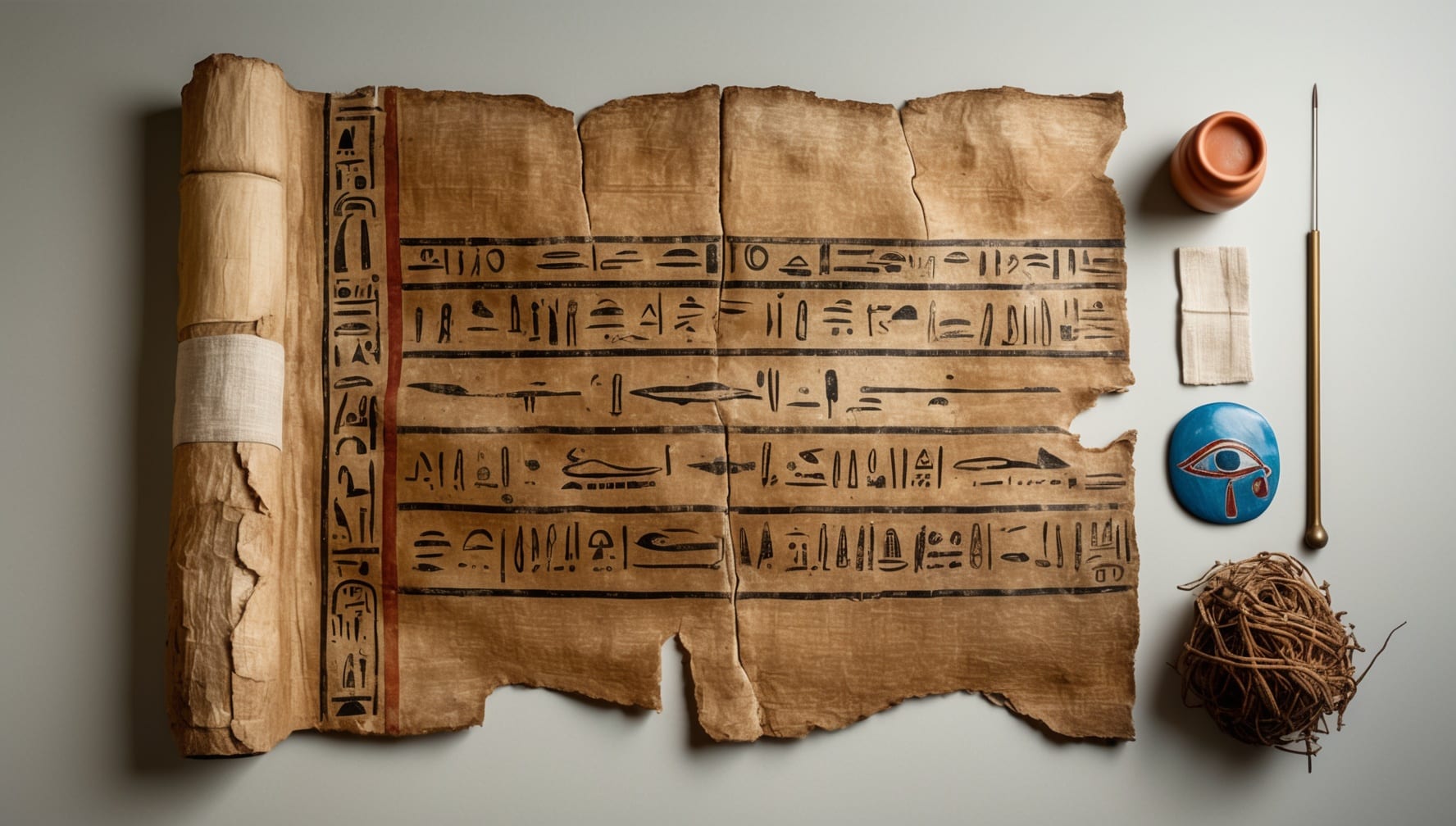
Almost everything we know about Egyptian medicine comes from written papyri and physical objects, and putting those sources in front of children moves a lesson from storytelling into historical enquiry.
The Ebers Papyrus, dating to around 1550 BCE, runs to more than a hundred pages and records hundreds of remedies alongside spells. The Edwin Smith Papyrus, roughly the same age but copied from an older text, is startlingly different in tone. It works through around forty-eight surgical case studies in a consistent format: examination, diagnosis, verdict on whether the case can be treated, and then treatment. It contains very little magic. The Kahun Papyrus, older still, deals with women’s health.
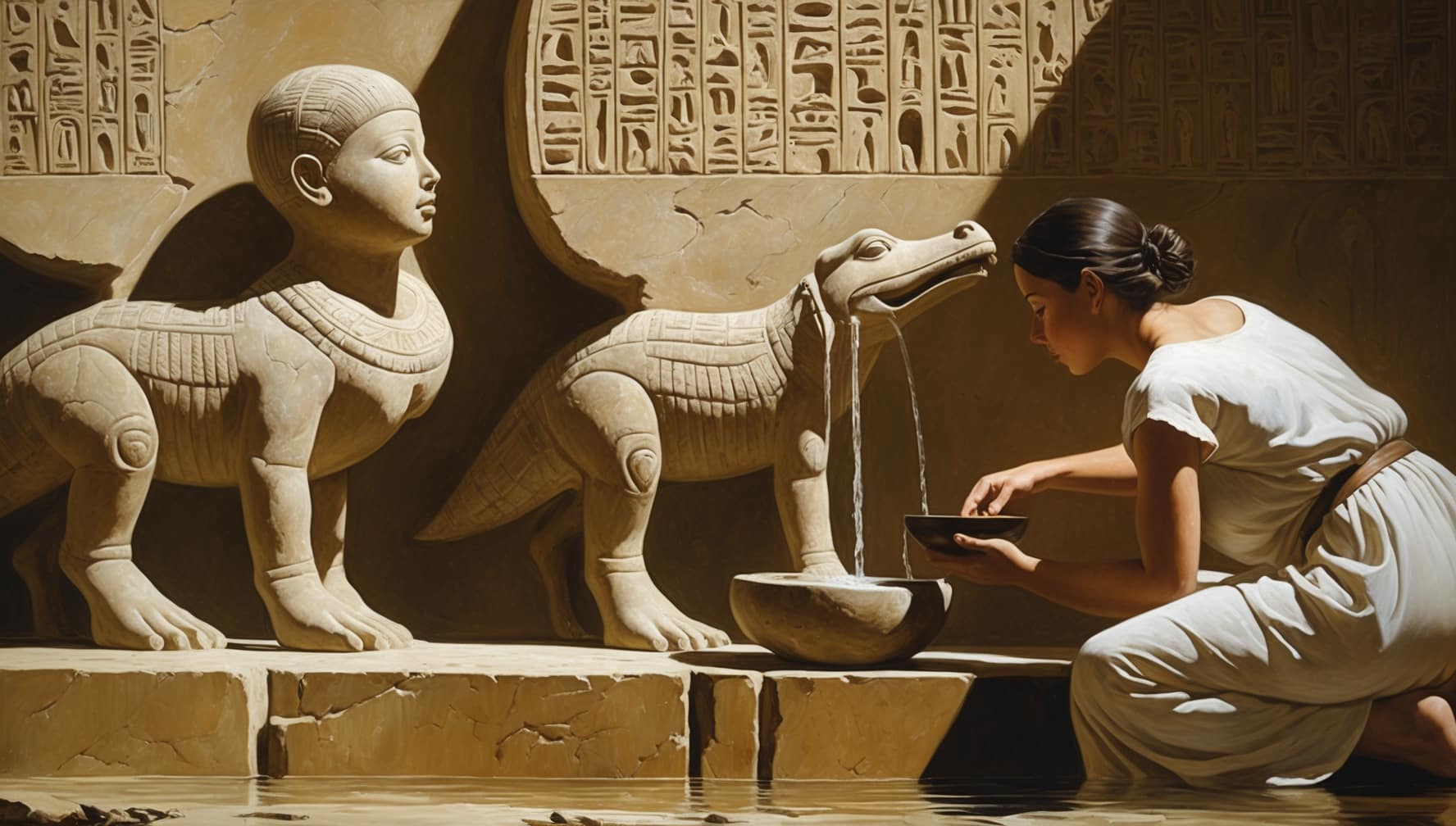
Then there are the healing statues. From the Late Period onwards, Egyptians produced stone figures and small stelae, often depicting the child Horus standing on crocodiles and covered with carved protective spells. Water was poured over the carved text so it ran across the words, collected at the base, and given to the patient to drink. The spell was understood to transfer into the water.
That single object does more work in a classroom than any amount of explanation. It is a physical thing children can picture; it demonstrates that Egyptians thought magic could be delivered through matter, and it invites the obvious question of whether it did anything at all.
“Children move from retelling a myth to thinking like a historian the moment you put an object in front of them and ask what it proves. A healing statue does that better than almost anything else from ancient Egypt, because a child can immediately see both what the Egyptians believed and what the evidence actually shows.” , Michelle Connolly, Founder of LearningMole and former teacher with over 15 years of classroom experience
Human remains add a further layer. Studies of Egyptian mummies have identified healed fractures, dental abscesses, arthritis and parasitic infection, giving a picture of what Egyptians were actually treating rather than what they wrote about treating. Our [history of medicine timeline] places Egyptian practice alongside later developments so pupils can see the through line.
Symbols of Healing in Ancient Egypt
Egyptian healing symbols appear constantly in classroom resources, and three of them carry specific meanings worth getting right.
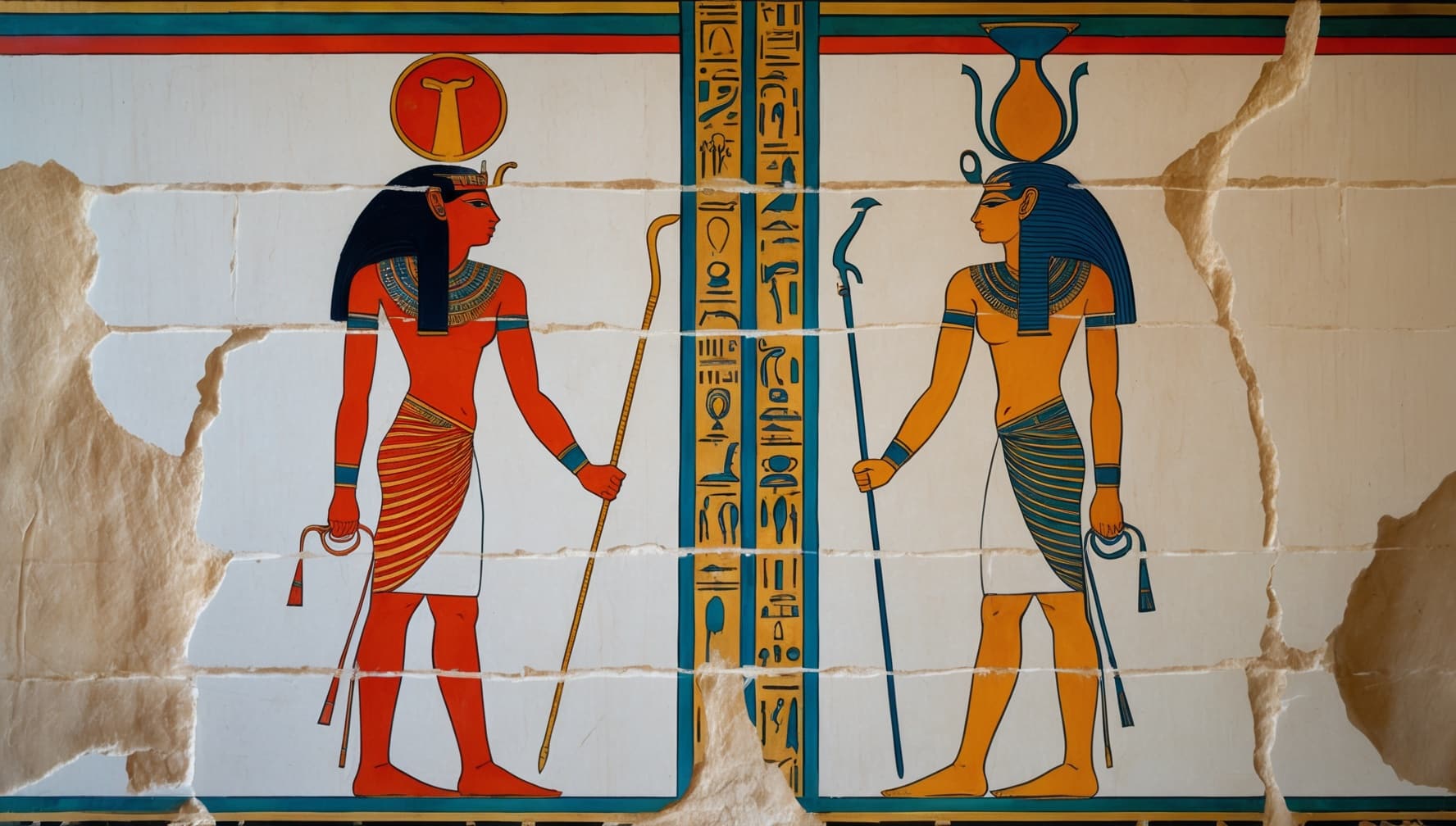
The ankh represents life itself, held by gods in temple reliefs and offered to the pharaoh’s nose as a gift of breath. It is not specifically a medical symbol, though it appears in healing contexts because health and life were bound together.
The wedjat, or Eye of Horus, is the restored eye from the Thoth myth. It stood for wholeness, protection and healing, and Egyptians wore it as an amulet in enormous numbers. A common point of confusion is worth clearing up: the wedjat is the eye, while Wadjet is a separate cobra goddess associated with Lower Egypt and the protection of the king. The names look alike and are regularly muddled in teaching resources.
The tyet, sometimes called the knot of Isis, resembles an ankh with its arms folded down. It was linked to Isis, to blood and to protection, and was often made from red stone or glass and placed with the dead. It gives a neat contrast with the wedjat when children are designing their own amulets.
Teaching the Egyptian Goddess of Healing at KS2
Egyptian medicine works best as a deep study within an ancient Egypt topic rather than as a standalone lesson, and it fits several curriculum strands at once.
Curriculum area
Where this topic fits
Suggested year group
KS2 History
Achievements of the earliest civilisations, the in-depth study of ancient Egypt
Years 3 to 6
KS2 History skills
Using sources, evaluating evidence, constructing accounts
Years 4 to 6
KS2 Science
Animals, including humans, keep the human body healthy
Years 3 to 6
PSHE and wellbeing
Health, medicine, how we look after ourselves
Years 3 to 6
KS2 English
Myth retelling, non-chronological reports, and explanation texts
Years 3 to 6
Classroom Discussion: Science or Magic?
Set the class a sorting task. Give them a mixed list of Egyptian treatments: honey on a wound, a spell naming the seven scorpions, splinting a broken arm with wood and linen, drinking water poured over a healing statue, a mouldy bread poultice, and an amulet of the wedjat eye. Ask them to sort into what they think worked and what they think did not.
The discussion afterwards matters more than the sorting. Some items sit awkwardly in both columns, which is the point. Honey does have antibacterial properties. An amulet has no physical effect but may well have calmed a frightened patient. Push the class towards the harder question: if an Egyptian doctor had no microscope and no germ theory, was believing in Sekhmet’s arrows an unreasonable explanation for plague?
Guard against the trap of treating Egyptian belief as silly. Ancient Egyptians were working carefully with the evidence available to them, and the Edwin Smith Papyrus shows a genuinely systematic approach to diagnosis.
Home Learning: Make a Protective Amulet
Children design and make their own protective amulet, choosing between a wedjat eye and a tyet knot, using air-dry clay, card or salt dough. The design work is only half of it. Each child writes a short protective inscription in their own words explaining what the amulet guards against and which god it calls on.
Parents can extend this by asking what modern objects do a similar job. A lucky pair of football socks, a photo in a wallet, a bracelet from a grandparent. The comparison usually lands well and gets children thinking about belief as something familiar rather than as something ancient people did because they did not know better.
Design a Temple Pharmacy
Give pairs a shelf to stock. They choose three natural remedies and three ritual items for a temple of Sekhmet, then justify each choice to another pair. Natural options might include honey, garlic, willow bark, juniper and castor oil. Ritual options might include an amulet, a written spell, an incense burner, a healing statue and a figure of the goddess.
The activity works because it forces the two systems together, which is exactly how an Egyptian wab would have understood their own store cupboard.
Teaching Resources and Support
LearningMole produces free and subscription video resources aligned to the UK National Curriculum, and our ancient Egypt collection supports the full KS2 depth study rather than a single lesson. Ready-made resources save planning time when you are covering a topic as large as ancient civilisations, and our videos are designed by a team led by an experienced primary teacher.
For classroom use, our ancient Egypt teaching resource packs provide activities and structured sequences that pair with the discussion tasks above. Teachers running enquiry-led history will find our classroom activities for teaching ancient history useful for building the source-evaluation skills this topic depends on. Curriculum-aligned materials cover the vocabulary children need, from wabu and sunu to wedjat and tyet, which matters because unfamiliar terminology is where most KS2 Egypt topics lose the weaker readers.
Parents supporting learning at home can use the same resources without any specialist knowledge. Home learning works best when it aligns with what the school is covering, and our videos are designed for exactly that. Michelle Connolly founded LearningMole to help teachers and parents provide quality educational experiences for children, and the platform now serves families across the UK and beyond.
Where a topic touches on health and the body, our primary science resources connect Egyptian ideas about the body to what children learn in KS2 science. That link matters for this topic in particular because comparing Egyptian anatomy with modern anatomy is one of the sharpest ways to show children how knowledge changes.
Frequently Asked Questions
Who was the main goddess of healing in ancient Egypt?
Sekhmet was the goddess most closely associated with healing and disease, and her priests served as physicians in temples at Memphis and Karnak. Isis was the goddess families called on at home for protection, poison and childbirth. Egyptians used both, along with Thoth for medical knowledge and Heka for the power of magic itself. If you need a single answer for a KS2 class, Sekhmet is the goddess of health and healing, and Isis is the goddess of protective magic, but the honest answer is that Egypt shared the role out.
Who was the Egyptian god of healing?
Thoth and Heka are the two male gods most often given this title, alongside the deified Imhotep. Thoth was credited with writing the medical texts and with restoring the Eye of Horus after Seth tore it out. Heka personified magic as a force, and every healing spell drew on him. Imhotep was a real architect from around 2650 BCE who was worshipped as a god of medicine long after his death. Searches for the Egyptian god of medicine most often return Thoth, Heka or Imhotep, depending on which aspect is meant.
Is there an Egyptian goddess of mental health?
Not in the modern sense, though Sekhmet comes closest. Egyptian texts describe calming what they called the heat of the heart, a phrase covering anger, fear and distress, and rituals for Sekhmet were used to settle it. Egyptians treated emotional disturbance as something a healer could address rather than something separate from physical illness. For a PSHE link, this connects well to discussions about how attitudes to mental wellbeing have changed over time.
What symbols represented healing in ancient Egypt?
Three symbols carry most of the meaning. The wedjat, or Eye of Horus, stood for wholeness and protection after Thoth restored the broken eye. The tyet, the knot of Isis, was linked to Isis and to protection, and was often carved in red stone. The ankh represented life and breath. Take care with one common mix-up: the wedjat is the eye symbol, while Wadjet is a separate cobra goddess.
Did ancient Egyptians use real medicine or just magic?
They used both deliberately and simultaneously. The Ebers Papyrus records hundreds of herbal remedies alongside spells, and the Edwin Smith Papyrus works through around forty-eight surgical cases with almost no magic in it. Honey dressings, willow, splinting and bandaging all appear, and some of these have measurable effects. Egyptians saw physical and spiritual causes of illness as two parts of the same problem, so treating only one would have seemed careless to them.
Is this topic suitable for Year 3 and Year 4?
Yes, with some selection. Lower KS2 children handle the Sekhmet and Isis stories comfortably, and the lioness and mother imagery gives them a clear hook. The red beer myth needs to be framed carefully because of its violence, and most teachers tell it as a trick that saved people rather than dwelling on the destruction. Save the papyri, the surgical cases and the evidence evaluation work for Years 5 and 6, where the historical enquiry skills are stronger.
What did Egyptian doctors actually treat?
Studies of mummified remains show healed fractures, severe dental disease, arthritis, eye infections and parasitic infections, including schistosomiasis. Egyptian titles indicate specialists in the eyes, teeth and stomach, and the papyri record treatments for wounds, burns, bites, digestive complaints and gynaecological conditions. Comparing what the texts describe with what the bodies show is a strong Year 6 source-evaluation task.
What resources help teach ancient Egyptian medicine at KS2?
Video works particularly well for this topic because the objects carry the meaning: a healing statue, a wedjat amulet, a page of the Edwin Smith Papyrus. LearningMole’s curriculum-aligned ancient Egypt resources cover the gods, daily life and beliefs at the KS2 level, and pair with the sorting and amulet activities in this guide. Physical replicas or printed images of amulets are also worth having, because children engage far more readily with something they can hold.
Conclusion
Ancient Egyptian healing rewards teaching because it refuses to sit neatly on either side of the line that children expect. Sekhmet sent the plague and cured it. Isis healed a woman’s son after that woman had turned her away. A physician set a broken bone with a wooden splint and then recited a spell over the patient, and saw both actions as necessary. The Egyptians were not confused about this. They held a coherent view of a world in which the visible and the invisible both made people ill.
For a KS2 class, that is the takeaway to aim for. Not a list of goddesses, but the recognition that people three thousand years ago were doing their best with the evidence they had, and that some of what they worked out still stands. Honey on a wound is good medicine. The Edwin Smith Papyrus reads like a modern case file. The parts they got wrong are wrong for understandable reasons, and identifying which is which is real historical thinking rather than a memory exercise.
LearningMole produces curriculum-aligned video resources and teaching materials for primary schools across the UK, covering ancient Egypt alongside maths, English, science and more. Whether you are planning a half-term on ancient civilisations or helping a child at the kitchen table, our library is built to make topics like this one straightforward to teach. Browse our ancient Egypt teaching resources or watch free videos on the LearningMole YouTube channel to get started.
Maths Circus, an innovative platform we've crafted, presents a captivating realm where children learn mathematics through the exciting theme of a circus. The joy of juggling numbers and solving circus...
Mozart: Life and Music of an Extraordinary Musician Wolfgang Amadeus Mozart (1756 to 1791) was an Austrian composer of the Classical period who wrote more than 600 works, including operas,...
Cooks prepare, cook and present food for other people, working in restaurants, schools, hospitals, hotels, care homes and cafés. Their day covers washing and chopping ingredients, cooking dishes at the...
Actors use their voice, their body and their imagination to turn the words of a script into a believable person that an audience can follow, whether that audience is sitting...





Leave a Reply