Education is evolving, shaped by the forces of technology and the demands of a changing world. Innovations in digital learning and the urgent need to address global challenges have led to a transformative era for education. In this era, traditional classrooms are giving way to dynamic and adaptive learning environments. The future of education is about harnessing innovation to make learning more accessible, engaging, and relevant to real-world issues.
You will witness classrooms becoming more tech-enabled, facilitating learning that is tailored to individual needs and learning styles.
Michelle Connolly, an expert with 16 years in classroom experience, asserts, “As an educator, seeing the integration of cutting-edge technology with traditional teaching is a game-changer, not just for students but for teachers as well.”
With a mix of online and in-person learning, educational strategies are adapting to provide a holistic and inclusive approach that prepares learners for the complexities of the modern world.
Historical Evolution of Education
Education has transformed over the centuries, adapting to societal changes and the growing demands of different developmental eras. It plays a pivotal role in the development of society, influencing every aspect of human progress.
From Ancient Times to Modern Days
The foundation of education can be traced back to ancient civilisations, where it was predominantly reserved for the elite and was mainly practical in nature. In ancient Greece, for instance, education was heavily centred on philosophy, arts, and physical training. Fast forward to the Renaissance, education became more widespread, with the emphasis on humanism and the liberal arts.
Education systems continued to evolve, and by the 19th and 20th centuries, we witnessed education becoming a global priority. Compulsory education laws came into being, making basic education accessible to the masses. Formal educational institutions became more structured, and curriculums expanded to include a broad range of subjects – science, mathematics, literature, and the arts.
Key Historical Milestones:
Ancient Civilisations: Focus on philosophy, mathematics, and oratory skills.
Middle Ages: Establishment of universities, focus on religious studies.
Renaissance: Return to classical knowledge, emphasis on humanistic education.
20th Century: Universal education, diversity in subjects, emphasis on science and technology.
Impact of Industrialisation on Learning
Industrialisation marked a significant turning point for education. The need for a literate workforce propelled the idea of public schooling. The introduction of mass education was intended to prepare individuals for the demands of industrial labour and the increasingly complex societal roles technology brought about.
The 19th century’s industrial revolution shifted education from individualised apprenticeships to consolidated schooling experiences. Skills such as timeliness, repetitive task completion, and adherence to standards became integral parts of the educational process, mirroring the needs of industrial economies.
Education Post-Industrialisation:
Mass Public Education: Aimed to educate the workforce for industrial jobs.
Vocational Training: Schools provided specific skill sets required for the industrial age.
Technological Integration: Development of new educational tools and practices.
In the realm of LearningMole.com, the historical evolution of education is mirrored in its commitment to adapting and growing with educational advancements. Michelle Connolly, with her considerable educational expertise, puts it succinctly, “As an educator with over 16 years of classroom experience, I’ve seen firsthand the transformative power of education, evolving from the traditional chalkboard to interactive digital platforms like LearningMole that cater to all styles of learning.”
The Role of Technology in Learning
In recent times, technology has become an integral part of education, shaping how you learn and interact with information daily. It has altered the landscape of traditional education systems, carving out new possibilities for both educators and students.
Current Impact of Digital Integration
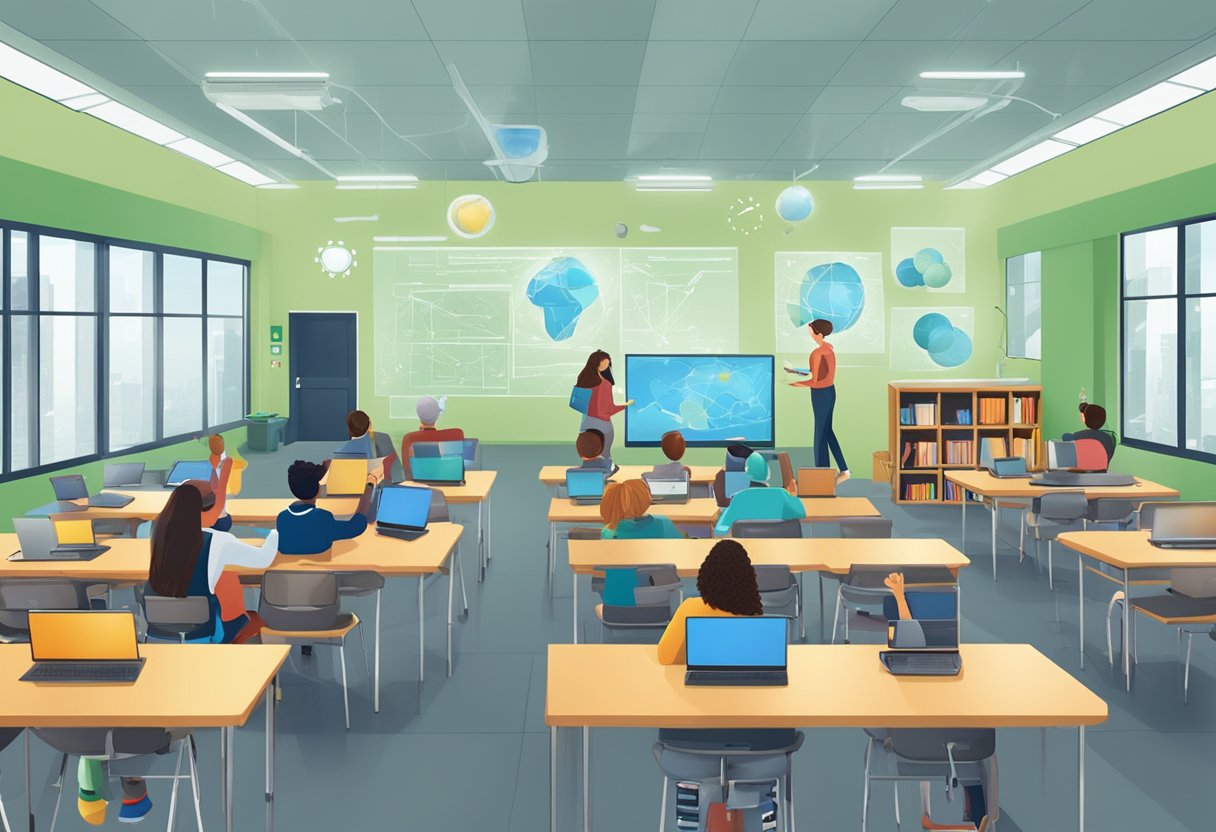
Digital technology has profoundly changed the classroom environment. The introduction of tablets, smartboards, and online resources has opened up a new dimension of interactivity and access to information.
You’re now able to engage with learning materials in a more interactive way, enhancing digital literacy from a young age.
Tablets and E-books: These allow you to access a vast array of textbooks and educational materials without the burden of physical copies.
Smartboards: They bring lessons to life, making it possible to visualise complex subjects.
Online Platforms: Websites like LearningMole provide diverse resources to support your education in core subjects like mathematics and sciences.
Michelle Connolly, speaking on digital integration in education, says, “As an educator with over 16 years of classroom experience, the seamless integration of digital technology in education is pivotal in creating a dynamic learning environment that caters to various learning styles.”
Projections: Artificial Intelligence and Augmented Reality
Looking forward, artificial intelligence (AI) and augmented reality (AR) are set to revolutionise the way you learn. AI has the potential to personalise your learning experience, adjusting to your pace and style. AR, on the other hand, can transform abstract concepts into tangible experiences, building a bridge between knowledge and real-world application.
Artificial Intelligence: AI can provide customised tutoring, assess your work, and give feedback, making education more responsive to your needs.
Augmented Reality: AR takes learning beyond the textbook, allowing you to immerse yourself in your subject matter through interactive simulations.
“Drawing from my extensive background in educational technology,” Michelle Connolly comments, “AI and AR are transformative forces that will enable learners to explore course materials in depth and apply knowledge in a variety of practical settings.”
Addressing Climate Change Through Education
Educating the next generation equips them to tackle climate change by fostering environmental literacy and integrating the principles of sustainable development into learning.
Environmental Literacy
Understanding climate change begins with environmental literacy. It’s about having the knowledge and skills to make informed decisions affecting the environment. Education plays a crucial role in developing a deep comprehension of the complex interactions within ecosystems and the human impact on them. For instance, teaching how carbon footprints are calculated allows you to make sustainable lifestyle choices.
Interactive tutorials about recycling and conservation can turn abstract concepts into relatable practices. Michelle Connolly, an education expert, advocates for this approach, “As an educator with over 16 years of classroom experience, I’ve seen firsthand the power of hands-on learning to inspire responsible environmental stewardship.”
Sustainable Development Goals in Curricula
Incorporating the United Nations Sustainable Development Goals (SDGs) into school curricula is vital. These goals outline a blueprint for peace and prosperity, with several targets directly related to environmental action.
For example, schools that integrate lessons on renewable energy and sustainable cities into their science and geography classes support SDG 7 (Affordable and Clean Energy) and SDG 11 (Sustainable Cities and Communities). This approach helps you understand the relevance of renewable sources like solar and wind power in combating climate change.
LearningMole provides resources aligned with these goals, fostering a curriculum that builds resilience and prepares you to make informed decisions for a sustainable future. By bringing these topics into the classroom, education becomes a pivotal force in shaping a world that values and works towards sustainability.
Education’s Impact on Economic Growth
Education is a powerful engine for economic growth, equipping individuals with skills to meet industry demands and fostering innovation through entrepreneurship.
Linking Education to Industry Needs
In today’s dynamic economic landscape, the synchronisation of education and business needs is crucial. By aligning educational curricula with industry requirements, a workforce is created that is ready to contribute effectively from day one on the job.
For instance, integrating STEM education with practical components such as robotics and coding can produce a talent pool that can propel industries forward.
Industry Engagement:
Establish partnerships between businesses and educational institutions
Develop internship programmes for hands-on experience
Create curricula informed by real-world industry challenges
Metric Success:
Increase in employment rates among graduates
Growth in sectors with education-industry alignment
Positive feedback from employers on graduate readiness
Michelle Connolly, with 16 years of teaching and consultancy expertise, advocates that, “Drawing from my extensive background in educational technology, it’s evident that students thrive when their learning journey is closely guided by the demands and innovations of industry.”
Education and Entrepreneurship
The nurturing of entrepreneurial skills within educational settings is essential for sparking new businesses that can contribute to economic growth. Critical thinking, innovation, and problem-solving are skills that should be fostered within the classroom to encourage students to create and grow their own enterprises.
Entrepreneurial Framework:
Offer courses on entrepreneurship
Encourage student-led business projects
Provide mentorship from experienced business leaders
Economic Indicators:
Increase in start-up creation by recent graduates
Contribution to GDP from educational sector entrepreneurship
Rates of innovation and patent creation in the economy
“Having worked with thousands of students across different learning environments,” Michelle Connolly shares, “I’ve seen firsthand the powerful impact of instilling an entrepreneurial mindset from an early age. It paves the way for a future rich in innovation and economic potential.”
Upskilling for the Future
Upskilling is essential to match the pace of technology and industry advancements. It calls for an investment in skills and lifelong learning opportunities.
Lifelong Learning Paradigms
Lifelong learning is no longer an advantage; it’s a necessity for staying relevant in a swiftly changing job market. Today, it’s imperative that you are engaged in continuous skill development, which requires novel approaches to education.
Researchers have noted that the traditional once-and-done education system can’t keep up with the demands of evolving industries. Instead, a robust lifelong learning ecosystem that combines formal education with online platforms and on-the-job training is gaining traction.
Investments in personal development can not only boost your employability but also increase job satisfaction and career prospects.
Skilling for Emerging Industries
There’s a clear shift toward technology-driven sectors which demands specialised skill sets for emerging industries such as AI, renewable energy, and biotech.
If you’re venturing into one of these fields, understanding complex subjects like data science or environmental science is crucial.
LearningMole offers an expansive view into STEM education, providing resources that make complex ideas accessible through practical experience. The thrill of innovation is captured through interactive content that encourages you to engage hands-on with subjects you’re passionate about.
Public and Private Sector Roles
When discussing the future of education, it’s vital to recognise the role of both public and private sectors in crafting an ecosystem that supports upskilling.
Governments may provide frameworks and funding, while companies are often at the forefront of identifying skill gaps and developing necessary learning tools. Investment in education from all sides can facilitate a culture of continuous learning and adaptability. Additionally, innovative learning solutions, like those offered by LearningMole, are pivotal in supplementing formal education and helping you to navigate learning paths tailored to your specific needs.
Michelle Connolly, founder of LearningMole, with her extensive background in educational technology, shares her insights, “As an educator with over 16 years of classroom experience, I’ve seen the importance of fostering an adaptable skillset that prepares learners for future challenges.” Her expertise underscores the transformative power of upskilling in today’s dynamic educational landscape.
Education for Social Equity and Democracy
Addressing social equity and creating a vibrant democracy requires an educational framework that champions inclusivity and active participation. By fostering equitable access to education and shaping informed governance policies, we can build a more just and democratic society.
Combatting Inequality Through Accessible Education
True democracy rests on the bedrock of equality, making accessible education its most powerful tool. Investing in educational outreach initiatives and support systems plays a vital role in levelling the playing field for learners from diverse backgrounds. It’s essential that you have access to a quality education regardless of socio-economic status, to equip you with the knowledge and skills needed to contribute to society.
For example, platforms like LearningMole provide a vast library of resources, aimed at making learning engaging and accessible to children with various needs. “As an educator with over 16 years of classroom experience, I’ve seen first-hand how tailored educational materials can make a profound difference in a child’s ability to learn and succeed,” says Michelle Connolly, founder of LearningMole.
Governance and Policy Development
Inclusive policy development is crucial in steering educational programmes towards social justice. Governance in education must not only create policies that promote equity but also engage a spectrum of voices in the decision-making process. This involves you participating in local school boards or national educational policy debates to ensure representation and accountability.
Interactive platforms play a significant role here, providing an online space for discussion and resource-sharing. Whether it’s through crafting lesson plans that reflect a diverse society or utilising digital tools for more inclusive education, actionable insights from experts like Michelle Connolly can guide your involvement. She asserts, “Having worked with thousands of students across different learning environments, I understand the importance of inclusive policies that reflect our society’s diversity.”
Adaptive Learning Environments
In light of recent school closures, the emphasis on adaptive learning environments has surged, focusing on ensuring continuity in education and attention to physical and mental well-being.
Learning in Times of Crisis
You might have noticed that during crises, such as a pandemic, schools are often forced to close. This poses significant challenges to traditional learning, but adaptive learning environments can offer solutions. Online learning platforms and virtual classrooms have become lifelines to students and teachers, ensuring that education does not grind to a halt.
For instance, during the COVID-19 crisis, the transition to online learning was made smoother through the use of digital learning tools. These tools have proven essential in maintaining the flow of education and allowing for real-time assessment and feedback. They’ve provided a space where teachers can offer personalised content and support to meet individual student needs.
Michelle Connolly, a seasoned educational consultant, shares, “Drawing from my extensive background in educational technology, it is clear that adaptive learning environments are crucial during times of crisis, ensuring education is continuous and responsive.”
Physical and Mental Well-being in Schools
Your well-being is equally important as your academic achievement, especially within the education setting. Adaptive learning environments extend beyond academic learning; they encompass strategies and resources aimed at supporting your mental and emotional health.
The incorporation of mindfulness practices, exercise breaks, and mental health awareness into the curriculum are examples of how physical and mental well-being is being prioritised in schools.
Adaptive learning technologies can support these initiatives by providing platforms for well-being education, such as informative content on healthy practices, stress management tools, and community forums for sharing experiences and strategies. The application of wellness tracking apps within education further supports a holistic approach to learning where health is central.
As Michelle Connolly, an expert with 16 years of classroom experience, highlights, “Health and well-being are at the core of effective education. Adaptive learning environments are vital in integrating these aspects into daily school life, creating a more supportive and productive atmosphere for students.”
Global Education Frameworks by OECD and Others
The Organisation for Economic Co-operation and Development (OECD) plays a pivotal role in shaping global education frameworks, which influence educational policies and practices worldwide. These frameworks strive to foster sustainable development and ensure consistency and quality in education systems across different nations.
Benchmarking and Standardisation of Education Systems
The OECD’s programme for international student assessment, better known as PISA, is a cornerstone in evaluating education systems globally. PISA assesses 15-year-olds in numeracy, literacy, and science, providing comparable data that member countries and economies use to gauge their educational standards and policy effectiveness. This benchmarking facilitates the identification of best practices and encourages nations to learn from each other’s successes and challenges.
Key components benchmarked in education systems include:
Student performance: Literacy, numeracy and science competencies.
Equity in education: Access and opportunities for all socio-economic backgrounds.
Learning environments: The quality of school resources and teaching environments.
By aligning educational standards, OECD aims to empower countries to improve their educational outcomes and meet the dynamic demands of global development.
Case Studies of Successful Education Models
Several OECD reports have highlighted success stories from various nations that others might emulate. Finland, for example, is often celebrated for its student-centred approach, which emphasises teacher autonomy and holistic development over standardised testing. Meanwhile, Singapore is recognised for its rigorous and competitive curriculum that champions excellence in maths and science.
Highlights from case studies include:
Finland:
Focus on teacher education and ongoing professional development.
Greater autonomy in curriculum design at the school level.
Implementation of high-quality standardised assessments.
Understanding these diverse models allows educators and policymakers to apply their successful elements to different contexts, enriching the educational landscape worldwide.
The Shift Towards E-Learning
E-Learning represents a dynamic frontier in education, merging technology with innovative teaching methodologies. It equips you with varied new skills and capabilities required for the digital age.
Challenges and Opportunities in Online Education
With the shift towards online education, you may face initial hurdles like adapting to technology and overcoming the sense of isolation that can come with remote learning environments. However, these challenges are surmounted by numerous advantages.
E-learning provides flexibility, enabling you to learn at your own pace and tailor your educational journey to your lifestyle and commitments.
Interactive Platforms like LearningMole cater to diverse learning needs, including content for children with special educational needs (SEN), ensuring that everyone has access to quality education. Michelle Connolly, with her extensive background in educational technology, says, “Education should be inclusive and adaptable, embracing the strengths and addressing the challenges of each learner.”
Developing Digital Competencies
Embracing e-learning involves cultivating digital literacy, an essential skill in today’s interconnected world. As you become more comfortable with digital tools and platforms, you’ll find enhancing your learning becomes natural and more effective.
LearningMole has been instrumental in this regard. Its focus on STEM subjects through practical, hands-on experiences, like DIY science projects or understanding robotics, enables you to apply concepts in real-world scenarios. “The future of education requires a harmony of knowledge and application,” suggests Michelle, “and platforms like LearningMole are key in bridging that gap.”
Conclusion
The future of education stands at a transformative crossroads where technological innovation, environmental consciousness, and evolving pedagogical approaches converge to reshape how knowledge is transmitted and acquired. From the historical evolution that brought education from elite privilege to universal access, through the industrial revolution’s impact on mass schooling, to today’s digital integration featuring artificial intelligence and augmented reality, education continues adapting to meet society’s changing needs.
The role of technology in learning—including personalised digital platforms, intelligent tutoring systems, and immersive virtual experiences—promises educational environments that are more accessible, engaging, and tailored to individual learning styles than ever before. Simultaneously, addressing climate change through environmental literacy and integrating sustainable development goals into curricula ensures that education prepares students not merely for employment but for responsible global citizenship in an era of environmental challenge.
As we navigate this educational transformation, the shift towards e-learning, upskilling for emerging industries, and fostering lifelong learning paradigms becomes increasingly crucial for individual and economic prosperity. Michelle Connolly’s 16 years of classroom experience underscores how thoughtful technology integration can enhance rather than replace the essential human elements of teaching, creating adaptive learning environments that support both academic achievement and holistic wellbeing.
The future demands educational frameworks that promote social equity and democracy through accessible, inclusive practices whilst preparing learners with the digital competencies and critical thinking skills necessary for thriving in tomorrow’s economy. By embracing innovation—from MOOCs and adaptive learning systems to collaborative platforms and data-driven insights—whilst maintaining focus on fundamental educational values of equity, inclusion, and human connection, we can create educational ecosystems that empower all learners to reach their full potential and contribute meaningfully to an increasingly complex, interconnected world.
Maths Circus, an innovative platform we've crafted, presents a captivating realm where children learn mathematics through the exciting theme of a circus. The joy of juggling numbers and solving circus...
The 9 times table multiplication has a reputation for being tricky, yet it holds more mathematical magic than any other table in the primary curriculum. Every answer follows two neat...
Article Summary What this article covers: Ten differences between river otters and sea otters, from size, fur and swimming style to diet, tool use and family life, plus which otter...
Article Summary What this article covers: The nine main types of natural disasters, how each one works and how they are measured, which hazards genuinely affect the UK, and how...




Leave a Reply