Oviraptor Facts for Kids: Oviraptor was one of the most misunderstood dinosaurs in history, and also one of the most fascinating. This feathered dinosaur lived during the Late Cretaceous period, approximately 75 to 71 million years ago, in what is now the Gobi Desert of Mongolia and parts of China. Unlike the giant predators like Tyrannosaurus rex that most people picture when they think of dinosaurs, Oviraptor was a medium-sized, bird-like creature that looked more like a modern emu or cassowary than a typical dinosaur.
What makes Oviraptor particularly interesting is the significant evolution of our understanding of this dinosaur over time. When scientists first discovered Oviraptor fossils in the 1920s, they made assumptions that gave this dinosaur a terrible reputation for decades. It wasn’t until new discoveries in the 1990s that palaeontologists realised they had gotten Oviraptor completely wrong. This story of scientific correction makes Oviraptor not just an interesting dinosaur, but also a valuable lesson about how science works – constantly questioning, testing, and updating our understanding based on new evidence.
Oviraptor also bridges the gap between dinosaurs and modern birds. Its feathered body, bird-like skeleton, nesting behaviour, and overall appearance demonstrate the evolutionary connection between the ancient dinosaurs and the birds we see today. Studying Oviraptor helps scientists understand how dinosaurs evolved into birds over millions of years.
Get ready to discover five outstanding facts about Oviraptor that will change how you think about dinosaurs. You’ll learn about the biggest mistake in its history, its remarkable bird-like appearance, the mystery of what it ate, its impressive speed and agility, and the diverse family of relatives it belonged to!
Fact 1: Oviraptor’s Name Means “Egg Thief” – But It Was Innocent!
Oviraptor has one of the most unfortunate names in all of palaeontology, and the story behind it is a perfect example of how scientific understanding can be completely wrong before new evidence corrects the record.
In 1924, the famous explorer and palaeontologist Roy Chapman Andrews led an expedition to the Gobi Desert of Mongolia, searching for fossils and evidence of ancient life. His team made an incredible discovery: a nearly complete dinosaur skeleton lying on top of a nest containing several eggs. The skeleton had a distinctive toothless beak and a strange crest on its head. The eggs in the nest were initially identified as belonging to Protoceratops, a common horned dinosaur found in the area.
The scientists interpreted the scene as a caught-in-the-act crime: this dinosaur had been stealing Protoceratops eggs and was buried suddenly, perhaps by a sandstorm, while committing the theft. Based on this interpretation, they named the new dinosaur “Oviraptor philoceratops,” which means “egg seizer that loves ceratopsians.” The name stuck, and for nearly 70 years, Oviraptor was known as an egg thief, a sneaky dinosaur that raided other dinosaurs’ nests to feast on their eggs.
This reputation persisted in books, museums, and popular media for decades. Oviraptor was portrayed as a villainous creature, skulking around nesting grounds to steal eggs from hardworking parent dinosaurs. It seemed to fit perfectly – the dinosaur was found with eggs, it had a strong beak that could crack shells, and the scenario made sense given what scientists knew at the time.
However, in the 1990s, new discoveries in Mongolia completely overturned this understanding. Palaeontologists found more Oviraptor specimens, and crucially, some were discovered in the exact same position as the original fossil – sitting on top of nests with their arms spread out in a protective posture. Even more importantly, scientists examined the eggs more carefully and made a shocking discovery: the eggs weren’t Protoceratops eggs at all. They were Oviraptor eggs! The dinosaur wasn’t stealing eggs; it was protecting its own eggs!
The fossils showed Oviraptor in a brooding position remarkably similar to modern birds. The dinosaur sat on its nest with its legs tucked underneath its body and its arms spread over the eggs, likely to keep them warm and protect them from predators and the elements. Some specimens even showed Oviraptor that had died while brooding, apparently refusing to abandon their nests even in the face of death, possibly from sandstorms that buried them alive.
This discovery completely changed the reputation of Oviraptor. Instead of being an egg thief, it was actually a devoted parent, caring for its young in ways very similar to modern birds. The original “egg thief” caught in the act was actually a parent protecting its babies. One fossil, nicknamed “Big Mama,” shows particularly clear evidence of this brooding behaviour, with the dinosaur’s arms positioned perfectly to cover and warm the eggs beneath.
This represents one of palaeontology’s most significant reversals. Unfortunately, according to the rules of scientific naming, once a species has been officially named, that name cannot be changed even if it’s completely inaccurate. So, despite being innocent of egg theft, Oviraptor is forever stuck with a name that means “egg thief.”
The mistake happened because scientists in the 1920s were working with limited evidence and made reasonable assumptions based on what they could observe. When you find a dinosaur on top of eggs, and those eggs appear to belong to a different species, assuming theft makes sense. However, this case teaches us a valuable lesson about science: we should always be prepared to revise our understanding when new evidence emerges. The story of Oviraptor reminds us not to jump to conclusions and always remain open to the possibility that we might be wrong.
Fact 2: Oviraptor Looked More Like a Giant Bird Than a Typical Dinosaur
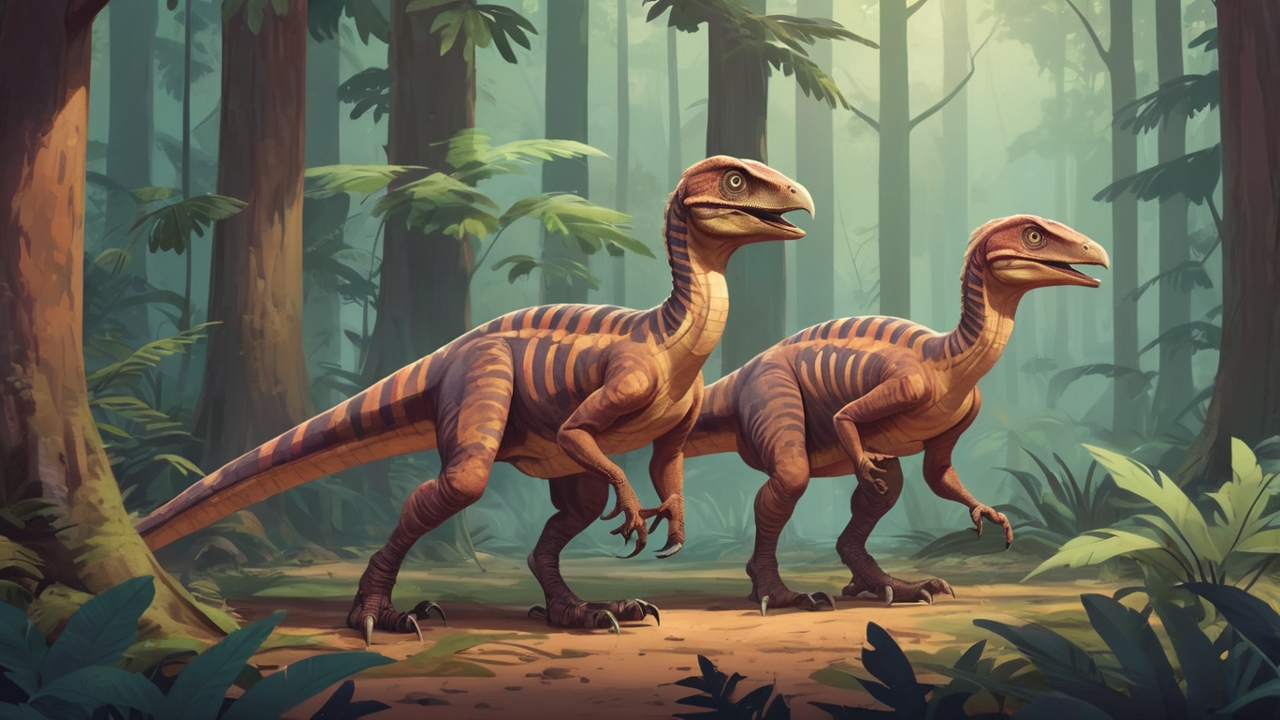
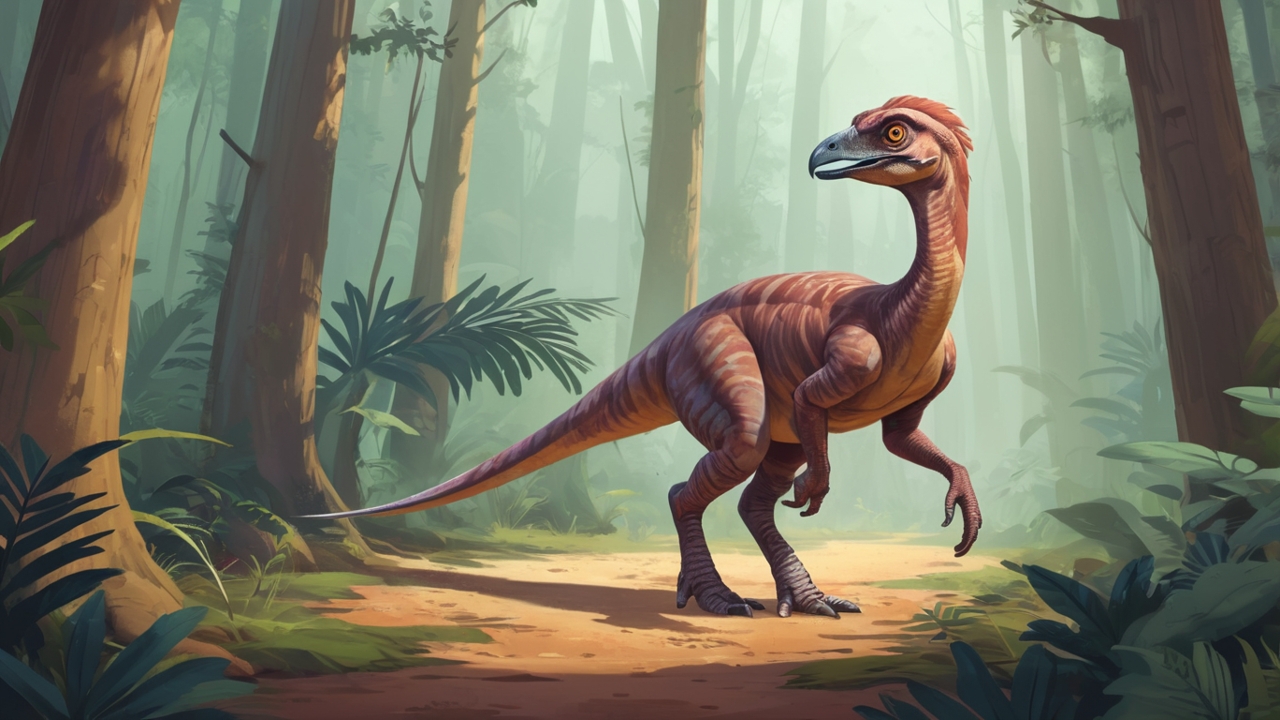
If you could travel back in time and see an Oviraptor in person, you might think you were looking at a very large, flightless bird rather than a dinosaur. Oviraptor had a distinctly bird-like appearance that set it apart from the scaly, lizard-like creatures we often imagine when we think of dinosaurs.
Oviraptor stood about three feet tall at the hip and measured approximately six to eight feet in length from nose to tail tip – roughly the size of a large dog or a modern emu. Unlike the massive predatory dinosaurs like Tyrannosaurus rex, Oviraptor was relatively small and lightly built. It had long, powerful legs designed for running, short arms ending in three-fingered hands with sharp, curved claws, and a long tail that helped with balance during quick movements. Its bones were hollow, similar to bird bones, which kept its body weight low and made it more agile.
The most distinctive feature of Oviraptor was its remarkable head crest. This tall, bony structure rose from the top of its skull, giving Oviraptor a profile similar to a modern cassowary or a rooster with an elaborate comb. The crest’s exact shape varied among different Oviraptor specimens and related species – some had tall, blade-like crests, while others had more rounded, helmet-like structures. Scientists aren’t entirely certain what purpose the crest served, but the most likely explanations include display for attracting mates, species recognition, or visual communication with other Oviraptors.
The crest was probably covered in keratin (the same material as your fingernails and bird beaks) and might have been brightly colored. Many modern birds use colourful crests, wattles, and other head decorations to attract mates and signal their health and fitness to potential partners. Oviraptor likely used its crest in similar ways. Some scientists theorise that male Oviraptors had larger, more elaborate crests than females, similar to how male peacocks have more impressive tail feathers than females, though this remains unproven.
Instead of teeth, Oviraptor had a strong, curved beak very similar to a parrot’s or turtle’s beak. This toothless beak was powerful enough to crack hard objects, and the upper jaw contained two small, pointed bony spikes that projected down from the roof of the mouth. These spikes might have helped grip and crack food items. The beak’s strength and design suggest Oviraptor ate foods that required significant crushing or cracking force, though, as we’ll discuss later, scientists still debate exactly what Oviraptor’s diet consisted of.
Perhaps most remarkably, Oviraptor was covered in feathers, not scales. Fossil evidence, including impressions preserved in rock and direct fossil remains, shows that Oviraptor had a coat of feathers covering its body, with longer feathers on its arms and especially its tail. These feathers likely served multiple purposes:
keeping the dinosaur warm, providing visual displays for communication and mating, and possibly helping with balance and steering while running. However, despite having feathers, Oviraptor could not fly. Its arms were far too short and its body too heavy for flight. The feathers were for purposes other than flying, just like modern ostriches, emus, and penguins have feathers but cannot fly.
The long feathers on Oviraptor’s tail might have formed a fan-like display that could be spread or folded, similar to a turkey’s tail or a peacock’s train. During mating season, Oviraptor might have performed elaborate displays, showing off its colourful crest and spreading its tail feathers to impress potential mates. We can imagine these dinosaurs strutting around, calling to each other, and competing for the best nesting sites and partners.
Oviraptor’s overall appearance was strikingly bird-like, much more so than that of typical predatory dinosaurs. While a Velociraptor or Allosaurus appeared reptilian with some bird-like features, Oviraptor resembled a large, flightless bird with some dinosaur-like characteristics. This bird-like appearance makes Oviraptor particularly important for understanding how dinosaurs evolved into modern birds, showing intermediate stages in the transition from traditional dinosaur body plans to the bird body plan we’re familiar with today.
Fact 3: Scientists Aren’t Sure What Oviraptor Ate
One of the ongoing mysteries about Oviraptor is its diet. Despite having studied this dinosaur for nearly a century, palaeontologists still debate what Oviraptor actually ate. The dinosaur’s anatomy provides clues, but those clues point in multiple directions, making the mystery particularly intriguing.
The original theory, based on Oviraptor’s name and the circumstances of its discovery, was that it ate eggs. A diet of eggs would explain several features of Oviraptor’s anatomy. The strong, toothless beak could crack eggshells effectively, similar to how modern egg-eating snakes can consume eggs much larger than their heads.
The two bony spikes in the roof of Oviraptor’s mouth could have been used to pierce eggs or help manipulate them. Even the relatively small size would make sense – an egg specialist wouldn’t need to be large to obtain food. However, we now know that the original fossil was protecting its own eggs, not stealing others, which makes the egg-eating theory less convincing as the primary or only diet.
A second theory suggests Oviraptor ate shellfish and molluscs like clams, snails, and crustaceans. Oviraptor fossils have been found in areas that, during the Cretaceous period, had rivers, lakes, and wetland environments where shellfish would have been abundant. The dinosaur’s powerful beak would be perfect for crushing the hard shells of these creatures, much like modern sea otters use rocks to crack open shellfish.
Many modern birds with similar beak shapes, such as oystercatchers and some parrots, specialise in eating hard-shelled prey. The bony spikes in Oviraptor’s mouth could have helped pry open shells or scrape out the soft meat inside. This theory is appealing because it explains the beak’s strength and design while providing a plausible food source.
A third theory proposes that Oviraptor was primarily herbivorous, eating plants, seeds, nuts, and tough vegetation. The beak’s shape and strength would work well for cracking hard seed pods or tough plant material. Some modern birds with similar beaks, like parrots and macaws, are primarily vegetarian, using their powerful beaks to crack nuts and seeds. Oviraptor might have used its beak to process difficult plant foods that other dinosaurs couldn’t eat, giving it access to a food source with less competition.
The most likely scenario, supported by most modern paleontologists, is that Oviraptor was an omnivore – an opportunistic feeder that ate whatever food was available. Its diet probably included plants, seeds, and nuts supplemented with small animals, insects, shellfish, and occasionally eggs (perhaps its own species’ eggs or those of other dinosaurs when available). This dietary flexibility would have been an advantage in the sometimes harsh and unpredictable environments of Late Cretaceous Mongolia.
Omnivory is common among modern birds, especially those with generalist beak shapes. Crows, for example, eat everything from fruits and seeds to insects, small animals, and carrion. Cassowaries, which Oviraptor resembled, primarily eat fruit but will also consume fungi, insects, and small vertebrates. A flexible, opportunistic diet allows animals to survive when specific food sources become scarce, which would have been valuable in the variable climate and environment where Oviraptor lived.
Fact 4: Oviraptor Was a Fast and Agile Dinosaur
Oviraptor might not have been the largest or most fearsome dinosaur, but it was built for speed and agility. Everything about its anatomy suggests a dinosaur that could run fast, turn quickly, and move with the nimbleness of a modern ground bird.
The most obvious evidence for Oviraptor’s speed is its leg structure. The dinosaur had long, powerful hind legs with proportions very similar to modern fast-running birds like ostriches and emus. The upper leg bones (femurs) were shorter than the lower leg bones (tibias and fibulas), which is a classic indicator of running ability. Animals built for speed have this proportion because longer lower leg bones create a longer stride and more efficient running mechanics. Oviraptor’s legs were muscular, with clear attachment points for powerful leg muscles that would have driven rapid acceleration and sustained running.
Scientists estimate that Oviraptor could run at speeds exceeding 40 miles per hour, comparable to an ostrich (which can reach 45 mph). While not as fast as the speediest dinosaurs like the small theropod Ornithomimus or modern cheetahs, 40 mph is still impressive and would have made Oviraptor one of the fastest dinosaurs in its ecosystem. For comparison, the fastest human sprinters barely exceed 27 mph, and only for very short distances. An Oviraptor could easily outrun any human.
Beyond its legs, Oviraptor’s entire body was designed for agile movement. Its lightweight build, thanks to hollow bones, reduced the energy needed for running and made quick direction changes easier. The long tail, which made up nearly half of the dinosaur’s total length, served as a dynamic counterbalance. When Oviraptor turned sharply while running, it could swing its tail in the opposite direction to maintain balance and avoid falling, similar to how a cheetah uses its tail during high-speed chases.
The dinosaur’s flexible neck allowed rapid head movements, important for tracking prey, watching for predators, or monitoring the environment while running. Strong leg muscles attached to the hip and thigh bones provided the power for explosive acceleration from a standing start. Oviraptor’s centre of gravity was positioned over its hips, creating stability during movement and allowing efficient energy transfer from leg muscles to forward motion.
Speed was crucial for Oviraptor’s survival because it lacked other defences. Unlike Triceratops with its horns and frill, or Ankylosaurus with its armoured body and club tail, Oviraptor had no protective armour, no large size to intimidate predators, and no significant weapons for fighting. Its claws were relatively small and not particularly dangerous. When confronted by predators like Velociraptor or larger tyrannosaurs that shared its environment, Oviraptor’s only option was to run.
Speed also helped Oviraptor hunt and forage. If it chased small mammals, lizards, or insects, agility and acceleration would be essential for catching quick prey. If it needed to reach food sources before competitors, speed provided an advantage. During mating season, faster males might win competitions with rivals or gain access to better nesting sites.
Fact 5: Oviraptor Belongs to a Diverse Family of Dinosaurs
Oviraptor wasn’t alone – it belonged to a diverse family of dinosaurs called oviraptorosaurs. This group included dozens of species that shared similar characteristics but varied considerably in size, appearance, and lifestyle. Understanding this broader family helps us appreciate Oviraptor’s place in dinosaur evolution and biodiversity.
Oviraptorosaurs thrived during the Late Cretaceous period, primarily in Asia (Mongolia and China) but with some species found in North America as well. They all shared certain features: crests or distinctive head structures, toothless beaks, bird-like skeletons with hollow bones, feathers covering their bodies, and similar reproductive behaviours, including brooding their eggs. However, within these shared characteristics, the family showed remarkable diversity.
Citipati is one of Oviraptor’s best-known relatives. Multiple well-preserved Citipati specimens have been found in brooding positions on nests, providing much of the evidence that revised our understanding of oviraptorosaur behaviour. Citipati was similar in size to Oviraptor but had a larger, more elaborate crest. Some Citipati fossils are so well-preserved that scientists can study details of their feathers and nesting behaviours.
Gigantoraptor represents the opposite extreme of the size spectrum. This massive oviraptorosaur grew to about 26 feet long and weighed approximately 2 tons – roughly the size of Tyrannosaurus rex! Despite being enormous, Gigantoraptor retained the characteristic oviraptorosaur features, including a toothless beak and likely had feathers, though an adult Gigantoraptor covered in feathers would have been a bizarre sight. Scientists aren’t sure why Gigantoraptor evolved to such an enormous size, but it demonstrates the range of body sizes possible within this dinosaur family.
Caudipteryx was a smaller, more primitive oviraptorosaur that showed particularly bird-like characteristics. It had long feathers on its short arms and tail that formed clear fan-like structures. These feathers were almost certainly used for display rather than flight, as Caudipteryx was firmly terrestrial. The feather patterns in Caudipteryx fossils have been preserved so well that scientists can study their structure in detail.
Nomingia had a particularly remarkable feature: a pygostyle, a structure formed by several tail vertebrae fusing together. Modern birds have pygostyles to support their tail feathers, and Nomingia’s pygostyle suggests it had a similar arrangement of tail feathers, probably forming a fan that could be displayed or used for balance.
Anzu, discovered in North America, earned the nickname “chicken from hell” due to its size (about 11 feet long), its bird-like appearance, and its discovery in the Hell Creek Formation. Anzu shows that oviraptorosaurs weren’t limited to Asia but had spread to North America by the end of the Cretaceous period.
The diversity within oviraptorosaurs is remarkable. Species ranged from turkey-sized to elephant-sized. Crest shapes varied from tall and blade-like to rounded and helmet-shaped. They occupied various habitats, including arid deserts, river valleys, and forested areas. Their dietary adaptations varied, with different beak shapes suggesting different specialised diets.
This family diversity reveals important information about dinosaur evolution. Oviraptorosaurs represent a successful group that adapted to various ecological niches, demonstrating that dinosaurs were not just giant reptiles but included sophisticated, specialised animals that filled many roles in their ecosystems. The bird-like characteristics shared by all oviraptorosaurs show transitional features between traditional dinosaurs and modern birds, helping scientists understand the evolutionary path from dinosaurs to birds.
New oviraptorosaur species are discovered regularly, especially in fossil-rich areas of China and Mongolia. Each discovery adds details to our understanding of this family’s diversity and evolution. Many species likely remain undiscovered, hidden in rocks waiting for palaeontologists to find them.
Oviraptor Facts Conclusion
Oviraptor stands as one of palaeontology’s most fascinating success stories – a dinosaur that went from vilified egg thief to celebrated caring parent as new evidence revealed the truth. This medium-sized, feathered dinosaur that lived 75 to 71 million years ago in Mongolia demonstrates how scientific understanding evolves when researchers remain open to revising their conclusions based on new discoveries.
With its distinctive head crest, bird-like appearance complete with feathers, powerful toothless beak whose diet remains debated, impressive running speed of over 40 miles per hour, and membership in the diverse oviraptorosaur family, Oviraptor reveals the incredible variety of dinosaur forms and behaviors that existed in the Late Cretaceous period.
The story of Oviraptor teaches us important lessons about jumping to conclusions, the value of questioning assumptions, and how science constantly improves our understanding of the ancient world. As paleontologists continue discovering new fossils in Mongolia and China, we’ll likely learn even more about Oviraptor and its relatives, further enriching our picture of these remarkable dinosaurs that bridge the evolutionary gap between ancient reptiles and modern birds.
We hope you enjoyed learning more things about Oviraptor as much as we loved teaching you about them. Now that you know how majestic these dinosaurs are, you can move on to learn about other dinosaurs like: Swimming Dinosaurs, Stegosaurus, and Flying Dinosaurs.
Why not subscribe to our LearningMole Library for as little as £1.99 per month to access over 3400 fun educational videos.
Maths Circus, an innovative platform we've crafted, presents a captivating realm where children learn mathematics through the exciting theme of a circus. The joy of juggling numbers and solving circus...
Asia Facts for Kids: Asia is the largest continent on Earth, covering around 30% of the world's land and home to about 4.8 billion people. It has 47 United Nations...
Feedback with digital portfolios works best in primary schools when teachers keep comments brief and expect every child to act on them. A voice note of about a minute on...
Singers use their voices as musical instruments to perform songs in theatres, recording studios, choirs and at events. Most of their working day, though, is spent practising, learning music and...








Leave a Reply