Five Ferocious Facts about Viking Warriors: 5 Fun Facts for Kids

Avatar of Shaimaa Olwan
Updated on: Educator Review By: Michelle Connolly

Viking Warriors Facts for Kids: Vikings captured the imagination of children and adults alike long before the TV dramas arrived. The warriors who swept out of Scandinavia from the late 700s onwards left a mark on British history that KS2 pupils still study today, and for good reason. Their raids, settlements, and legends shaped the language, place names, and culture of the British Isles in ways most people never notice.

At LearningMole, we find that Viking history is one of those topics where children arrive with strong preconceptions — usually featuring horned helmets and shaggy fur cloaks — and leave with something far more interesting: the truth. The reality of Viking life combines genuine ferocity with surprising sophistication, and that combination is what makes this topic so powerful for classroom teaching.

This article covers five ferocious facts about Viking warriors that satisfy children’s appetite for drama, and five fun facts that challenge assumptions and reveal a more complete picture. Both sets connect directly to the KS2 History curriculum — specifically the Viking and Anglo-Saxon struggle for England — making them ready-made lesson hooks for Year 4 and Year 5 teachers.

Who Were the Viking Warriors?

Viking warriors came from Scandinavia — the modern countries of Norway, Sweden, and Denmark. They began raiding the British coastline in the late 8th century, most famously attacking the monastery at Lindisfarne off the Northumberland coast in 793 AD. That raid sent shockwaves across Christian Europe and marked the start of what historians call the Viking Age.

They were not simply raiders. Over the following centuries, Vikings traded across vast distances, settled in Iceland, Greenland, and parts of North America, established the city of Dublin, and ruled large parts of England through the Danelaw. Understanding who they actually were — farmers, craftsmen, traders, and warriors — gives KS2 pupils a far richer picture than popular culture provides.

FeatureThe Viking StereotypeThe Historical Reality
HelmetsHorned and decoratedPlain iron with a nose guard
HygieneDirty and unwashedCombs, razors, and ear picks found at dig sites
WeaponsGeneric swords and axesSpecialised bearded axes, and rare Ulfberht steel swords
Women’s rolesStayed at homeSome archaeological evidence points to female warriors
MotivationPure violenceSpecialised bearded axes and rare Ulfberht steel swords

5 Ferocious Facts About Viking Warriors

Viking Warriors

1. Vikings Didn’t Wear Horned Helmets

This is the biggest myth in Viking history, and it’s a brilliant classroom conversation starter. Films and cartoons show Viking warriors with enormous curved horns rising from their helmets, but archaeologists tell us this never happened in battle.

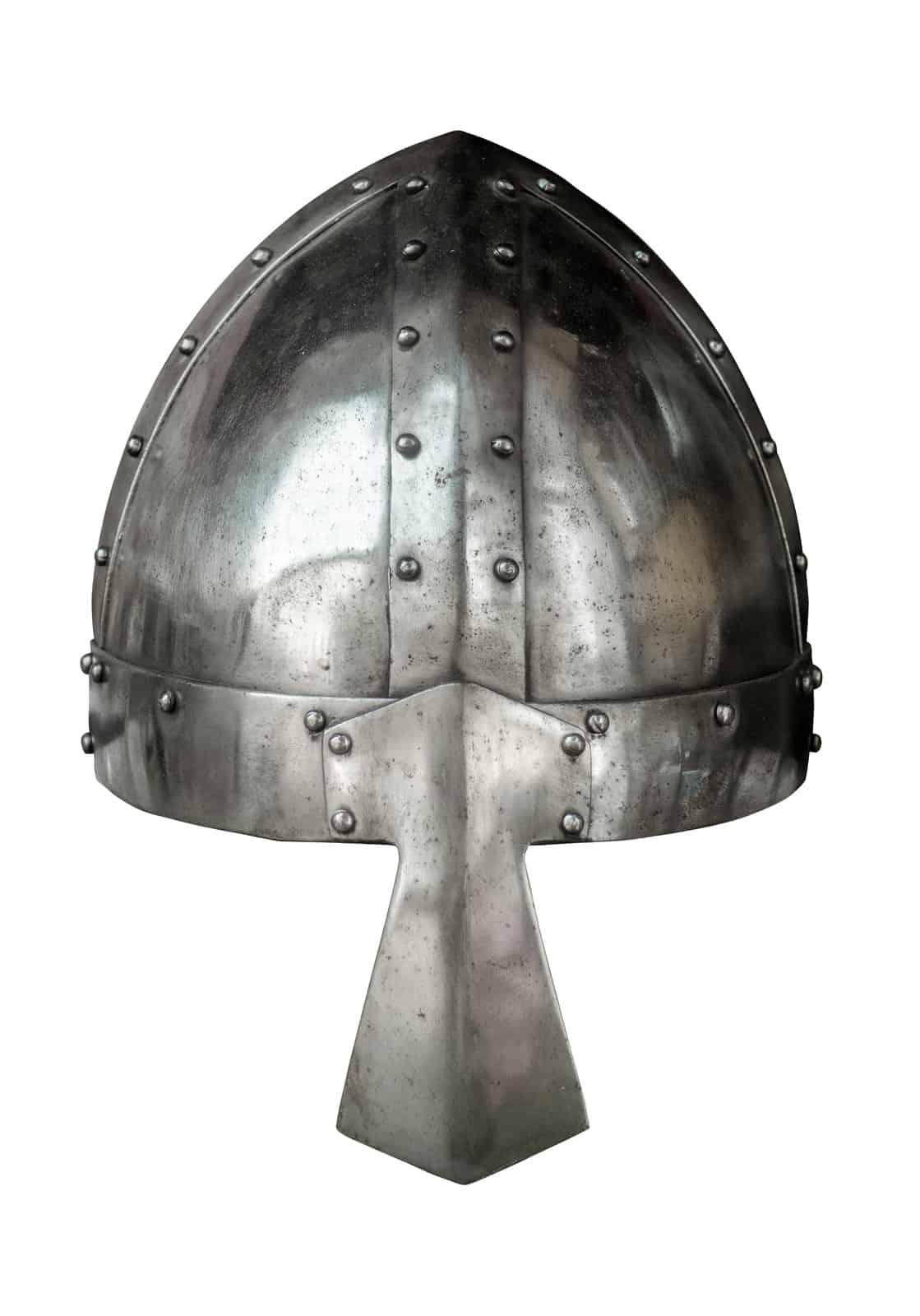
Only one well-preserved Viking helmet has ever been found — discovered at Gjermundbu in Norway — and it has no horns whatsoever. It’s a simple, rounded iron cap with a guard protecting the nose and eyes. Practical, effective, and not remotely Hollywood.

So where did the horns come from? Ceremonial horned headpieces existed in Scandinavia, but these were used in religious rituals, not combat. Animal horns were genuinely valuable resources for Vikings, used to make knife handles, arrowheads, combs, and jewellery. Bolting them onto a helmet — where they’d catch enemy blades and unbalance the wearer — would have been wasteful and dangerous. Some Vikings didn’t wear helmets at all, relying on speed and aggression instead.

Teacher hook: Ask pupils to sketch what they think a Viking helmet looks like before the lesson, then reveal the Gjermundbu helmet image. The gap between expectation and reality makes for a strong lesson opening.

2. The Berserkers: Fighting Like Wild Animals

The word ‘berserk’ comes directly from Old Norse, and it described an elite class of Viking warriors who fought in a state that terrified enemies. Berserkers appeared to feel no pain, howled and bit their shields before battle, and were said to have the strength of bears or wolves.

Historical accounts — including those from the Norse sagas — describe them wearing animal skins and entering a battle trance. Modern historians debate whether this state came from ritual preparation, certain plants, or the psychological effect of extreme adrenaline and group identity. What’s beyond debate is that they were genuinely frightening opponents, and that the reputation of berserkers spread far beyond Scandinavia.

Their name likely comes from the Old Norse words ‘ber’ (bear) and ‘serkr’ (coat) — bear-coated warriors who channelled the animal’s ferocity. This connects well to KS2 discussions about how Viking culture intertwined religion, mythology, and warfare.

3. Deadly Weapons: The Bearded Axe and the Ulfberht Sword

Viking weaponry was more sophisticated than most pupils expect. The ‘bearded axe’ — named for the extended lower blade that resembled a beard — had a hook-shaped lower edge that could catch an enemy’s shield and yank it away, leaving them exposed. It was a practical, clever design used by ordinary warriors who couldn’t afford a sword.

Swords were expensive and high-status. The rarest and most prized were Ulfberht swords, stamped with a runic inscription that may indicate a particular smithing tradition. Archaeologists have found that genuine Ulfberht blades used a steel-making technique that wasn’t supposed to be available in Europe until 800 years later — crucible steel, normally associated with the Middle East. How the Vikings accessed this technology remains an active area of historical research.

4. Shield-Maidens: The Women Who Fought

Recent archaeological evidence has added a genuinely exciting dimension to Viking warrior history. A burial site at Birka in Sweden, long assumed to contain a male warrior based on the weapons and horse found with the body, was analysed using DNA evidence published in 2017. The individual was genetically female.

The Birka warrior was buried with a full set of weapons, two horses, and gaming pieces that suggest a military leadership role. This doesn’t mean all Viking warriors were mixed-gender, but it does suggest that the category of ‘warrior’ in Viking society was not exclusively male. Norse sagas mention shield-maidens, and while saga literature mixes legend with history, the Birka burial provides physical evidence worth taking seriously.

For KS2 teaching, this is a powerful example of how archaeology can overturn assumptions and why historical evidence matters more than tradition.

5. The Lindisfarne Raid: The Moment That Changed Britain

On 8 June 793 AD, a fleet of Viking longships landed at Holy Island off the Northumberland coast and attacked the monastery at Lindisfarne. The monks were killed, enslaved, or scattered. The monastery’s treasures were taken. The scholar Alcuin described it as an unprecedented catastrophe that shattered the sense of safety coastal monasteries had previously enjoyed.

Lindisfarne mattered because it was one of the holiest sites in Christian England. For the KS2 curriculum, Lindisfarne represents the starting point of the Viking Age in Britain and sets up the subsequent decades of raids, settlement, and the eventual formation of the Danelaw. It’s the moment the story begins.

5 Fun Facts About Viking Life

Viking Warriors

1. Vikings Were Cleaner Than the English

Anglo-Saxon chroniclers complained repeatedly that Viking settlers in England were too clean — that they bathed every week (on Saturdays, which is why Saturday is still called ‘lørdag’ in Scandinavian languages, meaning ‘washing day’), combed their hair, and took care of their appearance.

Archaeologists working at Viking settlement sites across Britain and Scandinavia have found combs made from antler and bone, ear-cleaning tools, tweezers, and razors. The National Museum of Scotland holds significant Viking artefacts from the Galloway Hoard — the most important collection of Viking-age objects ever found in the UK — and grooming items are well represented.

2. Hnefatafl: The Viking Board Game Obsession

Vikings didn’t just fight. They were devoted to a board game called Hnefatafl (roughly pronounced ‘nef-ah-tah-fel’), which translates as ‘king’s table.’ The game involved one player defending a king piece in the centre of the board while the other player’s pieces tried to capture it — a tactical game requiring the same strategic thinking as battlefield planning.

Gaming pieces have been found at Viking sites across the UK, including the famous Lewis Chessmen found in Scotland. Board games were a serious leisure pursuit, played by warriors and jarls alike.

3. Day Names: How Vikings Are Still With Us Every Week

Some of the most lasting evidence of Viking culture isn’t in museums — it’s in the English language. Tuesday comes from Tyr, the Norse god of single combat. Wednesday comes from Woden (Odin), the ruler of Asgard. Thursday comes from Thor, the god of thunder. Friday comes from Frigg, Odin’s wife.

Four days of every week still carry the names of Viking gods. For KS2 pupils who feel that history is something distant, this is a genuinely arresting fact: they’ve been saying Viking words every single day of their lives.

4. Vikings Had a God of Skiing

Before skiing became a leisure activity, it was a Viking military skill and a source of genuine joy. Viking warriors from Scandinavia grew up skiing through long, snow-covered winters, and it was both a practical way to travel and a competitive activity. The Norse pantheon even included a god of skiing: Ullr, a deity associated with winter, hunting, and the bow.

5. Valhalla: Why Viking Warriors Didn’t Fear Death

Viking warriors believed that those who died in battle were chosen by Valkyries and taken to Valhalla, Odin’s great feasting hall in Asgard. Described in the Norse sagas as a vast hall with 540 doors, its ceiling made of shields and its rafters of spear shafts, Valhalla was essentially the Norse version of paradise — designed specifically for those who excelled in combat.

This belief had a practical military effect: warriors who genuinely expected to feast in Valhalla after an honourable death were, as a result, less afraid of dying. Understanding this belief system helps KS2 pupils make sense of why Viking warriors fought with such intensity.

Why the Vikings Stayed: From Raiders to Settlers

Viking raids facts

The story of the Vikings in Britain doesn’t end with raids. By the mid-9th century, Viking armies were staying for winters rather than returning to Scandinavia. By 865 AD, the ‘Great Heathen Army’ — a large coalition of Viking forces — launched a full-scale invasion of England and carved out the Danelaw, a substantial region of northern and eastern England under Norse law and rule.

Viking settlers intermarried with Anglo-Saxon communities, farmed the land, established towns (York, or Jorvik, was a major Viking city), and contributed to the cultural and linguistic fabric of England. Thousands of English place names still carry Viking roots: any place ending in ‘-by,’ ‘-thorpe,’ or ‘-thwaite’ was named by Norse settlers.

Viking Place Name EndingMeaningBritish Examples
-byFarm or villageGrimsby, Derby, Whitby
-thorpeSettlementScunthorpe, Mablethorpe
-thwaiteMeadow or clearingBraithwaite, Langthwaite
-wick/-wichBay or inletNorwich, Alnwick
-toftHomesteadLowestoft, Langtoft

Teaching Resources and Support

Viking raids facts

Viking history sits firmly within the KS2 History curriculum, covering the struggle between Vikings and Anglo-Saxons for England and the establishment of the Danelaw. LearningMole’s curriculum-aligned video resources support this unit with visual explanations that bring Viking warrior culture, longship design, Norse mythology, and Viking settlement to life for primary-aged pupils.

“Children engage most deeply with history when they’re genuinely surprised by it. The Viking helmet myth, the cleanliness evidence, the DNA discovery at Birka — these are the facts that make pupils stop and ask questions. That curiosity is where real historical learning begins.” — Michelle Connolly, Founder of LearningMole and former teacher with over 15 years of classroom experience

LearningMole’s free educational videos on Viking history are available on the LearningMole YouTube channel, with resources covering Norse mythology, Viking ships, and the wider history of the British Isles for KS2.

Watch LearningMole’s Viking history and Norse mythology videos

Frequently Asked Questions

Viking Warriors

Did Vikings really wear horned helmets?

No. Only one Viking helmet has been found in good enough condition to study — discovered in Norway at Gjermundbu — and it has no horns. It’s a simple iron cap with a nose guard. Horned helmets do appear in Scandinavian ceremonial objects from earlier periods, but these were used for religious rituals, not battle. Horns would have caught enemy weapons, unbalanced the wearer, and wasted a valuable material that Vikings used to make tools and jewellery.

What was the most ferocious Viking weapon?

It depends on who was fighting. The bearded axe was the most widely used weapon among ordinary warriors: its hooked lower blade could catch an opponent’s shield and drag it away. For wealthier warriors, the Ulfberht sword was the ultimate status symbol — a blade made using steel-working techniques far ahead of their time, possibly acquired through trade routes connecting Scandinavia to the Middle East.

Were there female Viking warriors?

The evidence is genuinely debated, but a 2017 DNA analysis of a warrior burial at Birka in Sweden found that a skeleton surrounded by weapons, gaming pieces, and two horses was genetically female. This doesn’t prove that female warriors were common, but it does suggest that at least some women in Viking society held warrior status. Norse sagas mention shield-maidens, and the Birka burial provides physical evidence worth taking seriously.

Why were some Viking warriors called Berserkers?

Berserkers were an elite group of warriors who fought in an intensely worked-up state, appearing to feel no pain and showing extreme aggression. The word likely comes from Old Norse: ‘ber’ (bear) and ‘serkr’ (coat), suggesting they wore animal skins in battle. Exactly how they achieved this state — ritual preparation, certain plants, or extreme psychological conditioning — remains debated by historians.

Is this content suitable for Year 4 and Year 5 pupils?

Yes. The facts in this article support the KS2 History curriculum unit on the Vikings and the Anglo-Saxon struggle for England, which is typically taught in Years 4 and 5. Both the ferocious and fun facts are written in accessible language for 8-11-year-olds and connect directly to curriculum requirements.

What is the best way to teach this topic in class?

Start with what pupils already believe. Ask them to draw a Viking helmet or describe a Viking warrior before any teaching. The gap between their preconceptions and the historical evidence — no horned helmets, surprisingly clean personal habits, possible female warriors — creates a genuine hook that motivates further enquiry. From there, the Lindisfarne raid gives a clear chronological starting point, and the Danelaw settlement gives the story a second act that moves beyond raiding.

Where can I find Viking primary sources for KS2 research?

The British Museum holds significant Viking artefacts and provides educational resources for schools. The National Museum of Scotland holds the Galloway Hoard — the most important collection of Viking-age objects found in the UK. Lindisfarne Priory in Northumberland (managed by English Heritage) provides a direct connection to the 793 raid. LearningMole’s video resources on Norse mythology and Viking history offer curriculum-aligned visual support for classroom and home use.

How did the Vikings settle in Britain?

After decades of raiding, Viking armies began wintering in Britain rather than returning to Scandinavia. The arrival of the Great Heathen Army in 865 AD was a turning point: this large coalition of Norse forces conquered much of northern and eastern England and established the Danelaw. Viking settlers intermarried with Anglo-Saxon communities and founded or expanded towns, including York (Jorvik). Many English place names ending in ‘-by,’ ‘-thorpe,’ or ‘-thwaite’ are direct evidence of Viking settlement that pupils can spot on local maps today.

Conclusion

Viking Warriors

Vikings were complicated: fierce and sophisticated, violent and artistic, feared and then absorbed into the communities they once raided. That complexity is exactly what makes them such a rewarding topic for primary history teaching.

The five ferocious facts in this article give KS2 pupils the dramatic entry point they need — the reality of Viking combat, the terror of Lindisfarne, the ferocity of the Berserkers. The five fun facts give them the intellectual challenge that good history teaching demands: questioning assumptions, examining evidence, and recognising that the past is rarely as simple as popular culture suggests.

For UK teachers planning KS2 history units on Vikings and the Anglo-Saxon struggle for England, LearningMole’s curriculum-aligned resources provide video-based support for both classroom and home learning. The visual format works particularly well for this topic, where seeing a reconstruction of a longship or a Ulfberht sword makes the history tangible in a way that text alone cannot achieve.

Leave a Reply

Your email address will not be published. Required fields are marked *