Faun Facts for Kids: Have you ever imagined encountering a creature that’s half human and half goat, playing enchanting music on panpipes in a sun-dappled forest? If so, you’ve pictured a faun—one of the most captivating creatures from ancient mythology! These magical beings have fascinated people for thousands of years and continue to appear in books, films, and artwork today.
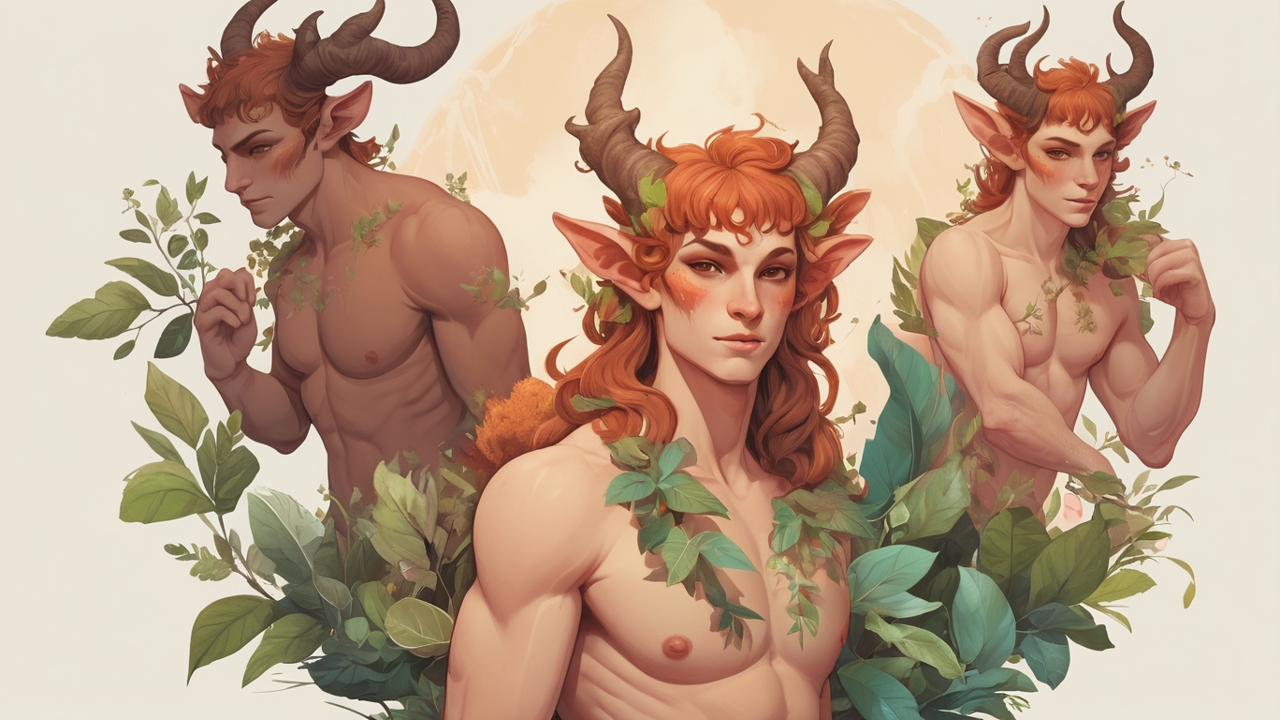
Fauns come from Roman mythology, where they were known as nature spirits who lived in forests, mountains, and the wild countryside. With the upper body of a human and the legs, hooves, and sometimes horns of a goat, fauns represent the connection between humanity and the natural world. They embody the untamed, playful, and sometimes mischievous spirit of nature itself.
Unlike many mythological creatures that were feared as dangerous monsters, fauns were generally seen as more playful than threatening. They spent their days dancing through woodlands, playing beautiful music, and looking after the forests and fields. Though they could be cheeky tricksters who enjoyed surprising unsuspecting travellers, they weren’t typically cruel or evil. Instead, they represented the wild, unpredictable side of nature—sometimes helpful, sometimes troublesome, but always fascinating.
The stories of fauns have travelled through time, inspiring countless artists, writers, and filmmakers. Perhaps you’ve encountered fauns in C.S. Lewis’s “The Chronicles of Narnia,” where the faun Mr Tumnus becomes one of the most beloved characters in children’s literature. Or maybe you’ve seen them depicted in classical paintings, where they’re often shown playing instruments or frolicking in pastoral scenes.
Understanding fauns helps us explore how ancient civilisations thought about nature, wildness, and the mysterious forces that seemed to inhabit forests and countryside. These creatures weren’t just entertainment—they represented important ideas about humanity’s relationship with the natural world. Let’s discover five fascinating facts about these remarkable mythological beings and explore why they’ve captured imaginations for over two thousand years!
Fact 1: Fauns Are Different from Satyrs (Though People Often Mix Them Up!)
One of the most important and fascinating facts about fauns is that they’re actually distinct from satyrs, even though many people use the names interchangeably. This confusion has existed for centuries, but understanding the differences helps us appreciate each creature’s unique place in mythology.
Roman Fauns vs Greek Satyrs
Fauns originate from Roman mythology. The word “faun” comes from Faunus, the Roman god of the forest, fields, and shepherds. Faunus was a bit like the god Pan from Greek mythology, and his followers—the fauns—were nature spirits who served him. Romans believed these creatures inhabited the countryside, protecting flocks of sheep and goats whilst playing music and dancing through the woods.
Satyrs, on the other hand, come from Greek mythology. They were companions of Dionysus, the Greek god of wine, revelry, and theatre. The Greeks originally depicted satyrs quite differently from how we imagine fauns today. In the earliest Greek art and stories, satyrs had fully human bodies with only horse-like tails and ears! It wasn’t until later that artists began giving them goat features.
Physical Differences
The most noticeable difference is in their legs. Fauns are always described as having goat legs with hooves, covered in fur. Their upper bodies are human-like, though sometimes quite hairy, and they typically have small horns on their heads. Imagine them as half-human, half-goat, perfectly split down the middle.
Satyrs, particularly in earlier Greek depictions, were more horse-like. They had horses’ tails and ears rather than goat features. However, as Greek and Roman cultures mixed and influenced each other, the depictions became more similar. By late Roman times, people were drawing and describing satyrs with goat legs just like fauns, which is probably where much of the confusion began!
Personality Differences
The character and behaviour of these creatures also differ. Fauns from Roman stories tend to be somewhat gentler spirits connected to pastoral life and shepherding. They were protectors of the countryside, helpful to farmers and shepherds, though they could certainly be mischievous. Romans told stories of fauns leading travellers astray in forests or causing sudden, inexplicable panic, which is where we get the word “panic” from the god Pan, who was closely related to Faunus.
Satyrs, meanwhile, were known for being more rowdy and pleasure-seeking. As followers of Dionysus, they were associated with wine, music, dancing, and wild celebrations. Greek pottery often shows them at parties, playing instruments, and generally having a raucous time. They were more likely to be drunk and disorderly than the relatively calmer fauns!
Why the Confusion?
You might wonder why these two different creatures became so mixed up in people’s minds. The answer lies in how cultures blend and borrow from each other. When Romans encountered Greek mythology, they saw similarities between their fauns and the Greek satyrs. Both were half-human nature spirits, both played music, and both lived in wild places. Over centuries, artists and writers began treating them as essentially the same creature, using the names interchangeably.
Today, in most modern books and films, the distinction has largely disappeared. When you see a creature with goat legs and horns, it might be called a faun (like Mr Tumnus in Narnia) or a satyr (like Grover in the Percy Jackson series), but they’re usually depicted quite similarly. However, knowing the original differences gives you a deeper appreciation of classical mythology!
Fact 2: Fauns Were Closely Connected to the God Faunus and the God Pan
Understanding fauns means understanding the gods they served, particularly Faunus and Pan. These connections reveal fascinating insights into what fauns represented to ancient people.
Faunus: The Roman God
Faunus was one of the oldest gods in Roman religion, worshipped long before Rome became a mighty empire. He was the god of the forest, plains, and fields—essentially, all the wild places outside human civilisation. Romans believed Faunus protected shepherds and their flocks, ensured the fertility of fields and animals, and could predict the future through dreams and omens.
The fauns were considered Faunus’s children, spirits, or servants, depending on which story you read. They carried out his work throughout the countryside, watching over nature and sometimes interacting with humans. When Romans heard mysterious sounds in the forest—rustling leaves, snapping twigs, strange calls—they might attribute these to fauns moving through the woods.
Faunus had a festival called the Lupercalia, celebrated every February. During this ancient celebration, priests would dress in goatskins and run through the streets of Rome. Young women who wanted to have children would line the route, hoping to be touched by the priests as they passed, as this was believed to bring fertility. This festival shows how deeply connected Faunus and his fauns were to ideas of fertility, nature, and the life force itself.
Pan: The Greek Equivalent
When Romans encountered Greek culture, they recognised that Faunus was very similar to the Greek god Pan. Pan was also a god of the wild, shepherds, and rustic music. He was typically depicted with the legs and horns of a goat and the upper body of a human—essentially looking like a faun himself!
Pan was famous for several things. He invented the panpipes (also called Pan flutes), which were made from reeds of different lengths bound together. According to Greek myth, Pan fell in love with a nymph named Syrinx, but she transformed into reeds to escape him. Pan cut the reeds and made them into his famous instrument, which he played beautifully. This is why fauns are so often depicted playing panpipes—they inherited this musical tradition from Pan.
Pan was also known for causing “panic.” The word comes directly from his name! Ancient Greeks believed that Pan could let out a terrifying shout that would strike sudden, unreasoning fear into anyone who heard it. Shepherds who heard strange noises in lonely mountain passes attributed them to Pan, and the fear they felt became known as “panic.”
The Wild God
What makes both Faunus and Pan (and by extension, fauns) so fascinating is what they represented. These weren’t gods of civilisation, order, or cities. They were gods of wildness, instinct, and nature. They lived outside the boundaries of human society, in places where civilisation’s rules didn’t apply.
Fauns, as servants and embodiments of these gods, carried the same associations. They represented the part of the world—and the part of ourselves—that remains untamed. They reminded ancient people that beyond the safety of cities and farms lay wild places full of mystery, beauty, and perhaps a touch of danger.
Prophetic Powers
Interestingly, both Faunus and Pan were associated with prophecy and divination. Romans believed that Faunus could speak to people in their dreams, offering warnings or predictions about the future. Fauns, too, were sometimes credited with prophetic knowledge. This connects them to the mysterious, unknowable aspects of nature—the sense that the natural world holds secrets and wisdom beyond human understanding.
Fact 3: Fauns Were Master Musicians and Dancers
Perhaps the most delightful fact about fauns is their extraordinary musical talent. Throughout mythology, art, and literature, fauns are almost always depicted with musical instruments, and their music is described as enchanting, beautiful, and sometimes even magical.
The Panpipes
The instrument most associated with fauns is the panpipes, also called the syrinx. This ancient instrument consists of several hollow reeds or tubes of different lengths, bound together side by side. By blowing across the open tops of the tubes, musicians can produce beautiful, flute-like notes. Each tube produces a different pitch, allowing skilled players to create complex melodies.
According to mythology, fauns learned to play panpipes from Pan himself. The instrument became a symbol of pastoral life and the countryside. Shepherds would play panpipes whilst watching their flocks, and fauns were imagined doing the same thing in their wild, forested homes. The sound of panpipes—breathy, gentle, and slightly haunting—perfectly captured the atmosphere of wild nature.
In many stories, fauns’ music had special powers. It could enchant listeners, making them forget their troubles or even fall asleep. Some tales suggested that fauns could use their music to communicate with animals or to make plants grow more abundantly. This magical quality of their music reinforced the idea that fauns were closely connected to the mysterious forces of nature.
Other Instruments
Whilst panpipes were their signature instrument, fauns were depicted playing other instruments too. They often played simple wooden flutes, drums made from hollowed logs or stretched animal hides, and sometimes stringed instruments like lyres. The key was that their instruments were rustic and natural—made from materials found in the forest rather than the refined instruments of civilised society.
Artwork from ancient Rome often shows fauns in musical gatherings, sometimes playing alone in peaceful glades, sometimes performing in groups. They might be shown playing for nymphs (female nature spirits), for other fauns, or simply for their own enjoyment. Music was portrayed as central to their existence, not just entertainment but a fundamental part of how they experienced and expressed their connection to nature.
Dance and Celebration
Fauns weren’t just musicians—they were also enthusiastic dancers. Ancient descriptions and artworks frequently show them dancing through forests, leaping over streams, and generally moving with joy and abandon. Their goat legs made them excellent jumpers and climbers, able to dance across rocky terrain that would challenge humans.
Roman mosaics and frescoes often depict fauns at festivals and celebrations, dancing in circles, playing music, and generally having a wonderful time. These scenes captured the Romans’ imagination because they represented freedom from the constraints and responsibilities of civilised life. For people living in structured, rule-bound society, the image of carefree fauns dancing in forests held powerful appeal.
The Sound of Nature
There’s something deeper to the fauns’ association with music. In ancient times, people living close to nature heard all sorts of mysterious sounds—wind whistling through reeds, birds calling, streams burbling, leaves rustling. These natural sounds could sometimes seem almost musical, as if nature itself were singing.
Fauns represented the idea that these sounds weren’t random but were actually music being played by supernatural beings. When shepherds heard what sounded like distant flute music in the hills, they might imagine fauns playing their panpipes just beyond sight. This belief made the natural world feel more alive, magical, and companionable.
Legacy in Art and Music
The image of the musical faun has inspired countless artists and composers over the centuries. Claude Debussy, a famous French composer, wrote a beautiful orchestral piece called “Prélude à l’après-midi d’un faune” (Prelude to the Afternoon of a Faun) in 1894. This dreamy, atmospheric music tries to capture the lazy, sensual feeling of a faun dozing in a forest on a hot afternoon.
Painters throughout history have loved depicting fauns with their instruments. From ancient Roman frescoes to Renaissance paintings to modern illustrations, the image of a faun playing panpipes in a forest remains enduringly popular. There’s something about this image that speaks to our longing for simpler times and a closer connection to nature.
Fact 4: Fauns Represented the Boundary Between Civilisation and Wilderness
One of the most fascinating aspects of fauns is what they symbolised to ancient Romans—these creatures represented the border between the ordered world of human civilisation and the wild, untamed world of nature.
Guardians of Wild Places
Fauns were believed to inhabit the spaces beyond human settlement—dense forests, remote mountains, hidden glades, and lonely countryside. These were places where civilisation’s rules didn’t apply, where humans were visitors rather than masters. Ancient Romans, like most ancient peoples, had a complex relationship with these wild places. They were sources of wood, game, and other resources, but they were also mysterious and potentially dangerous.
Fauns embodied this dual nature of the wilderness. They weren’t hostile to humans necessarily, but they weren’t entirely friendly either. They belonged to the wild and followed its rules rather than human laws. Meeting a faun meant crossing from the safe, known world into territory that operated by different principles.
Stories often told of travellers encountering fauns at the edges of forests or in mountain passes—threshold places where civilisation met wilderness. These encounters might be benign or might lead to confusion and being led astray. Either way, they served as reminders that beyond human control lay forces that demanded respect.
Half Human, Half Animal
The physical form of fauns—half human, half goat—perfectly symbolised their role as boundary creatures. They weren’t fully human, lacking complete reason and civilisation. They weren’t fully animal either, possessing intelligence and culture of their own. They existed in between, belonging fully to neither category.
This in-between nature made fauns useful symbols for exploring questions about human identity. What separates humans from animals? How much of ourselves is rational and civilised, and how much is instinctive and wild? Fauns suggested that these categories aren’t as separate as we might think—that wildness and civilisation, animal nature and human reason, exist side by side within all of us.
Ancient philosophers and writers sometimes used fauns in their works to explore these themes. The faun could represent the untamed aspects of human nature—our impulses, desires, and instincts that civilisation tries to control and order.
Protectors of Natural Spaces
Despite their wild nature, fauns weren’t depicted as destructive. Instead, they were guardians of natural spaces, protectors of flocks, and helpers of growth and fertility. This suggested that wildness itself wasn’t evil or dangerous but simply different from civilisation—operating by its own logic and deserving of respect.
Romans who encountered a sacred grove or an especially beautiful natural spot might imagine fauns dwelt there. This belief encouraged respect for these spaces. Cutting down a sacred grove or polluting a spring where fauns lived could bring bad luck or divine punishment. In this way, belief in fauns helped protect certain natural areas from destruction.
Shepherds, who spent their time in wild places with their flocks, considered fauns their particular patrons. They would make small offerings to fauns—milk, cheese, or wine—in exchange for the fauns’ protection. This created a kind of relationship between humans and the wild, mediated through these mythological beings.
The Call of the Wild
Fauns also represented the temptation to abandon civilisation altogether. In some stories, humans who spent too much time with fauns began to become more like them—more carefree, less bound by social rules, more attuned to nature. There was a cautionary element to these tales, warning that one could lose oneself in wildness and forget the responsibilities of civilised life.
Yet there was also appeal in this idea. Roman city-dwellers, bound by laws, duties, and social expectations, might dream of the freedom fauns represented. Art depicting fauns in their forest homes offered a fantasy of escape—a world without obligations, where one could simply play music, dance, and enjoy nature’s pleasures.
Modern Interpretations
Today, we might interpret fauns’ symbolic role differently. In our time, when wilderness is threatened rather than threatening, fauns could represent what we stand to lose if we don’t preserve natural spaces. They remind us of the value of wildness, spontaneity, and connection to nature in an increasingly controlled and technological world.
Fact 5: Fauns Continue to Captivate Modern Imagination
Perhaps the most fascinating fact about fauns is how they’ve remained relevant and beloved for over two thousand years, continuing to appear in literature, films, and art right up to the present day.
Literary Fauns
One of the most famous fauns in modern literature is Mr Tumnus from C.S. Lewis’s “The Lion, the Witch and the Wardrobe,” published in 1950. When Lucy Pevensie first enters Narnia through the wardrobe, Mr Tumnus is the first creature she meets. With his red scarf, umbrella, and parcels, he’s a thoroughly civilised faun—yet he still lives in a cave and plays traditional faun’s music on his flute.
Mr Tumnus is kind, gentle, and ultimately heroic, helping the Pevensie children despite the danger to himself. His character helped introduce millions of children to fauns and showed them in a positive, sympathetic light. Many people’s first image of a faun comes from descriptions or illustrations of Mr Tumnus.
Other authors have featured fauns in their works, too. The Percy Jackson series includes satyrs (though depicted similarly to fauns), Rick Riordan’s “Magnus Chase” series features various nature spirits, and numerous fantasy authors have included faun-like creatures in their invented worlds.
Fauns in Film and Television
The 2006 film “Pan’s Labyrinth” (though the English title says “Pan,” the Spanish title actually says “Faun”) features a mysterious faun as a central character. This faun is much more ambiguous than Mr Tumnus—ancient, strange, and difficult to fully trust. The film uses the faun to explore themes of fantasy, reality, and the power of belief.
The film adaptations of “The Chronicles of Narnia” brought Mr Tumnus to life with impressive special effects, introducing fauns to a new generation of viewers. Television series like “Merlin” and various fantasy shows have featured faun-like creatures, keeping them present in popular culture.
Fauns in Art
Artists have never stopped being fascinated by fauns. Classical sculptures of fauns can be found in museums worldwide, and modern artists continue to create new interpretations. The image of a faun—particularly a young faun or child-faun—playing panpipes in a garden has become a popular subject for garden statuary.
Fantasy artists who illustrate book covers, create concept art for games, or simply paint for their own enjoyment frequently include fauns. The blend of human and animal features provides endless creative possibilities, and the association with nature, music, and magic makes fauns perfect subjects for fantasy art.
Fauns in Games and Popular Culture
Video games, card games, and role-playing games often include fauns or faun-like creatures. In “Dungeons & Dragons” and similar games, satyrs (depicted as essentially identical to fauns) are a playable race. The “World of Warcraft” video game features the Draenei race, which, whilst not called fauns, shares many visual characteristics with them.
The continuing presence of fauns in games and popular culture means that even people who’ve never studied classical mythology are likely to encounter these creatures and learn something about their characteristics.
Why Do Fauns Endure?
What is it about fauns that keeps them relevant after more than two millennia? Several factors seem important. First, their appearance is memorable and distinctive—the combination of human and goat features creates a striking visual that artists love to depict and audiences love to see.
Second, fauns represent ideas that remain meaningful. In our busy, technological modern world, the faun’s association with nature, music, freedom, and wildness speaks to our longing for simpler, more natural lives. They remind us of what we might be losing as we spend more time indoors, staring at screens, disconnected from the natural world.
Third, fauns are versatile characters. They can be friendly (like Mr Tumnus) or mysterious (like the faun in “Pan’s Labyrinth”). They can be comic relief or serious magical beings. They can fit into children’s stories or mature fantasy. This flexibility means writers and artists can adapt fauns to suit whatever story they’re telling.
Finally, fauns connect us to the past. When we read about fauns, see them in films, or encounter their images in art, we’re connecting to the same mythological traditions that fascinated ancient Romans. There’s something satisfying about this continuity, this thread stretching from the ancient world to our own.
The Enduring Magic of Fauns
Fauns are truly fascinating creatures! They’re distinct from satyrs despite often being confused with them, they served the ancient gods Faunus and Pan, they were masterful musicians and dancers who played enchanting melodies on their panpipes, they represented the boundary between civilisation and wilderness, and they continue to capture imaginations in modern books, films, and art.
These half-human, half-goat beings have survived in our collective imagination because they represent something important—our connection to nature, the wildness within ourselves, and the magic of the natural world. In a time when many of us spend most of our lives indoors, surrounded by technology and concrete, the image of a faun playing music in a sun-dappled forest glade reminds us of what’s been lost and what we might reclaim.
Next time you’re walking through a wood and hear mysterious rustling or what might almost be music on the wind, let yourself imagine for a moment that perhaps a faun is nearby, playing its panpipes just beyond sight. Whether fauns ever truly existed or were always purely mythological doesn’t really matter—they exist in our stories, our art, and our imaginations, and that’s a kind of magic all its own!
We hope you enjoyed learning more things about fauns as much as we loved teaching you about them. Now that you know how majestic these mythical creatures are, you can move on to learn about other ones like: Elves, Unicorns, Mermaids, and Pegasus.
Why not subscribe to our LearningMole Library for as little as £1.99 per month to access over 3400 fun educational videos.
Maths Circus, an innovative platform we've crafted, presents a captivating realm where children learn mathematics through the exciting theme of a circus. The joy of juggling numbers and solving circus...
Feedback with digital portfolios works best in primary schools when teachers keep comments brief and expect every child to act on them. A voice note of about a minute on...
Singers use their voices as musical instruments to perform songs in theatres, recording studios, choirs and at events. Most of their working day, though, is spent practising, learning music and...
Article summary What this article covers: How primary teachers can use online assessment tools such as live quizzes, polling, digital exit tickets and digital portfolios to check understanding, give faster...







Leave a Reply