Farms are some of the most important places on Earth, and some of the most surprising. From fields of wheat stretching across the English countryside to robotic milking stations and crops grown under LED lights without a single patch of soil, modern farming is packed with discoveries that connect directly to what children study in KS1 and KS2 Geography and Science.
Whether you are a parent looking for a rich homework resource or a teacher planning a topic on food, land use, or the environment, this guide brings farming to life in a way that goes far beyond the textbook.
LearningMole has been helping UK families explore curriculum topics through engaging, curriculum-aligned content for years. This article maps every farming fact to the UK National Curriculum so that teachers and parents can use it with confidence, knowing it supports learning goals rather than simply filling time. You will find explanations of the three main types of farming in the UK, a look at how technology is reshaping agriculture, and a clear answer to one of the most-asked classroom questions: what was the very first animal humans ever farmed?
By the end of this guide, children will understand not just what a farm is, but why farming matters — for food, for wildlife, for the climate, and for the future. Each fact has been chosen to spark curiosity, support classroom discussion, and connect the food on every family’s table back to the land, the seasons, and the people who tend them.
What Is a Farm? (More Than Just Fields!)
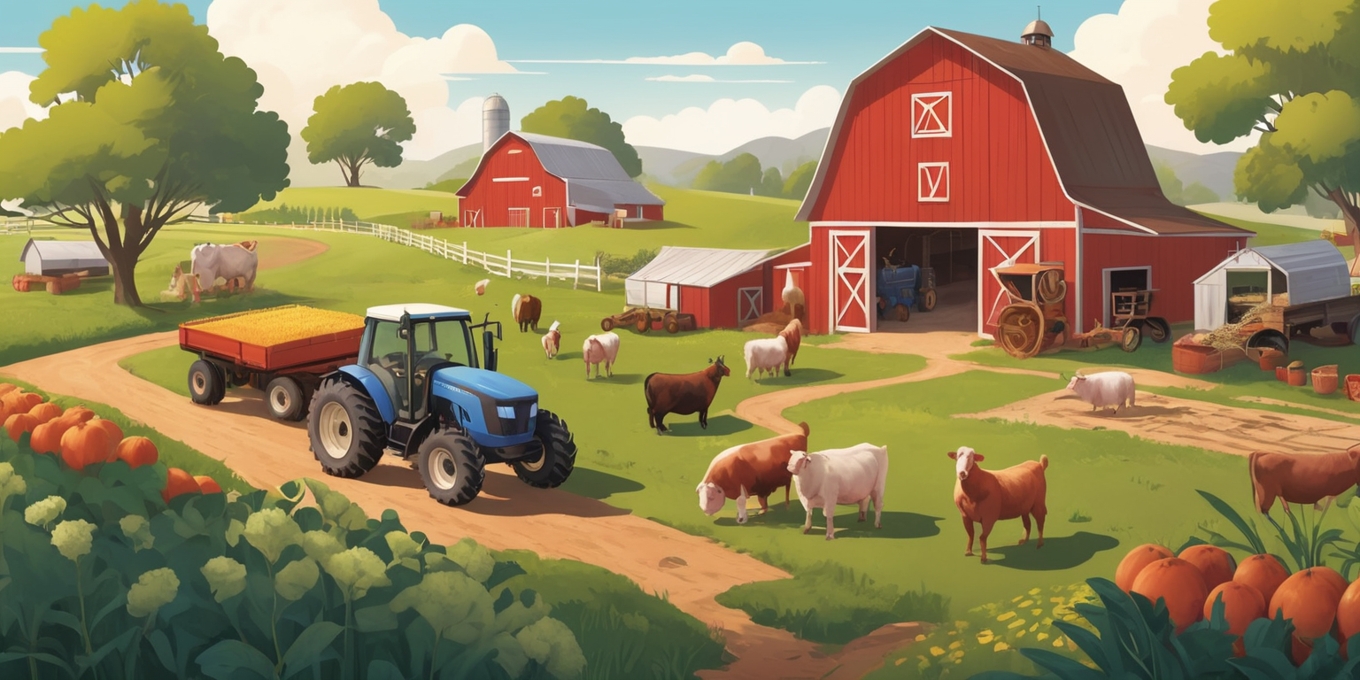
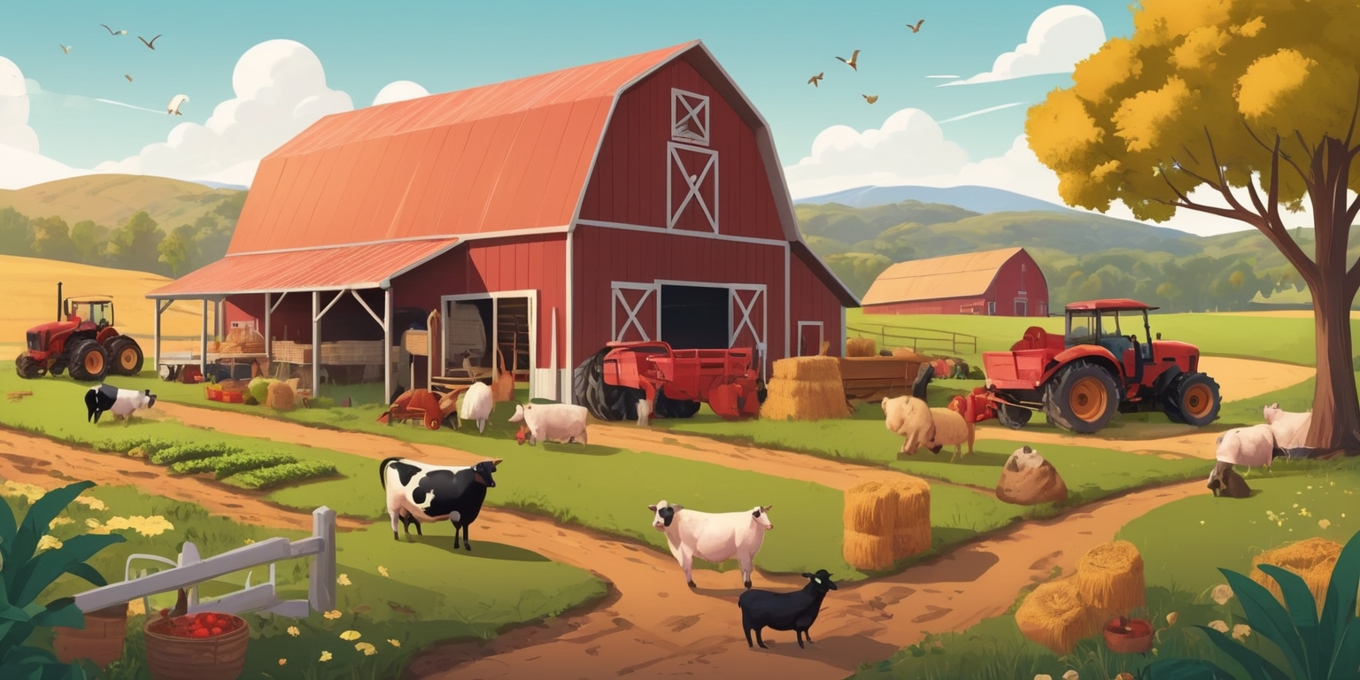
A farm is an area of land, known formally as an agricultural holding, managed to produce food, fibre, fuel, or other commodities. There are approximately 570 million farms worldwide, ranging from small family plots to vast commercial operations covering millions of acres. Farms may be owned and operated by a single family, a company, or a community, and they take many forms: arable farms growing cereals and vegetables, livestock farms raising cattle and sheep, dairy farms producing milk, and poultry farms raising chickens and turkeys for eggs and meat.
Agriculture is the primary source of the world’s food supply and plays a central role in KS2 Human and Physical Geography, covering topics such as land use, food production, and environmental stewardship. Understanding what a farm is and how farming works gives children a foundation for almost every geography and science topic that follows throughout primary school.
Fact 1: The Origins of Farming — What Was the First Animal to Be Farmed?
The very first animals to be domesticated for farming were goats and sheep, in the Near East (modern-day Iran and Turkey) approximately 10,000 years ago. This was shortly after humans first began cultivating wheat and barley in the same region, marking the birth of agriculture as we know it. Before this period, all human communities survived through hunting and gathering — moving constantly in search of food rather than producing it.
This transition, known as the Neolithic Revolution, is one of the most significant events in human history. By domesticating animals and growing crops, early farmers were able to settle in one place, build communities, and produce surplus food, the foundation on which all later civilisations were built.
KS2 curriculum link: History and Geography — early civilisations and the origins of settled communities.
Fact 2: Arable, Livestock, or Mixed? The 3 Main Types of UK Farming
Understanding the difference between the three main types of farming is a core requirement of KS2 Geography. Here is a clear comparison:
Type of Farming
What It Produces
Typical UK Location
Key Equipment
Arable
Crops — wheat, barley, oilseed rape, sugar beet
Eastern England (flat, fertile land)
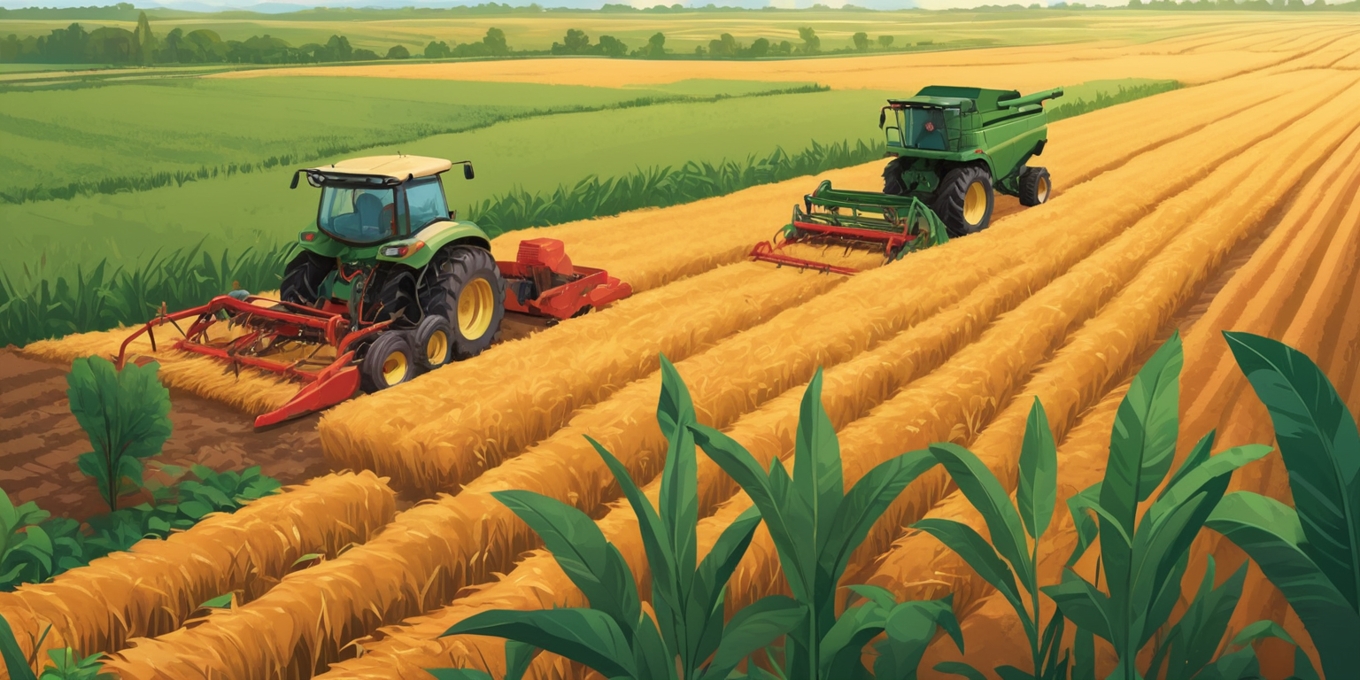
Combine harvester, seed drill, field cultivator
Livestock
Beef, lamb, wool, milk
Western and northern uplands (wetter, hillier)
Feed machinery, fencing, animal housing
Mixed
Both crops and animals
Across the UK
Feed machinery, fencing, and animal housing
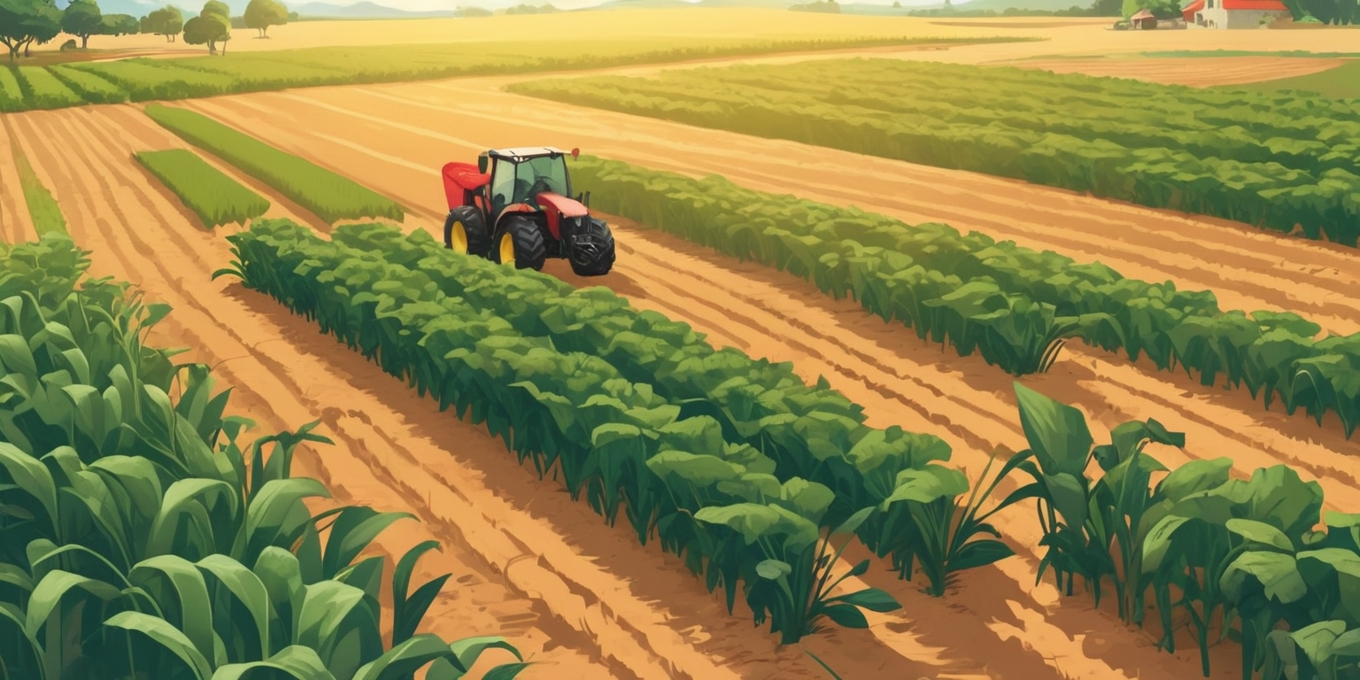
Arable farming thrives on flat, deep, fertile soil where machinery can move efficiently. In the UK, counties such as Lincolnshire, Norfolk, and Cambridgeshire are strongholds for arable production. Pastoral farming, or livestock farming, is better suited to steeper slopes and wetter climates, which is why Wales, Cumbria, and the Scottish Highlands are associated with sheep and cattle. Mixed farming combines both, allowing farmers to rotate crops and animals to improve soil health naturally.
KS2 curriculum link: Geography — Human geography: types of settlement and land use, including farming, trade links, and the distribution of natural resources.
Fact 3: High-Tech Harvesters — Robots and Drones on the Farm
Modern UK farms look nothing like the farms in storybooks. Today, farmers use drones to fly over fields and capture high-resolution images, allowing them to spot diseased patches, measure crop height, and plan precise applications of fertiliser, all without walking a single row. Some drones can spray pesticides or herbicides directly onto affected areas, reducing the total amount of chemicals used across the whole field.
On the ground, autonomous tractors fitted with GPS guidance can plough, plant, and harvest with millimetre accuracy, working day and night without a driver. Robotic arms have been developed to pick strawberries and tomatoes, crops that have traditionally needed large numbers of seasonal workers, using cameras and AI to identify ripe fruit and harvest it without bruising.
This AgTech revolution is not just impressive; it is a response to real pressures: labour shortages, the need to reduce chemical use, and the challenge of producing more food on the same amount of land as the population grows.
KS2 curriculum link: Science and Computing — how technology supports sustainable food production.
Fact 4: Soil Is a Superpower
Soil looks simple — but a single teaspoon of healthy farmland soil contains more living organisms than there are people on Earth. Soil is not merely dirt: it is a living ecosystem of bacteria, fungi, insects, and worms, all working together to break down organic matter, release nutrients, and hold water. When this ecosystem is healthy, crops grow stronger and need fewer chemical inputs.
Soil also plays a vital role in the climate. Healthy agricultural soil stores carbon — pulling carbon dioxide out of the atmosphere and locking it underground. Across the UK, there is growing interest in farming practices that build soil carbon, such as cover cropping (planting a crop after harvest to protect the soil over winter) and reduced tillage (ploughing less to disturb the soil ecosystem as little as possible).
Farmers who manage their soil well are not just growing food — they are acting as carbon custodians for the land they tend.
KS1/KS2 curriculum link: Science — Plants and living things in their environment.
Fact 5: Vertical Farming — Growing Food Upwards
One of the most extraordinary farming innovations of recent decades is vertical farming: growing crops in stacked trays inside warehouse-like buildings, lit entirely by LED lights and watered by a fine mist of nutrients. No soil is needed. No rain is needed. The crops grow up to three times faster than in a traditional field, and the system uses up to 95% less water because every drop is recycled.
The UK is home to several commercial vertical farms, producing salad leaves, herbs, and microgreens for supermarkets. Because these farms can be built anywhere, including in city centres, they dramatically reduce food miles (the distance food travels from farm to plate). The main challenge is energy: running high-powered LED lights around the clock requires substantial electricity, which is why many vertical farms are now powered by renewable energy sources, such as solar and wind.
KS2 curriculum link: Geography — Environmental regions and food security; Science — how plants grow in different conditions.
Fact 6: The Farm-to-Fork Journey — Food Miles Matter
Every item of food travels a journey before it reaches your plate. This is the farm-to-fork chain: the sequence of steps from planting or rearing, through harvesting, processing, packaging, transporting, and finally arriving in a shop or on a table. The distance food travels during this journey, measured in food miles, has a direct impact on the environment, because transport (by lorry, ship, or plane) produces carbon dioxide emissions.
Choosing food grown locally, such as British apples in autumn rather than imported ones from South Africa, reduces food miles and supports UK farmers. UK schools increasingly explore this idea as part of sustainability and environmental education.
Classroom activity — The Lunchbox Detective: Ask children to pick three items from their lunchbox and try to work out which came from an arable farm (bread, crisps, fruit) and which came from a livestock or dairy farm (cheese, ham, yoghurt). Then, using the food labels, see how many countries the items have travelled from.
KS2 curriculum link: Geography — Trade links and the distribution of natural resources; environmental impact of food production.
Fact 7: Happy Habitats — Hedgerows and Wildlife Corridors
The UK has lost around 50% of its hedgerows since the 1940s, largely due to the expansion of arable fields to accommodate larger machinery. This matters enormously for biodiversity: a single mature hedgerow can support over 600 insect species, 65 bird species, and 20 mammal species. Many UK farmers are now actively replanting hedgerows as part of government-supported agri-environment schemes.
Hedgerows act as wildlife corridors — strips of habitat that allow animals to move safely between woodlands, fields, and waterways. They also provide shelter for crops from wind damage, reduce soil erosion on slopes, and store carbon. Far from being a boundary to mark the edge of a field, a hedgerow is one of the most productive ecosystems on a farm.
KS1/KS2 curriculum link: Science — Animals and their habitats; Living things and their environment.
Fact 8: Smart Cows — Robotic Milking Stations
Dairy farming has been transformed by robotic milking. In a traditional dairy, cows are herded into a milking parlour twice a day at fixed times. On a farm with a robotic milking station, cows walk to the machine whenever they choose, day or night, and are milked automatically while sensors record each cow’s yield, milk quality, and health data in real time.
This system is better for the cow (lower stress, greater freedom of movement) and for the farmer (no early morning starts), and often produces higher yields because cows milked more frequently produce more milk overall. The data collected by the robots also allows farmers to spot early signs of illness before they become serious problems.
The UK is home to over 1.9 million dairy cows, and robotic milking is now used on hundreds of farms across the country.
Fact 9: Woolly Weather-Proofing — Sheep Facts
Sheep are one of the most versatile farm animals in the UK, and their wool is a remarkable natural material. A single sheep produces between 2 and 30 pounds of wool per year, depending on the breed. Wool is naturally flame-resistant, water- repellent, and biodegradable — properties that synthetic fabrics can replicate only with chemical treatments.
The UK has around 32 million sheep — more sheep than people in many of the countries where they are farmed. Upland breeds such as the Herdwick (native to the Lake District) have evolved thick, coarse fleeces that insulate them even in freezing, wet conditions, while lowland breeds tend to produce finer, softer wool used in clothing. Sheep also provide meat (lamb and mutton) and milk used in specialist cheeses.
KS1 curriculum link: Science — Animals including humans; identifying and naming a variety of common animals.
Fact 10: Farming for the Future — Renewable Energy on Farms
UK farms are increasingly becoming energy producers as well as food producers. Solar panels on barn roofs, wind turbines on hilltop fields, and anaerobic digesters that convert animal waste into biogas, all of these technologies are now common features on progressive farms across Britain.
An anaerobic digester works by breaking down organic material (food waste, slurry, crop residues) in an oxygen-free tank to produce biogas, which can be burned to generate heat and electricity, or refined into biomethane and fed into the national gas grid. The by-product, known as digestate, is a nutrient- rich liquid that can be spread on fields as a natural fertiliser, replacing synthetic alternatives.
As Michelle Connolly, founder of LearningMole, explains: “When we show children that a farm is not just a place that produces food but an ecosystem that can generate clean energy, protect wildlife, and lock carbon into the soil, we give them a genuinely exciting reason to care about the countryside, and a framework for understanding sustainability that they will carry into every future science and geography lesson.”
KS2 curriculum link: Science — Uses of everyday materials; Geography — Environmental regions and the impact of human activity.
How Farming Fits into the UK National Curriculum
Farming is not a single subject in the National Curriculum — it threads through multiple areas across both KS1 and KS2.
In KS1 Geography, children learn to identify land use in the local environment and understand the difference between urban and rural areas. Farms represent one of the clearest examples of rural land use, making them an ideal anchor topic for early geography lessons.
In KS2 Geography, the curriculum requires pupils to describe and understand human geography — including types of settlement, land use, trade links, and the distribution of natural resources. The three main types of farming (arable, livestock, and mixed), the farm-to-fork journey, and the impact of farming on biodiversity all map directly onto these objectives.
In KS1 and KS2 Science, farming connects to plants and how they grow, living things and their habitats, animals including humans, and the uses of everyday materials (wool, wood, fuel). Soil science, water cycles, and food webs all draw on examples from farmland.
LearningMole resources covering these curriculum areas are designed to support teachers in planning cross-curricular topic units that weave geography, science, and literacy together through a farming context.
Teaching Resources and Support
LearningMole offers a growing library of resources to support farming topics at both the KS1 and KS2 levels. The primary geography resources hub includes printable fact files, activity sheets, and lesson-support materials covering land use, food production, and the natural environment — all aligned to the UK National Curriculum and ready to use in the classroom or at home.
For science-linked content, LearningMole’s how plants grow resources support the arable farming and soil health sections of this guide, helping children to connect what they observe in the classroom to what happens on a real farm. LearningMole also provides life cycles content that links naturally to the animal facts in this article.
Families who want to explore farming topics further, including virtual farm visits, animal habitats, and food science, can access over 1,300 educational videos through a LearningMole subscription for as little as £1.99 per month.
Frequently Asked Questions About Farms
What are 5 interesting facts about farming?
Five standout facts: goats and sheep were the first animals farmed, around 10,000 years ago; UK farms now use drones to monitor crops from the air; a teaspoon of healthy soil contains more organisms than there are people on Earth; hedgerows support over 600 insect species; and some farms generate their own electricity from animal waste using anaerobic digesters.
What was the first animal to be farmed?
Goats and sheep were the first animals domesticated for farming, in the Near East (modern-day Iran and Turkey) around 10,000 years ago. This happened shortly after humans began cultivating the first cereal crops, wheat and barley, in the same region.
Why is farming important to the UK?
UK farming provides the foundation for food security, meaning the country can produce a significant proportion of the food it needs rather than relying entirely on imports. Beyond food, farming manages around 70% of the UK’s land area, shaping the countryside, supporting wildlife habitats, and providing employment in rural communities. Agriculture also contributes to the wider economy through exports of products such as whisky, dairy, and red meat.
What are the 3 main types of farming in the UK?
The three main types are arable farming (growing crops such as wheat, barley, and oilseed rape), livestock farming (raising cattle, sheep, and pigs for meat and dairy), and mixed farming (combining both crops and animals on the same holding). The type of farming in any area is largely determined by the climate, soil, and landscape.
How do farms help the environment?
Well-managed farms support biodiversity through hedgerows, wildflower margins, and ponds that provide habitat for insects, birds, and mammals. Healthy farm soils act as carbon sinks, absorbing CO₂ from the atmosphere. Many farms now generate renewable energy through solar panels, wind turbines, and anaerobic digesters, reducing their carbon footprint further.
Is this guide suitable for KS2?
Yes. This article is mapped to KS2 Geography (human geography, land use, food production, environmental impact) and KS2 Science (plants, living things and their habitats, uses of materials). The FAQ and curriculum section above identify specific curriculum links for each fact. It is also accessible for confident KS1 readers with adult support.
Why Farms Matter — Now More Than Ever
Modern UK farmers are far more than food producers. They are land managers, wildlife guardians, energy generators, and carbon custodians, working across some of the most diverse landscapes on Earth to feed a population while protecting the natural systems that make farming possible in the first place. The 10 facts in this guide only scratch the surface of a subject that connects to almost every area of the primary curriculum.
Understanding farming gives children a grounding in where their food comes from, how the land around them is managed, and why the choices people make, from what they eat to how food is grown, have consequences that ripple through ecosystems, economies, and the climate. These are not abstract ideas: they are the geography and science of everyday life.
LearningMole brings these ideas to life through videos, printable resources, and curriculum-linked articles that make complex topics feel accessible and genuinely exciting. Whether you are supporting a child working through a KS2 geography topic on land use, or simply trying to answer the question “where does our food come from?” at the dinner table, this guide, and the wider LearningMole library, give you everything you need to explore farming in depth.
Explore LearningMole’s full range of geography and science resources, or subscribe today from just £1.99 per month to access over 1,300 educational videos and keep the learning going at home.
Maths Circus, an innovative platform we've crafted, presents a captivating realm where children learn mathematics through the exciting theme of a circus. The joy of juggling numbers and solving circus...
Mexican traditions blend the customs of ancient Mesoamerican peoples, such as the Aztecs and the Maya, with Catholic festivals brought by Spanish settlers in the sixteenth century. The result is...
The moose (Alces alces) is the largest member of the deer family alive today, and a fully grown bull can stand about 2 metres tall at the shoulder, which makes...





Leave a Reply