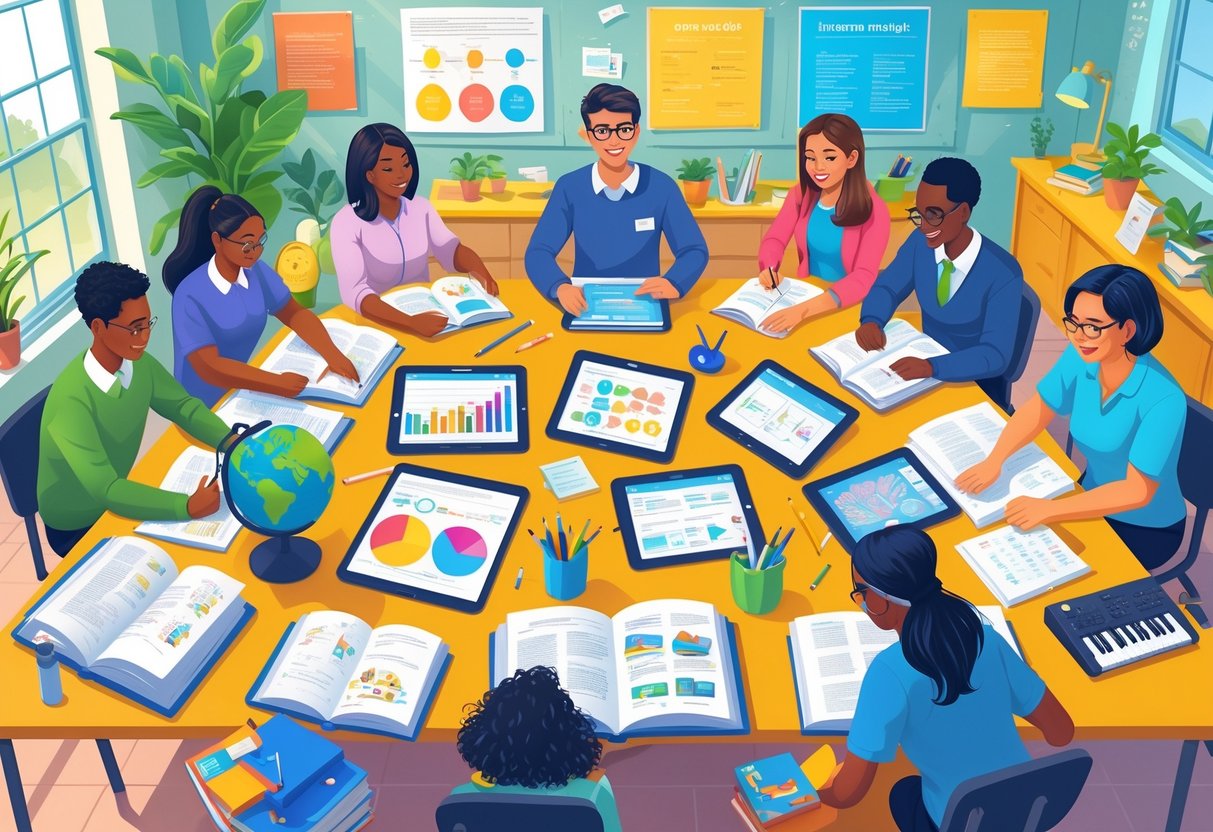
Core educator resources offer structured teaching materials that match essential learning standards and support a variety of classroom needs.
These resources range from ready-made worksheets to detailed lesson plans. They help teachers save preparation time and improve student outcomes.
Types of Resources for Teachers
Teachers can use different resource categories for various classroom needs. Curriculum-aligned materials include worksheets, assessment tools, and trackers that follow national standards.
Digital resources play a major role in many classrooms. Interactive whiteboards, online platforms, and educational apps make lessons more engaging.
Physical resources are still important. Maths manipulatives, science equipment, and classroom displays support hands-on learning. Art supplies, books, and games encourage creativity and independent learning.
Specialised resources meet specific needs. SEN materials include visual supports, communication aids, and adapted worksheets. EAL resources provide bilingual materials and language development tools.
Michelle Connolly, an expert in educational technology, says, “The best resources combine digital innovation with proven teaching methods, creating materials that genuinely enhance learning rather than simply digitising traditional approaches.”
Accessing Free and Paid Resources
Free resources are a great starting point for teachers on a budget. OER Commons offers thousands of open educational materials for all subjects and ages.
Government websites often provide curriculum guidance and assessment materials for free.
Free teaching resources include lesson plans, printables, videos, and interactive games for pre-K through Year 12. Many charities and organisations share high-quality materials created by experienced teachers.
Paid resources give more comprehensive support. Commercial publishers offer full schemes of work, detailed lesson plans, and professional development packages. These often come with regular updates and technical support.
Schools often set aside funds for resource purchases. When choosing paid options, consider cost per use, curriculum fit, and how easily you can adapt the materials.
Subscription models offer ongoing access to resource libraries. These often include updates, seasonal materials, and customisation options.
Resource Curation and Organisation
Start with clear organisation systems for effective resource curation. Create digital folders by subject, year group, and term for easy access during planning.
Use consistent naming conventions that include dates and curriculum objectives.
Assess resource quality to avoid overload. Check materials for curriculum alignment, differentiation options, and student engagement. Remove outdated or ineffective resources to keep your collection useful.
For physical resources, label boxes clearly and group similar items together. Keep inventory lists for expensive materials.
Make resources more valuable by sharing them across teams. Cloud-based folders allow for collaboration and version control.
Team meetings can highlight successful resources and identify gaps.
Digital tools like bookmark managers and resource databases help manage large collections and save planning time.
Lesson Plans for Every Subject
Teachers benefit from comprehensive lesson plans that save time and deliver quality education across all curriculum areas.
The best lesson plans include ready-to-use materials and customisable elements for different year groups and learning needs.
Primary Lesson Plan Collections
Major educational platforms offer extensive databases with hundreds of lesson plans for every grade and subject. These collections save teachers hours by providing structured frameworks ready for classroom use.
Platforms like Lesson Planet provide comprehensive materials, including millions of reviewed lesson plans and worksheets. Teacher ratings help you find effective resources quickly.
Michelle Connolly, an educational technology expert, says, “Quality lesson plans serve as your teaching backbone, providing structure whilst allowing flexibility for individual class needs.”
Most platforms offer keyword searches, grade-level filters, and subject categories. Content is usually organised by curriculum standards, helping teachers align lessons easily.
Secondary Subject-Specific Plans
Subject specialists design targeted lesson plans for older students to meet specific curriculum requirements. Storyboard That offers high school lesson plans with interactive activities and simple preparation.
Mathematics resources include real-world problem-solving scenarios. Science lesson plans feature hands-on experiments and inquiry-based activities.
English and humanities materials help develop critical thinking. You can access poetry analysis frameworks, essay structures, and literature guides.
STEM integration connects concepts across subjects. These interdisciplinary approaches help students see links between topics.
Most secondary lesson plans include built-in assessment tools. Rubrics, peer evaluation sheets, and reflection activities support thorough student evaluation.
Customisable and Thematic Plans
Adaptable lesson frameworks let you adjust content for different ability levels. Scholastic offers printable resources covering monthly themes and diverse cultures.
Seasonal and holiday themes keep students engaged while maintaining high educational standards. You can blend curriculum objectives with celebrations and special events.
Cross-curricular connections are common in thematic plans. History lessons might include geography skills, while science experiments use maths calculations.
Differentiation tools help you adjust lessons for a range of learning needs. You can add extension activities for advanced learners or support materials for those who need extra help.
Digital integration options let you enhance lessons with technology. Interactive whiteboards, tablets, and online tools extend learning beyond textbooks.
Printable Worksheets and Handouts
Free printable worksheets give teachers instant access to curriculum support materials. These handouts save preparation time and engage students across all subjects.
Quality worksheets provide structured practice and support differentiated learning.
Curriculum-Aligned Worksheet Packs
Curriculum-aligned worksheets help your lessons meet national standards and provide consistent practice. Educational worksheet collections cover maths, English, science, and social studies for all year groups.
Michelle Connolly, founder of LearningMole, says, “Well-designed worksheet packs eliminate the guesswork from lesson planning whilst ensuring every child has appropriate practice materials.”
Supplemental practice sheets help fill skill gaps and provide targeted revision. Free educational printables work well for homework and intervention programmes.
These resources reinforce concepts from main lessons. Use them for early finishers, catch-up sessions, or independent study.
Effective supplemental sheets include:
A focus on specific skills
Varied question types
Clear instructions
Visual elements for different learning styles
Organise worksheets by topic and difficulty for quick access. Teacher resource collections often offer pre-organised materials to save time.
Practice sheets also serve as formative assessments. Use short worksheets before main lessons to spot knowledge gaps early.
Creative and Fun Printables
Creative printables turn practice into engaging activities that motivate students. Educational worksheet platforms offer puzzles, games, and interactive elements.
Popular creative formats:
Word searches for vocabulary
Crossword puzzles for key terms
Comic strip templates for writing
Colouring sheets with educational content
Cut-and-paste activities for fine motor skills
These materials work well during transitions or as rewards. Students often enjoy choosing their favourite formats.
Add seasonal educational printables to connect learning to current events or holidays. Students enjoy timely, relevant content.
Creative worksheets also support differentiation. Visual learners benefit from graphic organisers, while kinaesthetic learners enjoy activities that involve movement.
Holiday and Seasonal Activities
Holiday activities turn regular lessons into memorable experiences while keeping academic standards high. Teachers can use festive themes in lesson plans, crafts, and classroom celebrations.
Engaging Holiday-Themed Lessons
Seasonal learning feels more relevant when lessons link to real-world experiences like changing seasons and cultural traditions. Students remember information better and participate more in themed activities.
Cross-curricular integration works well during holidays. You can teach maths with Christmas shopping calculations or explore science with autumn leaves.
Geography lessons can focus on different cultural celebrations.
Michelle Connolly says, “Holiday-themed lessons shouldn’t replace core learning objectives—they should enhance them by providing meaningful contexts that children naturally connect with.”
Quick tips for implementation:
Start with your current lesson plans and add seasonal details
Use holiday lesson plans that mix themes with academic subjects
Create word problems using holiday situations
Add seasonal vocabulary to literacy lessons
Many teachers plan one themed activity per subject during holiday weeks. This keeps curriculum coverage on track while adding festive fun.
Seasonal Craft Ideas
Showcase student creativity with crafts that support learning objectives. Art projects are most effective when they connect to subjects like history, science, or literacy.
Autumn projects can include leaf classification charts or pumpkin measurement activities.
Winter crafts might involve cutting snowflakes for symmetry or making advent calendars with daily challenges.
Spring brings opportunities for growth observations and flower pressing. Summer projects can focus on weather recording or building sundials.
Prepare materials ahead of time to save classroom minutes
Link crafts to curriculum goals
Display finished projects to celebrate achievements
Choose crafts that work for multiple year groups. Simple paper plate activities can be adapted for different ages and abilities.
Classroom Celebration Resources
Structured celebrations help maximise academic growth and seasonal enjoyment through careful planning. You need resources that maintain educational value while creating memorable experiences.
You can access cross-curricular groupings for major holidays that cover UK and international celebrations. These resources help you celebrate holidays educationally and respect classroom diversity.
Rotate celebration responsibilities among year groups to reduce individual teacher workload. This approach maintains school-wide festive spirit.
Digital Tools and Online Platforms
Modern digital tools change how teachers deliver lessons and how students engage with learning materials. Interactive learning apps create dynamic classroom experiences, while educational games make complex concepts simple through play.
Interactive Learning Apps
Interactive learning apps help you create engaging lessons that adapt to each student’s needs. These tools let you build custom activities and track progress in real time.
They provide instant feedback to your pupils.
Popular Interactive Apps for Your Classroom:
• Edpuzzle – Turn any video into an interactive lesson with embedded questions
• Kahoot! – Create live quizzes that get the whole class participating
• Padlet – Build collaborative digital walls where students share ideas
• Nearpod – Deliver interactive presentations with polls and virtual field trips
Michelle Connolly, founder of LearningMole, says, “When choosing interactive apps, look for ones that save you time rather than create extra work.” She adds, “The best tools feel natural to use and genuinely enhance your teaching.”
Free digital learning tools often include templates and pre-made content. You can start using them immediately without spending hours creating materials from scratch.
Most interactive apps work on tablets, laptops, and interactive whiteboards. This flexibility lets you use the same tool in class or for home learning.
The competitive element motivates students without creating pressure. Pupils focus on improving their personal best.
Virtual Resource Libraries
Virtual libraries give you access to thousands of teaching materials without leaving your desk. Digital content sources include lesson plans and multimedia resources for every subject.
Essential Digital Libraries:
• TED-Ed – Educational videos with lesson plans
• ReadWorks – Reading comprehension passages for all levels
• Project Gutenberg – Over 70,000 free ebooks and classic texts
• YouTube Teachers – Curated educational video playlists
• TeacherTube – Video content created by educators
These platforms often include search filters for age groups, subjects, and learning objectives. You can quickly find resources that match your curriculum.
Many virtual libraries offer offline access options. Download materials when you have good internet, then use them during lessons without worrying about connectivity.
Educational platforms review most content before publication. This saves you time evaluating resources and ensures alignment with curriculum standards.
Early Childhood Resource Essentials
Quality resources form the backbone of effective early childhood education. These materials support educators in delivering play-based learning experiences that build foundational skills.
Activity Ideas for Young Learners
Sensory exploration activities lay the foundation for early learning. Water tables with measuring cups, sand bins with hidden treasures, and playdough stations encourage tactile discovery and develop fine motor skills.
Rotate sensory bins weekly with themes like autumn leaves, coloured rice, or textured fabrics. Children naturally gravitate toward hands-on exploration, making these activities ideal for independent learning.
Creative arts activities support emotional expression and cognitive development. Finger painting, collage work, and simple craft projects let children experiment with colours and materials.
Set up art stations with specific goals like colour mixing or pattern creation. Resources for early learning provide lesson plans that combine creativity with skill-building.
Movement-based learning activities help children develop gross motor skills while learning academic concepts. Simple games like number hopscotch, alphabet yoga, or shape dancing make abstract ideas concrete.
Developmental Worksheets
Pre-writing practice sheets support fine motor development before formal writing begins. Tracing activities, maze puzzles, and pattern exercises strengthen the muscles needed for pencil control.
Start with large, simple shapes and progress to more complex patterns. Children should master circles, straight lines, and basic curves before writing letters.
Number recognition worksheets introduce maths concepts with visual and tactile methods. Counting activities with stickers, number matching games, and simple addition using pictures make maths accessible.
Use worksheets that include real-world objects like toys, animals, or food items children can identify. This helps bridge abstract number concepts with real understanding.
Phonics and literacy worksheets build reading skills through letter recognition and sound association. Beginning sound matching, rhyming games, and simple word building prepare children for reading.
Focus on one letter sound per week with varied activities. Early childhood educator resources offer materials that align with best teaching practices.
Play-Based Learning Resources
Building and construction materials encourage spatial reasoning and problem-solving. Blocks, magnetic tiles, and simple engineering challenges develop mathematical thinking during play.
Provide both structured challenges and open-ended building time. Children need time to follow directions and create independently.
Dramatic play resources support language development and social skills through role-playing. Dress-up clothes, play kitchens, and themed prop boxes encourage storytelling and imagination.
Rotate dramatic play themes monthly to maintain interest and introduce new vocabulary. Themes like doctors, shops, or construction sites expand children’s understanding of community roles.
Educational games and puzzles combine learning objectives with engaging play. Simple board games, matching activities, and age-appropriate puzzles develop critical thinking skills and reinforce academic concepts.
Choose games that you can adapt for different skill levels. This flexibility allows mixed-age groups to participate meaningfully in the same activity. Professional development resources help educators select high-quality learning materials for every child’s development.
Classroom Management Resources
Effective classroom management uses structured systems for behaviour tracking, time organisation, and seating arrangements. These resources help create routines that support learning and reduce disruptions.
Behaviour Charts and Rewards
Visual behaviour tracking systems make expectations clear and progress visible. Simple charts work better than complicated point systems.
Traffic light charts offer immediate feedback. Green means excellent behaviour, amber gives a warning, and red requires intervention.
Michelle Connolly, founder of LearningMole, says, “I’ve seen how visual behaviour systems create accountability and build student confidence.”
Reward systems should focus on intrinsic motivation. Try these approaches:
Behaviour reflection sheets help students think about their choices. Ask questions like “What happened?” and “What could you do differently next time?” This builds self-awareness and problem-solving skills.
Visual schedules help students understand daily routines and transitions. Display the timetable with pictures for younger children and clear text for older students.
Timer systems create urgency and structure during activities. Use sand timers, digital displays, or online countdown tools.
Give five-minute and two-minute warnings before transitions.
Transition signals reduce chaos between activities:
Signal Type
Example
Best For
Auditory
Bell, chime, clapping
All ages
Visual
Hand raised, lights dim
Noisy environments
Musical
Short song or tune
Young children
Digital
Countdown timer display
Older students
Morning routines checklists help students start independently. Post clear steps like “Hang up coat, unpack bag, complete morning work, read silently.”
Clean-up systems with designated roles save time. Assign table monitors, floor sweepers, and board cleaners.
Rotate jobs weekly so everyone participates.
Use attention-getting strategies that don’t require shouting. Try “If you can hear my voice, clap once” or simple call-and-response patterns.
Group and Seating Strategies
Flexible seating arrangements support different learning activities and needs. Arrange desks in clusters for group work, rows for independent tasks, or a circle for discussions.
Strategic student placement prevents many behaviour issues. Separate chatty friends, place easily distracted students near your desk, and create mixed-ability partnerships.
Group formation systems ensure fair team selection:
Movement patterns around the classroom should be clear and practiced. Establish one-way traffic flow where possible and keep pathways clear.
Quiet zones help students who need less stimulation. Create reading corners with soft seating and natural lighting away from busy areas.
Collaborative seating works well when students understand expectations. Teach voice levels, turn-taking, and conflict resolution before starting group activities.
Try standing desks or exercise balls for students who need movement. Start with one or two options and expand based on student response.
Assessment and Progress Tracking
Teachers use reliable ways to measure student learning and communicate progress clearly. Quick formative assessments help you adjust lessons in real-time.
Formative assessments provide instant snapshots of student understanding during lessons. Exit tickets work well—ask students to write one thing they learned and a question they still have before leaving class.
Quick polling templates check whole-class comprehension. For example, say, “Show thumbs up if you understand fractions, thumbs down if you need more help.”
This feedback lets you adjust your next lesson.
Popular formative assessment formats include:
Michelle Connolly, founder of LearningMole, says, “The best formative assessments are so natural that children barely notice they’re being assessed.”
Digital platforms now offer formative assessment tools that automatically collect and analyze responses. These tools save marking time and provide instant data about learning gaps.
Data Collection Tools
Progress monitoring sheets help you track individual student performance over time. Create simple templates to record key skills, assessment dates, and achievement levels.
Essential data collection elements:
Tool Type
Best Used For
Time Required
Weekly tracking sheets
Individual skill progression
5 minutes per child
Digital portfolios
Creative subjects and projects
10 minutes setup
Observational checklists
Behaviour and participation
2 minutes per observation
Benchmark assessments
Curriculum standards
30 minutes per term
Observational checklists record learning that tests might miss. Note if students work collaboratively, explain their thinking, or apply skills independently.
Digital learning platforms with built-in analytics streamline data collection. They automatically track quiz scores, completion rates, and time spent on tasks.
Special education progress monitoring needs detailed tracking. Focus on specific IEP goals and use visual progress charts that students can understand.
Reporting and Feedback Resources
Progress reports work best when you combine data with specific examples of student work. Parents want to see what their child can actually do, not just scores.
Create feedback templates that highlight three areas: strengths, next steps, and how parents can help at home.
Effective reporting strategies:
Student-led conferences let children present their own learning journey. Prepare templates to guide students through explaining their progress, challenges, and goals.
Digital dashboards help you share progress data with parents easily. Many platforms allow secure access to real-time information about homework, test scores, and teacher comments.
Peer assessment tools teach students to give constructive feedback and reduce your marking load. Provide clear rubrics and sentence starters to guide student evaluations.
Differentiation and Inclusion
Teachers use practical strategies to support every learner through adaptable resources and targeted approaches. Differentiated resources adjust content, process, and product so all students can access the curriculum and meet their learning needs.
Supporting Diverse Learning Needs
Every student brings unique strengths, challenges, and learning preferences to your classroom. Understanding these differences helps you create an inclusive environment.
Start by gathering learning profiles for each student. Use simple surveys to discover their interests, working styles, and academic strengths.
Some students learn best with visual aids, while others need hands-on activities or verbal explanations.
Visual learners benefit from:
Auditory learners respond well to:
Kinaesthetic learners need:
Michelle Connolly, founder of LearningMole, says, “When you match your materials to students’ learning preferences, engagement increases dramatically.”
Create flexible seating areas in your classroom. Set up quiet corners for independent work, tables for collaboration, and standing desks for students who learn better while moving.
Change groupings regularly based on learning objectives. Sometimes group by ability for targeted support, other times mix abilities for peer learning, and occasionally group by interest for projects.
Adaptable Resource Modifications
Transform your materials to meet different ability levels without creating separate lessons. This approach saves time and ensures every student accesses the same core concepts.
Tiered assignments are practical. Create three versions of activities:
Level
Example: Fraction Activity
Support Provided
Developing
Identify halves in shapes
Visual aids, concrete materials
Expected
Compare equivalent fractions
Diagrams, worked examples
Greater Depth
Solve real-world fraction problems
Open-ended challenges, extensions
Text modifications help all readers access content. Offer:
Assessment adaptations let students show knowledge in different ways:
Use graphic organisers to support planning and thinking. Provide detailed templates for students who need structure and blank ones for independent learners.
Technology tools expand your options. Text-to-speech software supports reading difficulties, and recording apps help students organise thoughts before writing.
Create choice boards with nine activities covering the same objective. Students pick three in a row, giving them choice while meeting learning goals.
Gifted and SEN Strategies
Students with special educational needs and gifted learners need specific strategies.
Twice-exceptional students (gifted with learning difficulties) need dual approaches:
Ongoing formative assessment helps you adjust support levels quickly. Use exit tickets, mini-whiteboards, and observation checklists to monitor progress.
Build emotional safety by teaching all students that fair doesn’t mean equal. Celebrate different achievements and help students understand that everyone gets challenges suited to their needs.
Professional Development for Educators
Modern professional development uses digital learning platforms, collaborative networks, and structured self-reflection. These three pillars help teachers improve their skills and build connections with colleagues.
Online Training Modules
Digital learning platforms have changed how teachers access professional development. You can complete training at your own pace, fitting learning around your schedule.
Free platforms worth exploring:
Michelle Connolly, with experience in educational technology, says online modules work best when teachers can apply new strategies right away.
Key benefits of online modules:
Many platforms offer continuing education credits for licence renewal. Check with your local authority before starting.
Peer Collaboration Networks
Professional learning communities help you develop skills through shared experiences. Discussing challenges with colleagues often brings better solutions.
Effective collaboration formats:
Consider joining networks like Teachers Helping Teachers or Educators Worldwide on Facebook. These communities share resources, answer questions, and provide support.
Benefits of peer networks:
Focus collaboration sessions on specific topics for best results. Try monthly themes like “differentiation strategies” or “behaviour management techniques.”
Reflective Teaching Resources
Structured reflection turns daily teaching experiences into growth opportunities. By examining what works and what needs improvement, you develop stronger teaching practices.
Essential reflection tools:
Professional Learning Board offers courses that guide teachers through reflective practices and help earn credits.
Weekly reflection prompts:
Monthly reflection activities:
Set aside 15-20 minutes weekly for structured self-evaluation using consistent questions or frameworks.
Community and Parental Engagement
Strong partnerships between schools and families create powerful support systems for students. When schools actively engage with parents and communities, students achieve higher grades, better attendance, and increased self-esteem.
Family Learning Activities
Family engagement grows when schools offer meaningful learning experiences at home. The best activities connect to what children learn in school and respect different family needs.
Reading partnerships help children of all ages. Families can set up cosy reading spaces and start daily reading routines.
Younger children benefit from talking about stories. Older students can share their favourite books with family members.
Michelle Connolly, founder of LearningMole with 16 years of classroom experience, says, “The best family learning happens when parents feel confident about their role as learning partners rather than substitute teachers.”
Cooking together teaches maths by measuring ingredients.
Garden observations help children learn science by tracking plant growth.
Families can also research their ancestry to build research skills. Community walks help children learn about local geography.
Digital learning tools connect home and school. Families appreciate simple guidance on using technology to support their children’s education.
Create easy-to-follow activity sheets that explain each task’s learning purpose. This helps parents see why activities are important and how to extend learning.
Building School-Community Links
Strong community partnerships grow through intentional relationship-building. Schools and families work best together when they share respect and goals.
Resource sharing benefits both schools and communities. Local businesses can welcome students for workplace visits or send guest speakers.
Community centres can offer after-school spaces. Libraries can host family learning events.
Communication systems need to reach all families, including those with different languages or technology access. Use a variety of communication methods:
Communication Method
Best For
Considerations
Text messages
Quick updates
Keep messages brief
Translated newsletters
Detailed information
Use simple language
Face-to-face meetings
Complex discussions
Offer flexible timing
Digital platforms
Interactive updates
Provide technical support
Leadership opportunities should include all families. Schools can create different ways for parents to share their skills and knowledge.
Start with informal coffee mornings or skill-sharing sessions. Some parents can help with reading groups, while others might share professional or cultural expertise.
Frequently Asked Questions
Teachers often look for advice on finding quality resources and meeting licensing requirements. These questions address practical challenges educators face in their classrooms and professional development.
What are the best websites for free teaching resources?
Libraries provide excellent educational materials through their digital collections. The Library of Congress offers teaching resources and answers questions about instructional materials.
Open Educational Resources (OER) are popular among educators. These materials are free to use and adapt for your classroom.
Michelle Connolly, founder of LearningMole, notes, “Many teachers find that combining resources from multiple platforms gives them the most comprehensive collection for their students.”
How can I find lesson plans tailored for agricultural studies?
Professional agricultural organisations provide free lesson plans and teaching materials. These resources match industry standards and real-life applications.
University extension services create educational content for K-12 classrooms. Local extension offices can supply materials specific to your region.
Where might one find professional development opportunities for educators?
State education departments offer training programmes and workshops for teachers. These focus on curriculum standards, teaching methods, and educational technology.
Universities provide graduate courses and certificate programmes for working educators. Many offer evening or weekend classes to fit teachers’ schedules.
Online platforms give access to professional learning at your own pace. You can earn continuing education credits through these modules.
Professional teaching organisations host conferences and workshops. These events combine networking with skill-building sessions.
Can you suggest some effective strategies for classroom management?
Clear expectations help create positive classroom behaviour. Set rules and procedures during the first week and reinforce them regularly.
Positive reinforcement works better than punishment for most students. Use a system that recognises good behaviour and academic effort.
Building relationships with students creates a supportive environment. Learn about their interests and backgrounds to make connections.
Consistent routines help students feel secure and understand expectations. Set procedures for activities like entering the classroom, turning in assignments, and working in groups.
What are the requirements to become a licensed teacher in Oregon?
Oregon requires you to complete an approved teacher preparation programme before applying for initial licensure.
Most states include background checks and fingerprinting in the licensing process. You must also show subject area competency through exams or coursework.
Student teaching experience gives you hands-on training before managing a classroom on your own. Most programmes require a full semester of supervised teaching.
To keep your teaching licence, you need to complete specific professional development hours within set time periods.
How can educators integrate technology effectively in their lesson plans?
Interactive whiteboards and tablets can boost student engagement when teachers use them with purpose. Plan activities that promote collaboration and hands-on exploration.
Digital assessment tools help teachers save time on grading and give students immediate feedback. You can track student progress more easily and spot areas that need extra support.
Training in educational technology builds teacher confidence with new tools. Many schools offer professional development sessions for specific programs or devices.
When students use online resources, safety becomes important. Set clear guidelines for internet use and digital citizenship in your classroom.
Maths Circus, an innovative platform we've crafted, presents a captivating realm where children learn mathematics through the exciting theme of a circus. The joy of juggling numbers and solving circus...
The 9 times table multiplication has a reputation for being tricky, yet it holds more mathematical magic than any other table in the primary curriculum. Every answer follows two neat...
Article Summary What this article covers: Ten differences between river otters and sea otters, from size, fur and swimming style to diet, tool use and family life, plus which otter...
Article Summary What this article covers: The nine main types of natural disasters, how each one works and how they are measured, which hazards genuinely affect the UK, and how...





Leave a Reply