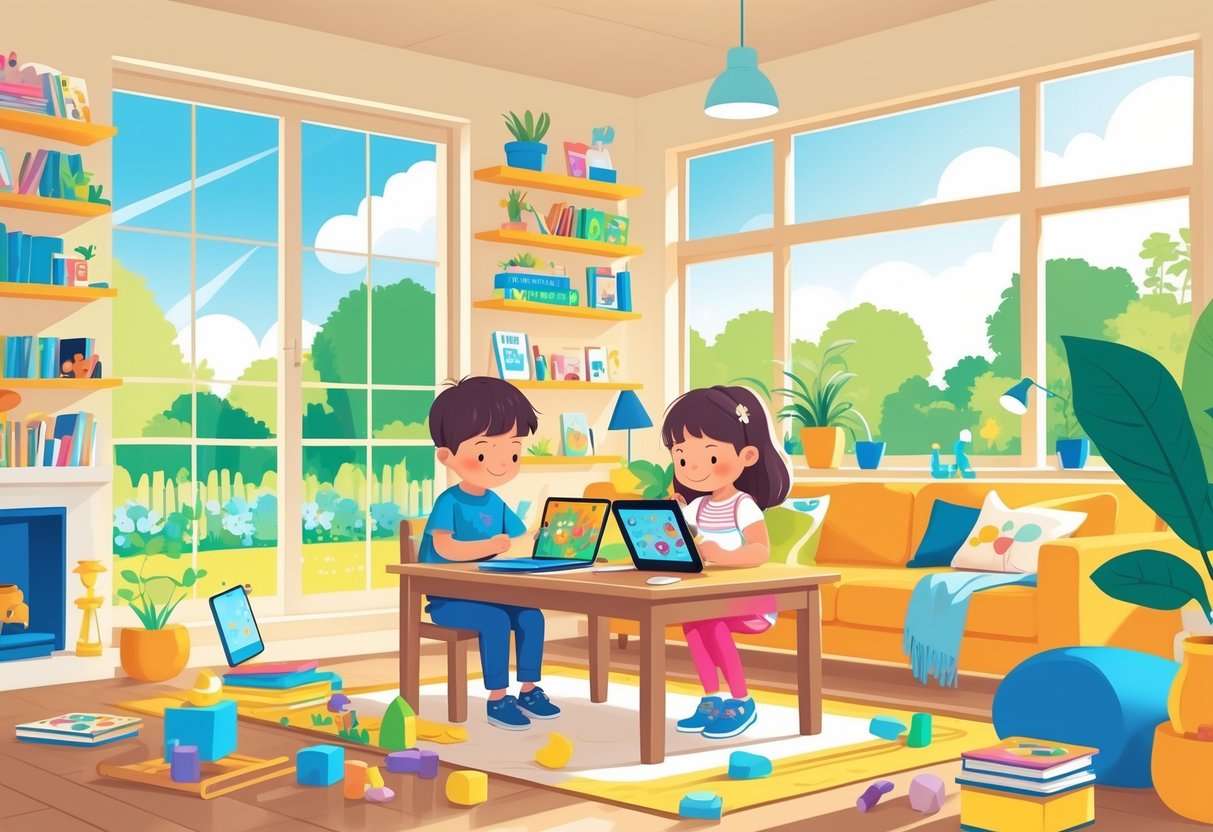
Educational activities at home can turn your living room into a classroom, your kitchen into a science lab, and your garden into a place to explore and learn. UK parents have access to hundreds of free and low-cost activities that support the National Curriculum while keeping children interested, from printable worksheets and hands-on crafts to nature walks and educational games.
Whether you’re homeschooling or just want something extra after school, mixing structured learning with creative play helps children pick up essential skills without being glued to screens.
Michelle Connolly, the founder of LearningMole and a former primary teacher with over 15 years in the classroom, says, “the best home learning happens when children don’t realise they’re learning at all.” LearningMole, a UK educational platform, offers curriculum-aligned videos and activities for children aged 4-11, giving parents and teachers materials that make maths, science, and English more enjoyable.
The trick is to pick fun learning activities that fit your child’s interests and build knowledge in core subjects.
You can use simple science experiments or treasure hunts to teach problem-solving, all with stuff you already have around the house. The activities below include downloadable resources, sensory play ideas, and outdoor adventures to keep children active and curious while supporting development across Key Stages 1 and 2.
Key Takeaways
You can create effective educational activities at home using free resources and everyday household items.
Mixing hands-on projects with outdoor exploration keeps children interested while supporting curriculum goals.
Balancing structured learning with creative play helps children develop skills naturally without too much screen time.
Getting Started with Educational Activities at Home
A dedicated learning space, a flexible daily routine, and the right motivation can turn home education from a headache into a real opportunity. These three things work together to build an environment where children feel ready to learn and parents feel confident teaching.
Setting Up a Learning Space
You don’t need a special room to make an effective learning area. A corner of the kitchen table or a desk in the bedroom does the trick as long as it’s quiet and well-lit.
Keep essential supplies close by. Store pencils, paper, rulers, scissors, and glue in a small box or drawer. This saves time and helps children feel more independent during activities for kids at home.
Clear away distractions. Put away toys, games, and devices not needed for learning. A tidy space makes it easier for children to focus.
Make sure the chair and table fit your child. Their feet should touch the floor, and their arms should rest comfortably on the desk. If the set-up feels awkward, kids get tired or fidgety.
Hang up your child’s work on a wall or board nearby. It shows you care about their effort and gives them a little boost of pride.
Creating a Flexible Daily Routine
A routine gives learning at home some structure without making it feel like being at school. Choose regular times for different activities, but don’t worry about sticking to strict hour-by-hour plans.
Morning activities often suit subjects that need more focus, like maths or writing. Kids usually have more energy earlier in the day.
Break up learning into short bursts. Primary-aged children focus best for 20 to 30 minutes. Take five-minute breaks to move around or grab a snack.
Keep things flexible. If your child is really into something, let them carry on. If they’re struggling, it’s fine to switch and return later.
Motivating Children for Home Learning
Letting children choose gives them a sense of control. Offer them a list and let them pick which subject or fun learning activities to start with.
Tie learning to your child’s interests. If a child loves dinosaurs, use dinosaur maths problems or books about prehistoric life.
Celebrate little wins. Notice when your child tries hard, solves something tricky, or gets better at something. Say things like, “You worked out that tough sum by breaking it down,” instead of just “Good job.”
Don’t compare your home set-up to school. Activities at home look different, and that’s fine. Your child might learn maths while baking or practise writing by making a comic.
Keep a simple record of what you’ve done. A sticker calendar or photo album of projects shows progress and gives kids a sense of achievement.
Printable and Downloadable Learning Resources
Free printable materials give you ready-made activities that support your child’s learning across different subjects. These resources help you organise home education without spending money on workbooks or subscriptions.
Using Free Activity Sheets
Activity sheets give you structured learning activities you can print at home and use straight away. Lots of UK websites offer free activity sheets covering maths, literacy, science, and other subjects.
You can find worksheets matched to National Curriculum levels for ages 3 to 11. Educational resources include videos and materials that fit what your child needs for each Key Stage.
Pick sheets that fit your child’s current ability, not just their age. You might use Year 3 maths sheets but Year 4 reading materials, depending on their strengths.
Supplementing with Activity Packs
Activity packs bundle worksheets and activities around a theme or topic. These packs save you time because someone else has grouped related activities for you.
Seasonal packs are great for keeping kids engaged during holidays. Bloomsbury publishes free children’s activity packs for Christmas, Easter, and Halloween linked to popular books.
Subject-specific packs let you cover one topic thoroughly. Look for packs that include lots of activity types so your child can learn by colouring, cutting, writing, and problem-solving.
Organising Printable Resources
Store your printed materials in folders divided by subject or Key Stage. Label each folder so you can find what you need quickly.
Set up a simple filing system using plastic wallets or ring binders. Sort activity sheets by difficulty within each subject. Keep blank copies separate from finished work so you can reuse them for younger siblings.
Keep current week materials on a shelf or in a box. This keeps things handy and stops your learning area getting cluttered.
Print sheets in batches when you’re planning weekly activities. This way, you won’t run out mid-lesson and you’ll save on printer ink. Store templates like lined paper and maths grids in sheet protectors so you can use dry-erase markers for repeated practice.
Fun Indoor Activities for Kids
Indoor activities for kids at home spark creativity, help physical development, and support learning across subjects like science and the arts. From making colourful crafts to dancing around the living room, these activities keep children interested while building essential skills.
Creative Arts and Crafts
Arts and crafts give children endless ways to express themselves and develop fine motor skills. Set up a simple craft area with things you already have, like cardboard boxes, magazines, old fabric, and paint.
Collage making is perfect for all ages. Your child can cut and stick materials to create scenes, animals, or abstract designs. This activity helps hand-eye coordination and lets children play with colour, texture, and composition.
Drawing and painting activities let children share their ideas visually. Try fun indoor activities like step-by-step drawing guides for dinosaurs, rockets, or underwater scenes. These activities build confidence and teach basic art skills.
Recycling projects turn everyday items into creative treasures. Egg cartons become caterpillars, toilet roll tubes turn into binoculars, and cereal boxes make puppet theatres. These activities teach children about reusing materials and encourage problem-solving.
Building Dens and Secret Spaces
Building dens creates magical play spaces and encourages imaginative role-play. Children love having their own hideaway for reading, games, or just relaxing.
Help your child construct a den using blankets, sheets, and furniture like chairs or sofas. Drape fabric over chairs to make walls and a roof, then hold it in place with cushions or books. Add pillows, soft toys, and torches to make it cosy.
Den building teaches kids about structure and balance. They figure out which materials work best for walls, how to make stable roofs, and how to create doorways. These practical engineering ideas support their understanding of science concepts in a hands-on way.
Once the den is ready, it becomes a base for other activities. Your child might use it as a reading corner, puppet theatre, or even a pretend spaceship to explore the solar system. Den play is one of the best indoor activities for kids.
Music, Movement, and Dance
Physical activities at home keep kids moving and support healthy growth. Music and movement burn off energy while improving coordination, rhythm, and listening.
Host dance parties and let your child move to different music styles. Try changing the tempo or ask them to dance like different animals. These changes teach children to adjust their movements and become more aware of their bodies.
Action songs mix music with movements children can copy. Songs with instructions help younger children follow along and build gross motor skills. You can find activity ideas like freeze dance, musical statues, or simple routines.
Musical instrument play develops fine motor skills and rhythm. You don’t need to buy instruments. Wooden spoons and pots work as drums, dried pasta in containers makes shakers, and elastic bands over boxes become string instruments. Making music together gives children chances to take turns and play cooperatively.
Educational Games to Play at Home
Games that teach while children play make learning feel natural and fun. Traditional board games, digital quizzes, and a good mix of both keep young minds busy and help build important skills.
Board Games and Puzzles
Classic board games give children a chance to build problem-solving skills while they spend time with family. Games like Scrabble boost vocabulary and spelling, and Monopoly introduces money management and arithmetic.
Chess gets kids thinking strategically and planning ahead. Jigsaw puzzles improve spatial awareness and focus. Start with puzzles that match your child’s age, then slowly add more pieces as they get more confident.
Number puzzles such as Sudoku teach logic and pattern spotting. Word searches help with spelling and recognising letters.
Shape puzzles help children grasp geometry basics. Learning about 2D and 3D shapes lays the groundwork for later maths skills.
Interactive Educational Games
Digital educational games bring structured learning with levels that get harder as your child improves. Many websites offer curriculum-based content for several subjects in one spot.
Fun learning games for ages 3-11 let your child practise skills through interactive play. Choose games that give instant feedback and adjust to your child’s progress.
Free printable activity sheets give a break from screens. Print these out for hands-on learning with pencils and paper.
Online quiz games can make revision less of a chore. Multiple choice questions help you quickly see where your child needs extra help, without any stress.
Maths and Literacy Games
Number games help children grow confident with sums and puzzles. Card games like 21 teach quick addition, and dice games encourage counting and probability. Maths resources cover everything from basic numbers to shapes and space, supporting what they learn at school.
Simple maths games you can play:
Times tables bingo
Mental arithmetic races
Shopping with real money
Measuring ingredients while cooking
Reading and writing games build literacy in a fun way. Phonics activities support new readers, and tricky words practice helps with common sight words. Story dice spark creative writing, and rhyming games develop phonological skills.
Word-building activities strengthen spelling and vocabulary. English resources cover grammar and language skills for extra practice. Hangman is still a favourite for spelling, and 20 questions encourages descriptive language.
Active and Sensory Play Ideas
Movement and sensory play help children develop motor skills, body awareness, and ways to manage their emotions. These activities for children use different senses while building strength and coordination.
Obstacle Courses and Movement Challenges
You can set up simple obstacle courses with cushions, chairs, and masking tape on the floor. Create stations where your child crawls under tables, hops between taped circles, or balances along a line of books.
These activities develop gross motor skills and keep kids moving indoors. Change the course often to keep things fresh and add new challenges as your child gets better.
Try carrying a beanbag on their head or moving backwards through a section. Timing each run can add excitement and encourage them to beat their own record.
Younger children might just step over objects or crawl through cardboard tunnels. Older kids can try more complicated sequences that mix different moves. Keep sessions short, maybe 15 to 20 minutes, to avoid frustration.
Sensory Play Tubs
Sensory play boosts brain development by using touch, sight, and sometimes smell. Fill a big plastic tub with dried rice, pasta, or water, then add small toys or scoops.
Let your child explore textures while building fine motor skills by pouring and grabbing. You can theme tubs to match school topics.
A dinosaur tub might hide plastic dinosaurs in sand, while a maths tub could have numbered objects in coloured water. Indoor activities for kids like these are easy to set up and can last a while.
Add tongs, sieves, or funnels to encourage different hand movements. Always supervise younger children, especially with small pieces that could be a choking risk.
Clean-up feels less stressful if you put the tub in a bigger bowl or on a waterproof mat.
Yoga and Physical Play Indoors
Simple yoga poses help children improve balance, flexibility, and focus. Start with animal poses like cat, cow, and downward dog, which younger kids usually love.
You can follow along with free videos on LearningMole that guide children through fun routines. Mix yoga with stories by turning each pose into part of a journey.
Maybe your child pretends to be a seed growing into a tree, using poses to show each stage. This blends movement with imagination and language.
For more energetic play, freeze dance or action songs work well. Jumping, stretching, and spinning let kids burn off energy while learning body control and rhythm.
Make sure the area is clear of furniture and breakables to avoid accidents.
Nature and Outdoor Learning Adventures
Spending time outdoors gives children hands-on learning and sparks curiosity. Activities like searching for natural items, making food for wildlife, and growing plantsconnect children to their environment and support what they learn in school.
Scavenger Hunt in the Garden
A scavenger hunt turns your garden or park into a fun learning space. Make a list of things for your child to find: leaves of different colours, smooth stones, feathers, or certain flowers.
You can make it easier or harder depending on your child’s age. Younger kids might look for colours or shapes, while older ones search for signs of animals or specific plants.
This activity builds observational skills and scientific thinking. Children pay attention to details and start noticing patterns in nature.
Ask them to sketch what they find or start a nature journal to record their discoveries. Try themed hunts for textures, sounds, or items from different world biomes for extra variety.
Making a simple bird feeder helps children learn about caring for wildlife. The easiest way uses a pine cone, peanut butter, and bird seed.
Your child spreads peanut butter on the pine cone, rolls it in seeds, and hangs it outside with string. You can also make a bird feeder from old plastic bottles or milk cartons.
Cut holes for birds, add wooden spoons as perches, and fill with seeds. Once the feeder is up, invite your child to watch which birds visit.
They can keep a list of different species, note feeding times, and learn about bird behaviour. This links to Key Stage 1 and 2 science about living things and habitats.
Gardening and Plant Care
Growing plants gives children a sense of ownership from seed to harvest. Start with fast growers like cress, sunflowers, or cherry tomatoes so children see results quickly.
Let your child have a small patch or container to look after. They plant seeds, water them, and track growth with drawings or measurements.
This teaches responsibility and covers Key Stage 1 science about plant growth and needs. Older children can experiment by growing the same plant in different conditions.
Maybe they test how much water is best or compare growth in sun and shade. These outdoor learning activities build enquiry skills.
Try a vegetable garden so children learn about healthy eating and plant biology at the same time. Harvesting and tasting what they’ve grown makes it all feel worthwhile.
Treasure Hunts and Exploration Games
Treasure hunts encourage problem-solving and get children moving as they solve clues and search for hidden items. You can tweak these games for any age or learning level using things you already have at home or in the garden.
Organising a Classic Treasure Hunt
A treasure hunt starts with a series of clues that lead children from one spot to another until they find a final prize. Write simple riddles for little ones or trickier puzzles for older kids.
For example, “I have hands but cannot clap, I show you numbers on my lap” leads to a clock. Pick five to ten hiding spots around your house or garden.
Write clues on cards or paper, making sure each one clearly points to the next spot. Add learning by including maths problems, spelling tasks, or science questions that must be solved before moving on.
Hide small prizes at each stop or save one bigger reward for the end, like stickers, fruit snacks, or extra playtime.
Theme-Based Exploration Activities
A scavenger hunt asks children to find specific things instead of following clues. You can make themed lists for colours, shapes, textures, or school topics.
For science, children might gather leaves of different shapes or rocks of various sizes. Geography scavenger hunts help kids explore local landmarks and practise map reading.
On rainy days, indoor themes work too. Ask children to find something soft, something round, something starting with B, or something smaller than their hand.
Create adventures around pirates, explorers, or detectives to keep it lively. LearningMole has free videos on maps and directions that fit well with these activities.
Mix searching with learning by having children answer questions about what they find or draw their discoveries.
Special Activities for Toddlers
Toddlers learn best by exploring and playing with activities that use all their senses. The ideas below focus on simple, practical ways to support your child’s development at home using everyday things.
Hands-On Play for Early Years
Activities for toddlers work best when they involve touching, moving and exploring real objects. Set up a simple activity station with things like wooden spoons, plastic containers and bits of fabric.
Your toddler can stack, sort and explore these items, building important motor skills. Playdough is brilliant for little hands and you can make it at home with flour, salt, water and food colouring.
Let your child squeeze, roll and shape the dough. This really strengthens hand muscles needed for writing later on.
Building blocks and nesting cups help with spatial awareness and problem-solving skills. Start with just a few pieces and add more as your toddler’s confidence grows.
These simple toys encourage independent play. They support cognitive development in a natural way.
Engaging Sensory Activities
Sensory play helps toddlers understand the world through touch, sight, sound and movement. Fill a plastic tub with dry rice or pasta and add cups, spoons and small toys for scooping and pouring.
This type of sensory play keeps children engaged and develops fine motor control. Water play in the bath or garden gives calming sensory input.
Add floating toys, measuring cups or food colouring to make it more interesting. Always supervise water activities closely for safety.
Create a texture basket filled with things like smooth stones, soft fabric, rough sandpaper and bumpy pine cones. Let your toddler explore each item while you describe what they’re feeling.
This builds vocabulary and helps them make sense of different sensory experiences. LearningMole has free videos about colours, shapes and textures that fit well with hands-on sensory activities.
Simple Games for Little Learners
Matching games teach toddlers about colours, shapes and patterns. Print or draw simple pictures on cards and help your child find pairs.
Start with three or four pairs and add more as they get better. Hide and seek with toys encourages problem-solving and object permanence.
Hide a favourite toy under a blanket or behind a cushion and ask your toddler to find it. This game supports memory development and helps them understand that objects exist even when hidden.
Movement games like freeze dance or animal walks mix physical activity with listening skills. Play music and dance together, then stop and freeze when the music stops.
These games for toddlers burn energy while teaching self-control and following instructions.
Creative Time Capsules and Projects
These hands-on activities for children let kids capture memories, reflect on their lives and work together on meaningful family projects. Time capsules show a snapshot of the present. Journalling develops writing skills and family projects build teamwork.
Making a Time Capsule
A time capsule lets children document their current interests, thoughts and everyday life in a way they can revisit later. Choose a sturdy container like a shoebox or plastic tub that seals and stores safely.
Creating a time capsule works best when children divide it into themed sections. The “All About Me” section might include favourite books, toys, colours, animals and television shows.
Add their current age, best friends’ names and what they want to be when they grow up. Include things that show what life is like in 2026.
Write down the price of milk, bread or a postage stamp. Cut out news headlines or print popular song lyrics.
Children can interview parents or carers about how life has changed since they were young. This brings in different perspectives and sparks conversations between generations.
A letter to their future self makes the activity more personal. It gives them something specific to read when they open it later.
Memory Booking and Journalling
Memory books and journals help children practise writing and record important moments. Unlike time capsules, journals are ongoing activities that develop over weeks or months.
Set up a simple notebook with dated entries. Younger children can draw pictures with a few words, while older ones write detailed descriptions of their day.
Focus on specific events. Themed pages keep children interested.
Create pages for family traditions, favourite recipes, funny things siblings said or memorable trips. Add photographs, ticket stubs or small flat items that fit in the book.
Regular journalling builds writing confidence. Even 10 minutes twice a week creates a substantial record over time.
Let children decorate their journals. This makes them feel more personal and special.
Building Family Projects Together
Family projects mix learning with quality time and give everyone a shared goal. History-based activities work well because they connect different subjects and suit various ages.
Research projects about Vikings or ancient Egypt let families explore together using books, videos and hands-on activities. Children can build models, create timelines or write stories set in historical periods.
These topics appear in the Key Stage 2 curriculum, so the work supports school learning too.
Building a bird feeder and recording which species visit
Growing vegetables from seeds and documenting their progress
Creating a family recipe book with dishes from different relatives
Designing and building a cardboard castle or fort together
Let each family member contribute according to their abilities. Younger children might paint and older ones measure and cut.
The key is working towards something tangible that everyone helped create.
Using Technology for Learning at Home
Digital tools bring museums, interactive lessons and group projects right into your home. Technology can support learning at home with structured apps, virtual experiences and online activities that fit alongside traditional methods.
Virtual Museum Tours
Many UK museums offer free online tours so you can explore history, science and art from your living room. The British Museum, Natural History Museum and Science Museum all have virtual galleries you can wander through at your own pace.
These tours fit well with Key Stage 1 and Key Stage 2 topics. You might visit Ancient Egypt while studying it in Year 3 or check out dinosaur exhibits during a science unit.
Most tours include 360-degree views and detailed information about exhibits. You can pause and chat about what you see.
Take screenshots of interesting items to use later for drawing or research. Some museums provide downloadable activity sheets to turn the virtual visit into a hands-on experience.
Educational Apps and Resources
Quality apps and websites support maths, literacy and science learning at home. Top online learning resources UK include platforms with lessons aligned to the National Curriculum.
LearningMole offers free curriculum-aligned videos for maths, English and science for ages 4-11. The platform has printable resources that go with the videos.
White Rose Maths gives structured maths lessons and Topmarks has interactive games. Educational apps can enhance learning when you choose them carefully for your child’s age and ability.
Look for apps that encourage problem-solving, not just entertainment.
Online Collaborative Activities
Video calls and shared documents let children work together on projects, even when they’re apart. Google Docs allows several users to write stories or create reports at the same time.
This teaches collaboration skills and makes writing more engaging. Set up virtual book clubs where children read the same book and discuss it over video calls.
You can also arrange online quiz sessions using platforms like Kahoot. These work well for practising times tables or spelling words.
Technology supports learning at home by connecting children with peers for group activities. Shared projects give children a real audience, which often boosts motivation.
Tips for Balancing Fun and Learning
Balancing enjoyment and education helps children stay motivated and build important skills. Set up systems that encourage independence, recognise progress, and adjust activities to fit each child’s age so learning feels natural, not forced.
Encouraging Independent Play
Independent play lets children explore educational activities on their own terms. When you step back, your child develops problem-solving skills and confidence without constant guidance.
Set up activity stations around your home with different learning materials. Try a reading corner with books at their level, a craft table with paper and colouring supplies, or a science area with magnifying glasses and nature items.
Keep materials organised in clear boxes so your child can reach them easily. Start with short periods of independent play—maybe 10 to 15 minutes for younger children.
Extend this time as they get more comfortable. Stay nearby at first, offering help only if needed.
Choose open-ended materials that work in several ways. Building blocks, art supplies and simple puzzles let children direct their own learning.
LearningMole has curriculum-aligned videos for ages 4 to 11 that children can watch independently, covering everything from Key Stage 1 phonics to Key Stage 2 science experiments.
Try not to interrupt when your child is focused. That concentration time is valuable for deep learning and creativity.
Reward Systems and Progress Tracking
Reward systems work best when they celebrate effort, not just results. Create a simple chart where your child earns stickers or stamps for finishing educational activities at home.
Use different types of rewards. You might offer extra playtime, a special activity or let them choose the next family film.
Keep rewards immediate for younger children. Older ones can work towards bigger goals.
Track progress visually so your child can see what they’ve achieved. A calendar marked with completed activities or a jar filled with marbles for each task gives a clear picture of their work.
Take photos of finished projects or keep a portfolio of their best work.
Simple Tracking Methods:
Sticker charts for daily reading
Progress jars with coloured counters
Weekly activity logs with tick boxes
Before and after samples of handwriting or drawings
Celebrate milestones together. When your child completes a set of activities or masters a new skill, mention it specifically.
Say “You worked really hard on those maths problems” instead of just “well done”.
Adapting Activities for Different Ages
Younger children in Reception and Key Stage 1 need shorter, hands-on activities. A counting game might last 10 minutes, using toys or snacks they can touch and move.
Keep instructions simple, with one or two steps. Key Stage 2 children can handle longer projects with multiple stages.
They might spend 30 minutes on a science experiment or work on creative writing over several days. You can introduce more complex rules and abstract ideas.
Adjust the same activity for different ages. A cooking activity teaches measuring to Year 1 pupils but introduces fractions and ratios to Year 5 children.
Reading aloud works for all ages if you choose age-appropriate books and ask different levels of questions.
Age Group
Activity Length
Best Activity Types
Ages 4-6
10-15 minutes
Sensory play, simple crafts, picture books
Ages 7-9
20-30 minutes
Board games, building projects, chapter books
Ages 10-11
30-45 minutes
Research tasks, detailed art, independent reading
Watch for signs your child finds an activity too easy or too hard. If they finish quickly without effort, add challenges.
If they become frustrated, break the task into smaller steps or offer more support.
Frequently Asked Questions
Parents and carers often ask similar questions when starting educational activities at home, from finding age-appropriate games to locating free resources that match UK learning standards.
What are some engaging educational activities for 5-year-olds to do at home?
Five-year-olds pick things up best when they’re playing. Play-based activities really help them develop early literacy and numeracy skills.
Try creating letter hunts around the house. Ask your child to find objects that start with different sounds, building their phonics awareness.
Cooking together is a fun way to practise counting and measuring. When you make playdough from scratch, your child learns about measurements and how to follow steps in the right order.
Art projects can use whatever you have lying around. Get creative with a painting station outside using water and brushes, or make collages from old magazines and recycled boxes.
How can I find free educational resources for children’s home activities in the UK?
BBC Bitesize shares free downloadable home education resources like weekly planners, reward charts and activities for ages 5 to 11. You’ll find games, quizzes and videos for different subjects that match the National Curriculum.
LearningMole has free video resources for maths, English, science and phonics for children aged 4 to 11. The videos come from experienced primary teachers and support learning across Key Stages 1 and 2.
Oxford Owl offers educational games and activities for ages 3 to 11, focusing on maths and reading. Local libraries often provide free access to digital learning platforms when you use your library card.
What should I consider teaching my 5-year-old at home?
Stick to the basics: early reading, simple number work and building independence. Your 5-year-old can start learning letter sounds through phonics, blending words like ‘cat’ and ‘dog’, and recognising their own name.
Number work means counting to 20 and higher, spotting numerals and understanding simple addition with hands-on activities. Grab toys or snacks to show how adding and taking away works.
Personal and social skills matter too. Teach your child to dress themselves, use cutlery and follow instructions with more than one step.
Can you suggest some educational games for 7 to 8-year-olds that can be played indoors?
Maths board games like Monopoly Junior help kids practise money handling and arithmetic, and they build strategic thinking too. Card games such as multiplication snap or fraction war make number facts a bit more fun.
Word games like Scrabble Junior, Boggle or making crossword puzzles boost spelling and vocabulary. Try playing 20 questions or I Spy with descriptive language to help communication skills.
Science experiments with household bits and bobs give hands-on learning a go. You could make a volcano using bicarbonate of soda and vinegar, grow crystals from salt or see which materials stick to magnets.
Where can I download educational activity worksheets for 4 to 6-year-olds?
Twinkl offers printable activity sheets for different subjects and skill levels. Some resources are free, others need a subscription, and they fit with the UK National Curriculum.
Save the Children UK shares family learning activities with printables and ideas for everyday learning. These focus on turning daily routines into learning chances.
Many local council websites post free downloadable resources for home learning. Check your local authority’s education pages for materials and support that fit your area.
What typical activities do British children enjoy that are both fun and educational?
Kids love outdoor nature walks. They get to run around, spot different plants and trees, and notice how things change with the seasons.
Families often head to local parks or nature reserves. Children look for animals, collect leaves, and sometimes even keep a little journal of what they find.
Baking at home is a favourite. When children bake scones or a Victoria sponge, they measure ingredients and follow steps. They actually learn a bit of maths too, like when they halve a recipe or need to double the sugar.
Many families still visit the library. It’s a cosy spot to pick out books and get into reading.
Libraries usually offer storytelling sessions or craft activities, especially during school holidays. Reading challenges pop up too, which help children practise their literacy skills while having a bit of fun.
Maths Circus, an innovative platform we've crafted, presents a captivating realm where children learn mathematics through the exciting theme of a circus. The joy of juggling numbers and solving circus...
The 9 times table multiplication has a reputation for being tricky, yet it holds more mathematical magic than any other table in the primary curriculum. Every answer follows two neat...
Article Summary What this article covers: Ten differences between river otters and sea otters, from size, fur and swimming style to diet, tool use and family life, plus which otter...
Article Summary What this article covers: The nine main types of natural disasters, how each one works and how they are measured, which hazards genuinely affect the UK, and how...




Leave a Reply