More than one in five primary pupils in UK schools use English as an additional language, so most teachers will work with EAL learners at some point in their career. LearningMole’s EAL teaching resources are built for children aged 3 to 11, made by a former primary school teacher, and free with an account. For the wider library across every subject, browse our teaching resources.
EAL covers a wide range. A child who arrived last week with no English at all. A child born in Britain who speaks Urdu at home and switches language at the school gate. A child who chats easily in the playground but stalls when asked to explain their maths reasoning in writing. The label is the same; the support needed is not.
EAL is not a special educational need. Many multilingual learners are highly capable and simply need time and targeted language support. Some EAL pupils do also have additional learning needs, but that is a separate assessment and a separate conversation.
EAL teaching resources come in many formats to support different learning needs and classroom settings. Using the right mix of materials can improve language learning for students and help teachers save preparation time.
Resource Types and Formats
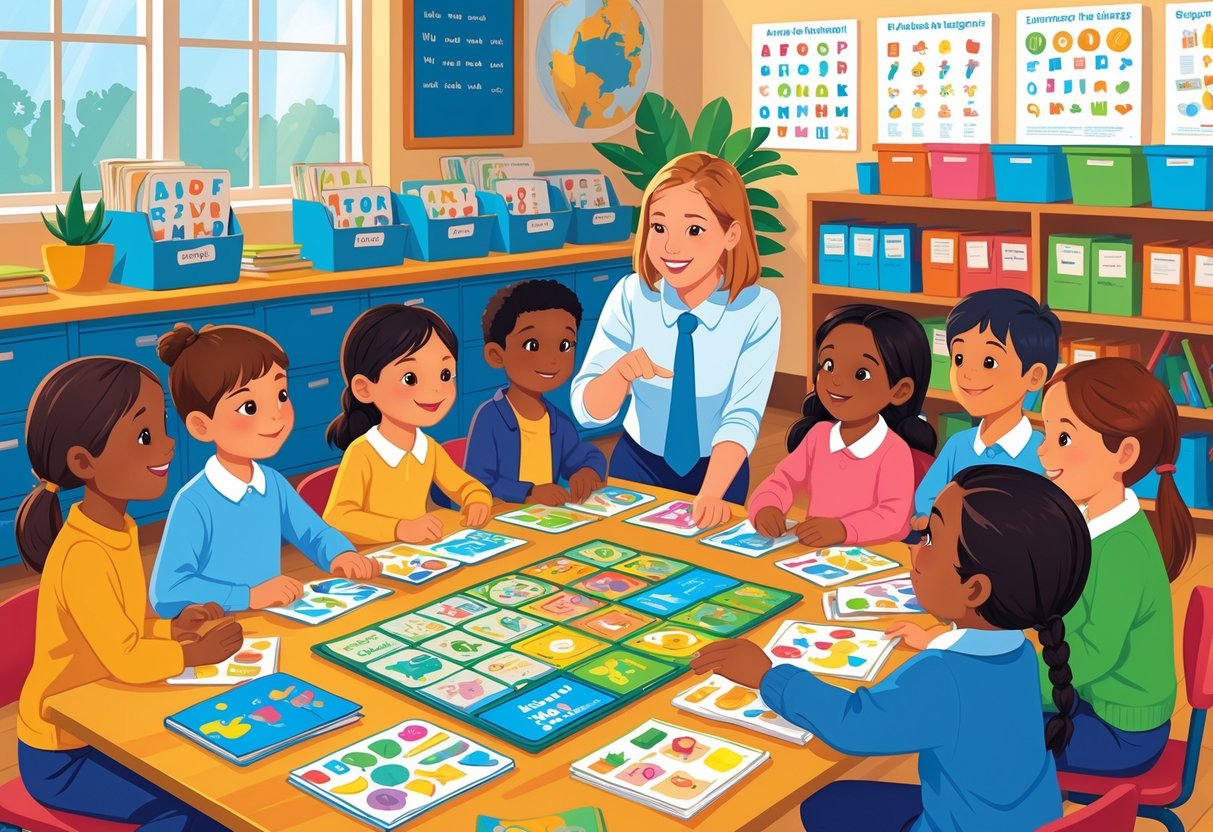
Visual Learning Materials support EAL instruction. Posters with vocabulary and clear images help students in classroom displays and serve as quick reference points.
Picture cards and flashcards let students connect new words with images. These tools benefit younger learners who need concrete links to new concepts.
Interactive Worksheets give students structured practice. You can use basic vocabulary exercises or more advanced grammar activities for older learners.
Audio Resources help students develop pronunciation and listening skills. These include recorded vocabulary lists, story readings, and pronunciation guides.
Games and Activities make learning fun. Board games, card activities, and role-play scenarios encourage students to use language naturally and build confidence.
Choosing Effective Materials
Match Resources to Language Levels instead of age groups. Differentiate by task complexity rather than by topic. Every Year 4 child can study the Romans. The EAL learner gets the visual timeline, the pre-taught vocabulary and the sentence starters, not a different subject.
A 12-year-old new to English needs different materials than a peer who has studied English for years. Choose resources that move from simple to complex concepts. Build vocabulary in a logical order, not with random words.
Cultural Relevance is important. Select materials that reflect diverse backgrounds and introduce British culture in a suitable way.
Curriculum Alignment helps EAL resources support mainstream learning goals. Use materials that link language learning with subject content. Try multimodal options to match different learning styles. Some students prefer kinesthetic activities, while others learn better with visual or auditory resources.
Adaptability increases a resource’s value. The best materials can be changed for different proficiency levels or learning goals without losing their usefulness.
Printable and Digital Options
Printable Resources give you flexibility and do not depend on technology. Worksheets, vocabulary cards, and activity sheets can be used anywhere.
These resources work well for homework or when technology is not available. Many teachers use printable materials for assessments because they are easy to mark and store.
Digital Resources offer interactive experiences for modern learners. These materials often include audio guides, instant feedback, and progress tracking.
Online platforms provide large libraries of content that update often. You can access many activities without worrying about storage or printing costs.
Hybrid Approaches use both digital and printable materials. Start with digital activities, then use printable resources for extra practice at home.
Check your school’s technology before choosing a format. Reliable wifi and devices are needed for digital resources to work well.
Cost Considerations differ between formats. Printable resources need ongoing printing, while digital subscriptions give unlimited access for a fixed fee.
Supporting English Language Skills
Students need targeted activities to build listening, speaking, reading, and writing skills. Each area requires specific resources and teaching strategies to help EAL learners make progress.
Listening and Speaking Activities
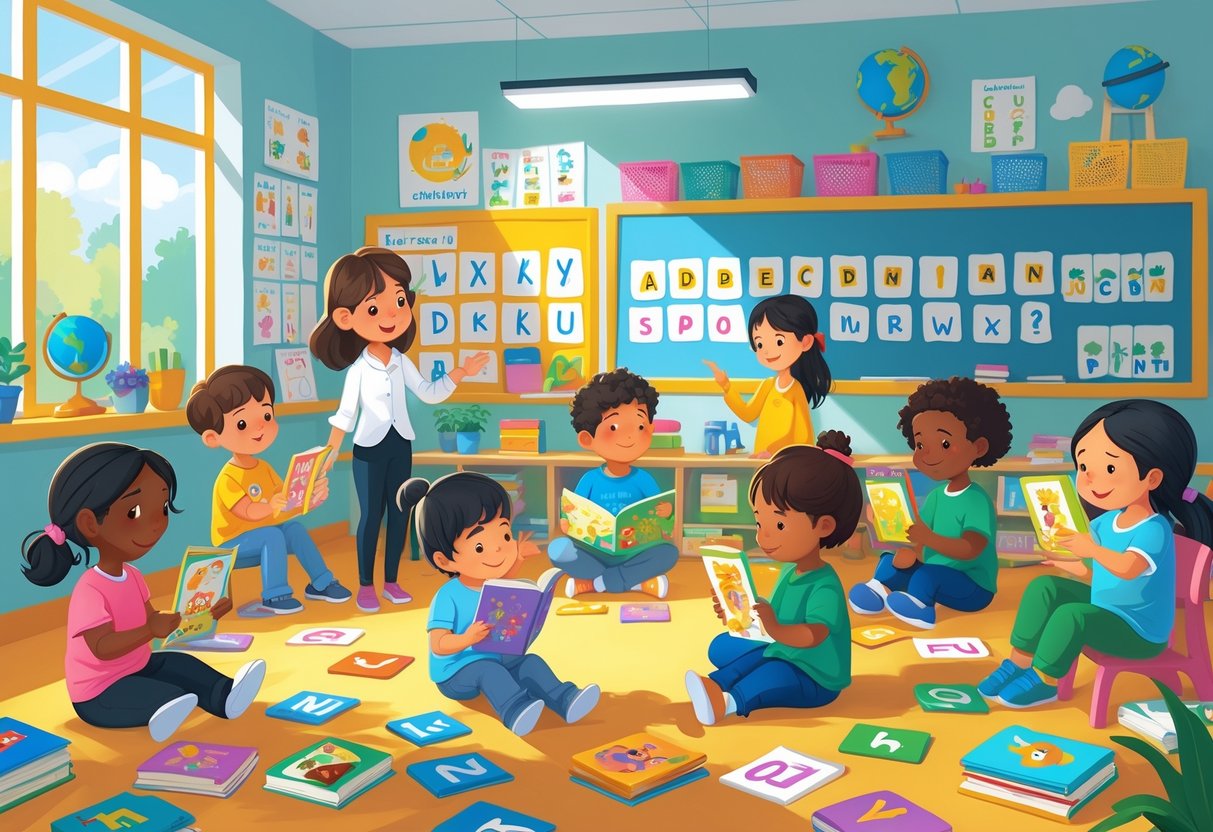
Teachers build listening skills by using visual support and clear pronunciation models. Pair audio recordings with pictures or gestures so students can link sounds and meaning.
Interactive speaking activities work best when pressure is low. Start with choral repetition so students speak together and gain confidence before speaking alone.
Total Physical Response works well with younger children. Say “jump” and jump, and a child with almost no English can join in immediately, which gets them participating before they can speak.
Role-play activities give students practice in real-life situations. Create simple scenarios like ordering food or asking for directions. Supporting EAL students often means giving them these practical opportunities.
Quick listening games:
Sound matching with picture cards
Following simple instructions
Listening for certain words in songs
Identifying emotions in voice recordings
Speaking circles encourage conversation. Students share something about their day or culture, which builds language skills and classroom community.
Reading Materials
Choose reading materials that fit students’ language level. High-interest, low-vocabulary books keep older students engaged and help them build skills.
Visual readers help students understand text. Books with clear pictures allow students to guess meaning from context and images.
Dual language resources let students connect their home language with English by reading familiar stories in both languages.
Effective reading support:
Graphic novels with simple text
News articles about students’ home countries
Instructions for games or crafts
Poems with repetitive patterns
Word cards with pictures help teach vocabulary before reading. Students learn key words first, making texts easier.
Reading buddies pair EAL students with confident English speakers. They read together and discuss simple questions about the story.
Writing Support
Begin with copying and tracing activities. Students need to learn letter formation before moving to creative writing. Use worksheets that mix letters and pictures.
Sentence frames give structure to writing. Offer templates like “I like _____ because _____” so students can add their ideas and learn grammar patterns.
Writing progression:
Single words with pictures
Simple sentences using frames
Short paragraphs with prompts
Independent creative writing
Visual writing prompts work better than abstract topics. Use photos, comic strips, or picture sequences to inspire stories.
Writing journals encourage daily practice. Students write one or two sentences about their experiences. Focus on communication, not perfect grammar at first.
Peer editing partnerships help students improve writing. Pair EAL learners with classmates who can suggest changes and corrections.
Vocabulary and Grammar Tools
Strong vocabulary and grammar skills help EAL students learn English. Digital tools and resources can help students build word knowledge, understand sentence structure, and practice spelling through interactive activities.
Building Vocabulary
Michelle Connolly says, “Building vocabulary requires context and repetition. Students need to encounter new words multiple times in meaningful situations before they truly understand them.”
Word-building activities work best when they include:
Visual connections with pictures
Real-world contexts
Multiple exposure opportunities
Speaking and listening practice
Grammar Practice
Progressive grammar activities help students learn sentence patterns. Start with basic subject-verb structures before introducing complex sentences.
Essential grammar focus:
Verb tenses and forms
Sentence structure patterns
Question formation
Plural and singular forms
Students learn grammar best when they can use new structures in speaking and writing right away.
Spelling Resources
Phonics-based spelling programmes help students understand sound-letter connections. These are useful for students whose first language uses a different script.
Effective spelling practice:
Sound pattern recognition
Visual word memory activities
Contextual spelling in sentences
Regular review and testing
Teach common spelling patterns step by step. Focus on frequent word families and high-frequency words.
Use multi-sensory approaches for spelling. Combine visual, auditory, and kinesthetic activities to help students remember letter sequences.
Literacy and Reading Comprehension
EAL learners need targeted support to build reading skills and understand complex texts. Effective literacy programmes use vocabulary building and structured comprehension activities to build confidence.
Boosting Literacy Skills
Teachers help EAL learners build literacy skills by focusing on both reading basics and vocabulary. Students progress faster with regular practice in phonics, sight words, and reading in context.
Structured Phonics Programmes work well for EAL students. Start with simple consonant-vowel combinations and add more complex patterns later. Visual phonics cards help students connect sounds and letters.
Essential Literacy Building Blocks:
Daily 15-minute phonics sessions
Picture books with predictable patterns
High-frequency word recognition activities
Interactive reading games
Vocabulary Development Strategies should focus on words students use in daily school life. Create word walls with images, practice new words through role-play, and encourage students to keep personal dictionaries with drawings.
Reading Comprehension Activities
Regular practice with levelled texts and strategic questioning helps students develop reading comprehension. Choose activities that check understanding and build critical thinking skills.
Guided Reading Sessions work best when you select texts just below the student’s independent reading level. This allows students to focus on comprehension instead of decoding.
Ask questions before, during, and after reading to keep students engaged.
Effective questioning includes:
Literal questions: “What happened first?”
Inferential questions: “Why did the character feel worried?”
Evaluative questions: “Do you think the character made the right choice?”
Visual Reading Supports help EAL learners access complex texts. Use graphic organisers, story maps, and picture sequences to break down comprehension tasks.
Many students benefit from drawing their understanding before writing responses.
Interactive Comprehension Games make practice enjoyable and reinforce skills:
Story prediction activities using book covers
Character emotion cards matched to text events
Try sequencing activities with comic strips or reading detective games for inference practice.
Academic Subject Resources for EAL Learners
Subject-specific materials help EAL students connect language learning with core curriculum topics like mathematics, science, and technology. Visual supports and hands-on activities make abstract concepts more accessible and build academic vocabulary.
Maths and Addition
Mathematics is a great entry point for EAL learners because numbers are universal. Use visual aids like counting blocks, number lines, and pictures to teach addition concepts without relying on English vocabulary.
Start with concrete materials before moving to abstract concepts. Use manipulatives such as counters, cubes, or everyday objects to show addition problems.
This approach helps students understand maths concepts and introduces English mathematical vocabulary.
Essential maths resources for EAL students include:
Number cards with visual representations
Interactive addition games with minimal text
Try bilingual number charts and step-by-step visual guides for problem-solving.
Create word walls with mathematical terms in both English and students’ home languages. This dual-language approach builds confidence and develops academic English skills.
Use technology tools that offer multi-language support for maths concepts. Many digital platforms provide visual demonstrations of addition problems with audio support in several languages.
Science Materials
Hands-on experiments and visual demonstrations support science education for EAL learners. Students engage with scientific concepts through observation and experiments rather than complex written instructions.
Use science picture books and visual guides to introduce new topics. Show images of scientific processes, equipment, and phenomena to help students understand concepts.
Label classroom science equipment with both English and pictures.
Effective science resources include:
Visual experiment guides with step-by-step photos
Science vocabulary cards with images
Try interactive simulations, virtual experiments, and multilingual science glossaries.
Encourage students to record observations with drawings and simple charts before writing detailed reports. This scaffolded approach builds scientific thinking and language skills.
Technology Integration
Digital tools support EAL learners across all academic subjects. Translation apps, visual learning platforms, and interactive software bridge language gaps while maintaining curriculum standards.
Use multimedia presentations that combine text, images, audio, and video. This approach supports different learning styles and provides language support with visual and auditory cues.
Key technology resources include:
Educational apps with multilingual support
Video content with subtitles in multiple languages
Interactive whiteboards and recording tools help students practise pronunciation.
Let EAL students collaborate online with peers on projects. Many platforms include built-in translation features and allow students to contribute using their strengths.
Assessment and Progress Tracking
Conversational English often arrives within about two years. Academic English, the language of explaining, comparing and justifying in writing, typically takes five to seven. A child who sounds fluent in the playground may still need substantial support with a science write-up two years later.
Track EAL students’ progress with tools that measure both social and academic English development. Effective monitoring helps teachers identify language needs and adjust support.
EAL Assessment Tools
Assess across all four areas separately: speaking, listening, reading and writing. They develop at different rates, and a single overall level hides more than it shows.
The Department for Education proficiency scale runs from A, new to English, through to E, fluent. Recording where a child sits on each strand gives you something to plan from and something to show parents.
Monitoring Language Development
Monitor both social communication and academic English skills. Academic English needs specific vocabulary, complex sentence structures, and subject-specific language that take years to develop.
Track these key areas:
Social Language Skills:
Basic conversational ability
Playground interactions
Academic English Development:
Subject-specific vocabulary
Complex grammar
Written expression across subjects
Use progress tracking tools to record interventions alongside language development. This helps identify which support strategies work for each student.
Assess every 6-8 weeks to gather enough data without overwhelming students or teachers. Focus on individual progress rather than comparing EAL learners to native speakers.
EAL Pedagogy and Teaching Strategies
Effective EAL pedagogy uses principles that recognise multilingual learners’ needs and keep academic expectations high. The best approaches integrate language development with subject content, letting learners build English skills while accessing the curriculum.
Principles of Effective EAL Teaching
Effective EAL pedagogy relies on five core principles. These principles address EAL learners’ unique needs and recognise what they share with all students.
Multilingualism as an asset forms the foundation of effective EAL teaching. Encourage learners to use their home languages as cognitive tools.
Michelle Connolly explains, “When we celebrate and use children’s multilingual abilities, we support their English development and strengthen their overall academic potential.”
High expectations with appropriate support means challenging all learners and giving the scaffolding they need. EAL learners must learn English and learn through English at the same time.
Set demanding goals for EAL students and provide targeted language support to help them access the curriculum.
Social inclusion and wellbeing affect academic success. Give EAL learners opportunities to participate fully in school life from the start.
Encourage mixed-language friendships and encourage participation in extracurricular activities. Build respectful relationships with families and understand that some parents may face challenges in school engagement.
Content and Language Integration
Integrated content and language teaching allows language development within meaningful academic contexts. This approach lets EAL learners develop English and learn curriculum content at the same time.
Design lessons that teach subject-specific vocabulary alongside content. Create word walls, glossaries, and visual supports to make academic language accessible.
Language-rich mainstream classes provide the best environment for EAL development. Keep learners in mainstream lessons except for short, targeted support linked to classroom work.
Use collaborative learning structures to encourage peer interaction. Pair EAL learners with confident English speakers for structured activities.
Assessment strategies should separate language ability from subject knowledge. Use clear instructions and reduce linguistic demands when assessing understanding.
Conduct regular formative assessments using EAL-specific frameworks that track language and subject progress together.
Resources for New-to-English and Early Stage Learners
When working with new-to-English pupils, use specialised materials that bridge communication gaps and build confidence. The best resources combine visuals with multilingual support to create an inclusive learning environment from the start.
Welcome Packs and Translations
New starter EAL resources help you connect with pupils who are new to English. These materials focus on essential first-day information and settling-in activities.
Your welcome pack should include basic classroom vocabulary cards with pictures and translations. Key phrases like “toilet”, “water”, “help”, and “finished” become vital communication tools.
Create simple routine visual schedules showing daily activities. Include pictures of lunch, assembly, and break times to reduce anxiety and help pupils anticipate what comes next.
Multilingual welcome letters explaining school procedures work best when translated professionally. Include information about uniform, dinner money, and pick-up arrangements that parents need right away.
Visual and AAC Resources
Visual teaching resources are your main communication method with early-stage EAL learners. Beginning EAL workbooks use pictures and simple activities to build vocabulary.
Picture communication boards help pupils express basic needs without English. Create subject-specific boards for maths, science, and literacy with key vocabulary and clear images.
Use gesture cards with spoken instructions. Simple hand signals for “stop”, “listen”, “write”, and “turn the page” support understanding.
Symbol-supported worksheets work well for early learners. Use pictures instead of text to show pupils what to do, such as writing, cutting, colouring, or matching.
Digital AAC apps on tablets provide extra communication support. Load them with school-specific vocabulary, teachers’ names, classroom objects, and daily routines.
Incorporating Posters and Visual Supports
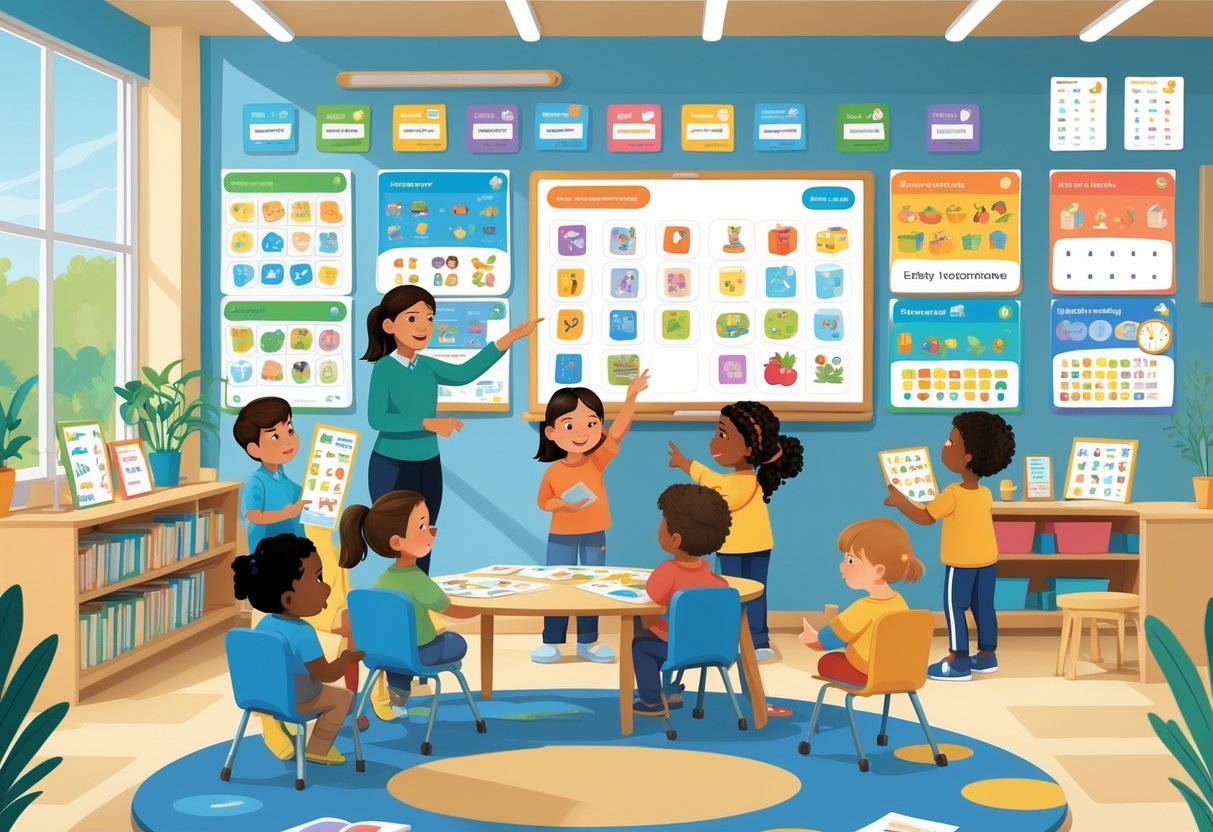
Visual supports for ELLs create immediate understanding when words alone fall short. Your classroom walls become powerful teaching tools that support every learner, especially those developing English skills.
Posters display clear, labelled images alongside key vocabulary. Use photographs, diagrams, and graphic organisers that students can reference independently during lessons.
Michelle Connolly, founder of LearningMole and former teacher with over 15 years of classroom experience, says, “Visual supports don’t replace rigorous teaching, they make challenging content accessible to all learners.” When students see concepts visually, they engage more confidently with grade-level material.
Essential Poster Types for EAL Support:
• Vocabulary walls with images and definitions
• Process charts showing step-by-step instructions
• Labelled diagrams for science and maths concepts
• Cultural celebrations reflecting student diversity
Different types of visuals include photographs, illustrations, and real objects. Choose images that connect to your students’ experiences and introduce new concepts.
Learn to say every child’s name correctly, and ask if you are unsure. It takes a minute and signals more than any display does.
Position posters at student eye level. Make sure text is large enough to read from across the room.
Avoid cluttering displays with too many labels or competing information.
Quick Implementation Tips:
• Label posters in both English and heritage languages where possible
• Use consistent colours for different subject areas
• Include student-created visuals alongside commercial materials
• Rotate displays regularly to maintain interest
Interactive visual content engages students beyond observation. Give learners chances to point, match, and manipulate visual elements during lessons.
Use digital displays to annotate and highlight specific sections while teaching. This combines the permanence of posters with the flexibility of interactive technology.
Engaging Parents and the Wider Community
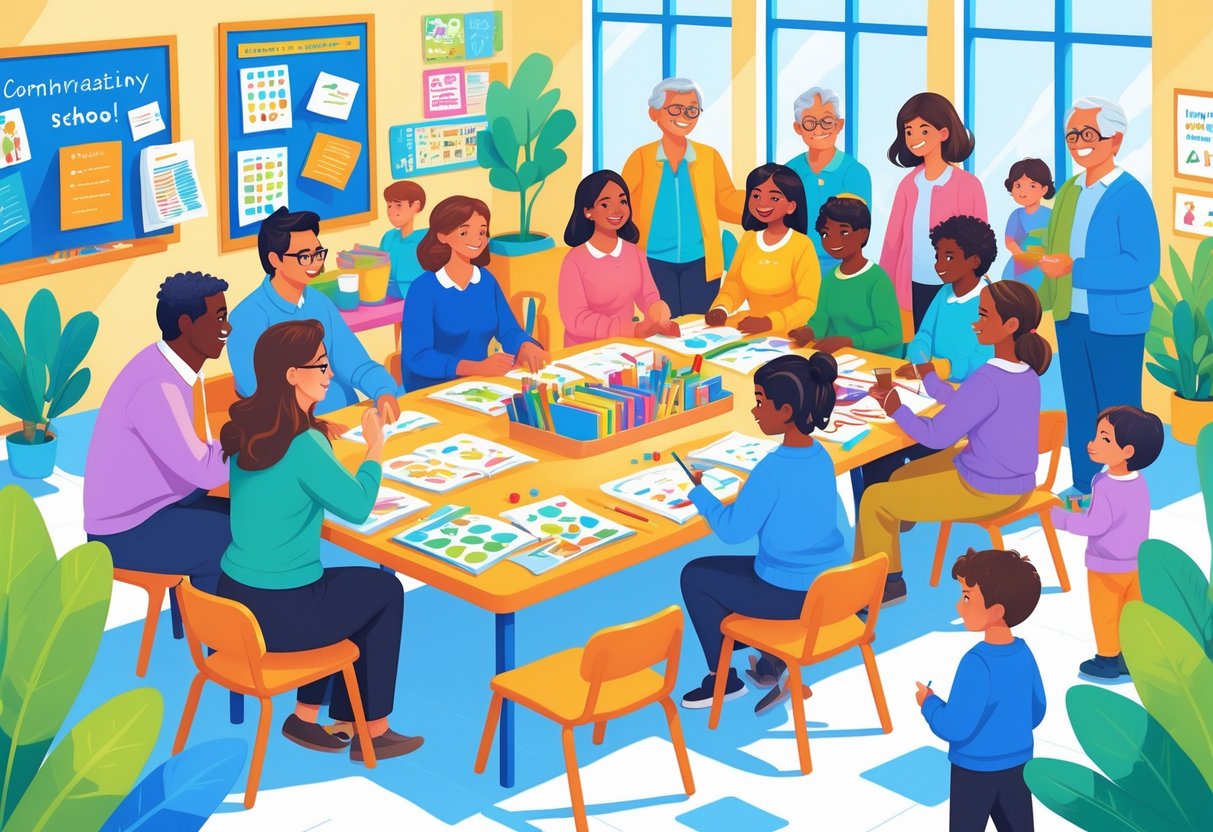
Support EAL families by providing clear communication about home language use. Establish consistent school routines to help parents become active partners in their children’s literacy development.
Home Language Support
EAL students benefit when parents feel valued for their linguistic backgrounds. Involving parents and the wider family to share their language and culture creates stronger school communities.
Encourage multilingual literacy practices at home. Parents should read stories and discuss schoolwork in their first language to build strong literacy foundations.
Create simple home activity guides translated into community languages. Include practical suggestions like reading bilingual books together and discussing school topics in the family’s strongest language.
Suggest sharing oral stories, cultural traditions, and playing word games in both languages.
Connect families with bilingual resources at your local library. Many libraries offer books in community languages and multilingual storytelling sessions.
Communicating School Routines
Clear communication about daily expectations helps EAL families navigate the British education system. Provide guidance for parents on key information about the English education system.
Create visual guides showing typical school day routines. Include photographs of morning registration, lunch arrangements, home-school communication methods, and after-school collection points.
Establish consistent communication channels that work for each family. Some prefer written notes, while others respond better to phone calls or face-to-face meetings. When you use an interpreter, look at and speak to the parents, not the interpreter. It changes the feel of the conversation entirely. Bear in mind too that many parents understand considerably more English than they can produce, so simple spoken English alongside translation often works better than translation alone.
Translate key information into community languages, focusing on essential policies.
Priority Information
Translation Need
Attendance procedures
High
Homework expectations
High
Assessment dates
Medium
School events
Medium
Use simple English when translation isn’t possible. Send home weekly routine updates highlighting changes to normal schedules, such as sports days or parent consultations.
Frequently Asked Questions
What does EAL mean?
EAL stands for English as an Additional Language. It describes any child who speaks another language at home or grew up hearing languages other than English, whatever their current level of English. That covers a child who arrived last week with none, a child born in Britain who speaks Urdu at home, and a child who chats easily in the playground but struggles to explain their reasoning in writing.
Is EAL a special educational need?
No. Many multilingual learners are highly capable and simply need time and targeted language support to access the curriculum. Some EAL pupils do also have additional learning needs, but that is a separate assessment. Treating language acquisition as a learning difficulty leads to the wrong support and lowered expectations.
How long does it take for a child to learn English?
Conversational English often arrives within about two years. Academic English, the language of explaining, comparing and justifying in writing, typically takes five to seven. This gap catches people out: a child who sounds fluent socially may still need substantial support with a science write-up two years later.
How do I support an EAL learner in a mainstream class?
Keep them in the lesson and change the demand rather than the topic. Every Year 4 child can study the Romans; the EAL learner gets the visual timeline, the pre-taught vocabulary and the sentence starters. Pre-teach three to five key words before the lesson, pair written instructions with images, and give them a way to show what they know that does not depend on written English.
When should I assess a new arrival?
Wait two to three weeks. The settling period lets the child feel comfortable and gives you time to watch them across different situations, which tells you more than a test will. Avoid standard school assessments such as spelling tests for this purpose, since they measure cultural familiarity rather than what the child can do. Assess speaking, listening, reading and writing separately, as they develop at different rates.
What resources work best for EAL learners?
Anything that carries meaning visually. Short videos, picture cards, labelled diagrams, visual timetables and symbol-supported worksheets all let a child follow the concept while their English is still developing. LearningMole’s videos cover maths, English, science, history and geography for children aged 3 to 11, and are free with an account.
Maths Circus, an innovative platform we've crafted, presents a captivating realm where children learn mathematics through the exciting theme of a circus. The joy of juggling numbers and solving circus...
Article Summary What this article covers: Facts about forces and motion for primary children, including Newton's three laws, friction, gravity, air and water resistance, measuring forces and simple machines, with...
Article Summary What this article covers: Fun monkeys facts for kids, explained for UK primary pupils, with links to the National Curriculum for science at Key Stage 1 and Key...
Respiratory System Facts for Kids: You breathe roughly 20,000 times a day, and almost every one of those breaths happens without you thinking about it. The respiratory system is the group...







Leave a Reply