A slow loris has huge round eyes, soft fur and a gentle way of creeping along branches, and it is also the only primate in the world known to produce venom. Plenty of animals share that same surprise. Koalas, pandas, swans, and even the cat asleep on the sofa look cuddly, yet each one carries claws, teeth, toxins, or germs that can hurt someone who gets too close. Cute but deadly animals fascinate children because they turn the usual rule on its head, making them a brilliant starting point for science lessons and conversations at home.
This guide from LearningMole, the free UK educational platform founded by former primary school teacher Michelle Connolly, explains 20 cute animals that are dangerous and the science behind each hidden threat.
It is written for UK primary teachers and parents, and for curious children aged around 7 to 11, and it links each animal to the National Curriculum topics of habitats and living things, classification and adaptation. You will find a quick reference table, clear explanations of venom and poison, and practical classroom activities that turn a list of surprising animals into a proper science enquiry.
Every animal on this list is dangerous for a reason that helps it survive. Some use toxins to avoid being eaten, some defend their young with surprising force, and others carry diseases simply because of where they live and what they eat. None of them is cruel or sneaky, and most would much rather avoid people altogether. Learning why these animals behave as they do helps children respect wildlife, stay safe around animals and understand that appearance tells us very little about how an animal survives.
Why some dangerous animals look so cute
Cute deadly animals look harmless to us because human brains are wired to respond to baby-like features, but those features have nothing to do with how safe an animal is. The Austrian scientist Konrad Lorenz described this reaction as the “baby schema” in the 1940s. Large eyes, a round face, a small nose and soft-looking fur all trigger a caring response in people, which is why we want to stroke a koala or cuddle a panda.
Animals did not develop those features to charm humans. A slow loris has huge eyes because it hunts at night and needs to gather as much light as possible. A panda looks round and soft partly because its thick fur keeps it warm in cold mountain forests. When children learn the real reason behind each feature, they start thinking like scientists, which is exactly the skill the classification and adaptation units in KS2 science are designed to build.
Venomous and poisonous animals use toxins differently
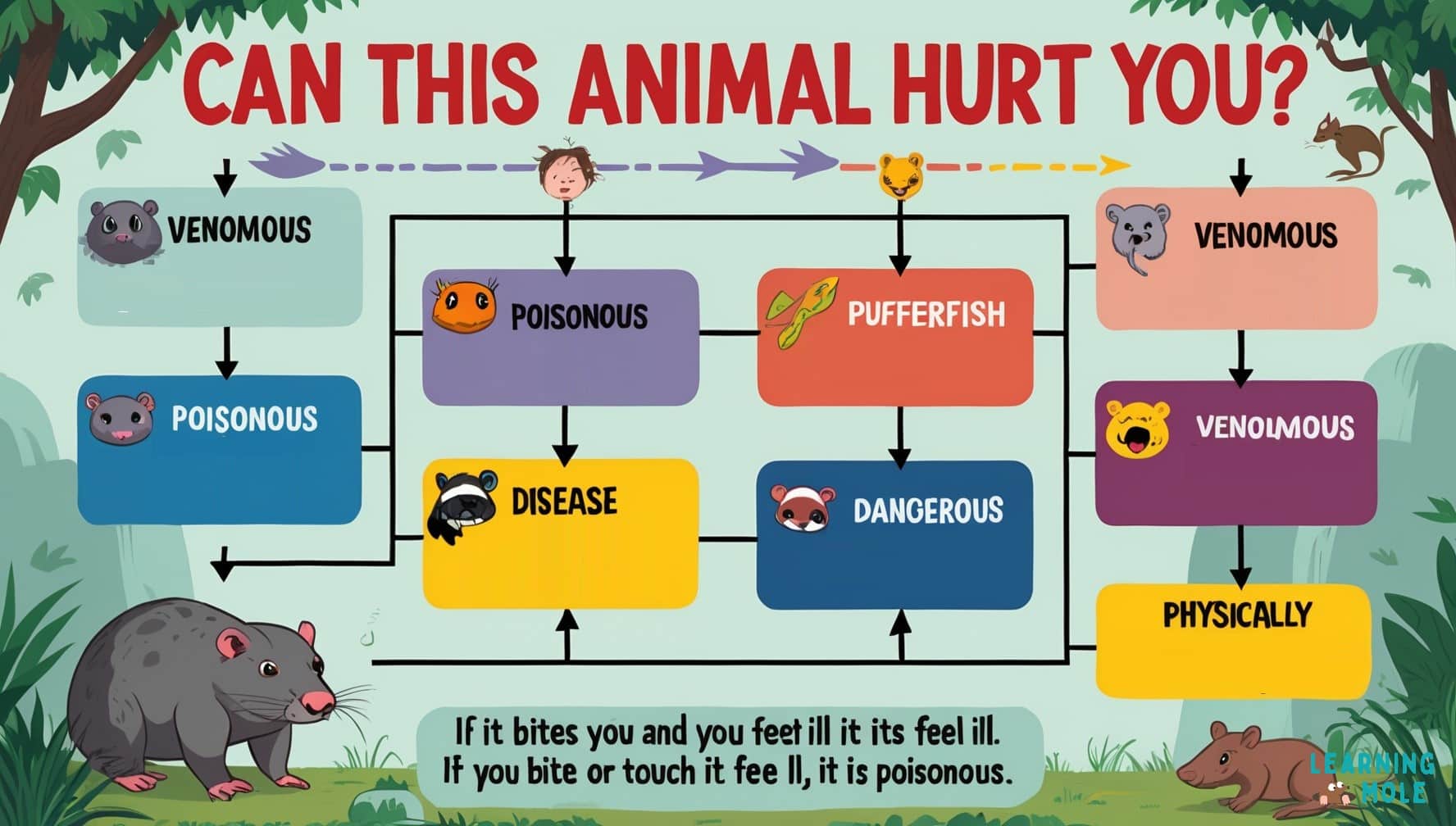
Venomous animals inject toxins by biting, stinging or spiking, while poisonous animals cause harm when they are eaten or touched. The two words are often swapped in everyday speech, so this is one of the most useful pieces of vocabulary to teach alongside this topic. A simple rule helps pupils remember the difference: if it bites you and you become ill, it is venomous, but if you bite it (or touch it) and become ill, it is poisonous.
Term
How the toxin reaches you
Examples from this list
What to do
Venomous
Injected through a bite, sting or spur
Slow loris, platypus
Never handle the animal, and seek medical help after any bite
Poisonous
Swallowed, or absorbed through skin, eyes or cuts
Pufferfish, poison dart frogs, hooded pitohui
Never eat or touch the animal, and wash hands after any contact
Disease carrying
Germs spread through bites, scratches, urine or droppings
Rats, raccoons, domestic cats, red foxes
Keep wounds clean, wash hands and avoid contact with droppings
Physically dangerous
Claws, teeth, kicks or body weight
Bears, hippos, kangaroos, giant anteaters
Keep a safe distance and never feed or corner the animal
Most attacks happen when animals feel threatened
The great majority of injuries from cute but dangerous animals happen because a person got too close, tried to feed or touch the animal, or came between a mother and her young. Wild animals see an approaching human as a possible predator. A swan guarding its nest, a kangaroo cornered by a dog or a bear surprised on a forest path is defending itself, and understanding this helps children see danger from the animal’s point of view.
The 20 cute but deadly animals at a glance
The table below summarises the top 20 cute but deadly animals, where they live and the main hazard each one poses. The final column gives the safest way to enjoy each animal, which makes the table a handy reference for classroom displays or a quick check before a zoo or aquarium visit. For a wider look at how these animals are grouped, our guide to vertebrates for kids explains the five main vertebrate groups that appear across this list.
Animal
Where it lives
Why it looks cute
Main hazard
Safest way to enjoy it
Pufferfish
Warm seas worldwide
Inflates into a round ball
Poison in its organs and skin
Watch in aquariums and never eat unlicensed puffer
Bobcat
North America
Kitten-like face and short tail
Claws and teeth
Watch from a distance in wildlife parks
Slow loris
South and south-east Asia
Huge eyes and soft fur
Venomous bite
Support conservation and never keep one as a pet
Poison dart frog
Central and South America
Tiny and brightly coloured
Poison in its skin
Watch through glass at zoos
Bear
North America, Europe and Asia
Thick, cuddly fur
Strength, claws and teeth
Watch on wildlife films or from safe viewing areas
Leopard seal
Antarctic waters
Smiling face
Powerful bite
Watch on documentaries
Mute swan
UK, Europe and beyond
Elegant white feathers
Wing strikes and bites near nests
Keep back during the nesting season
Red fox
UK and much of the world
Dog-like face and fluffy tail
Bites, mange and parasites
Watch quietly and never hand feed
Koala
Eastern and south-eastern Australia
Fluffy ears and round face
Sharp claws and bites
Visit sanctuaries that do not allow cuddling
Kangaroo
Australia
Big eyes and hopping movement
Powerful kicks
Stay well back, especially from large males
Platypus
Eastern Australia and Tasmania
Duck-like bill
Venomous ankle spurs on males
Watch in sanctuaries and never pick one up
Dolphin
Oceans worldwide, including UK waters
Friendly “smile”
Bites and ramming
Watch from the shore or licensed boat trips
Hooded pitohui
New Guinea
Small, colourful songbird
Poison in feathers and skin
Learn about it through photos and films
Giant panda
Mountains of central China
Black and white fur
Strong jaws and claws
Watch at zoos from public areas
Hippopotamus
Sub-Saharan Africa
Round body and small ears
Huge teeth and weight
Watch from vehicles or viewing platforms
Domestic cat
Homes worldwide
Soft fur and small paws
Scratches, bites and germs
Handle gently and wash hands after cleaning litter
Polar bear
Arctic
White fluffy fur
Size, teeth and claws
Watch on documentaries
Rat
Worldwide
Small body and twitching nose
Germs in urine and bites
Keep wild rats away and wash hands
Giant anteater
Central and South America
Long nose and bushy tail
10 cm front claws
Watch from a distance at zoos
Raccoon
North America and parts of Europe
Black “mask” and tiny hands
Bites and germs in droppings
Never feed or keep as a pet
20 cute animals that are dangerous
Each profile below explains why the animal looks harmless, what makes it dangerous and when it is most likely to pose a risk. The animals are grouped by number for easy reference in class, and many of them are excellent examples of adaptation for Year 6 science.
1. Pufferfish
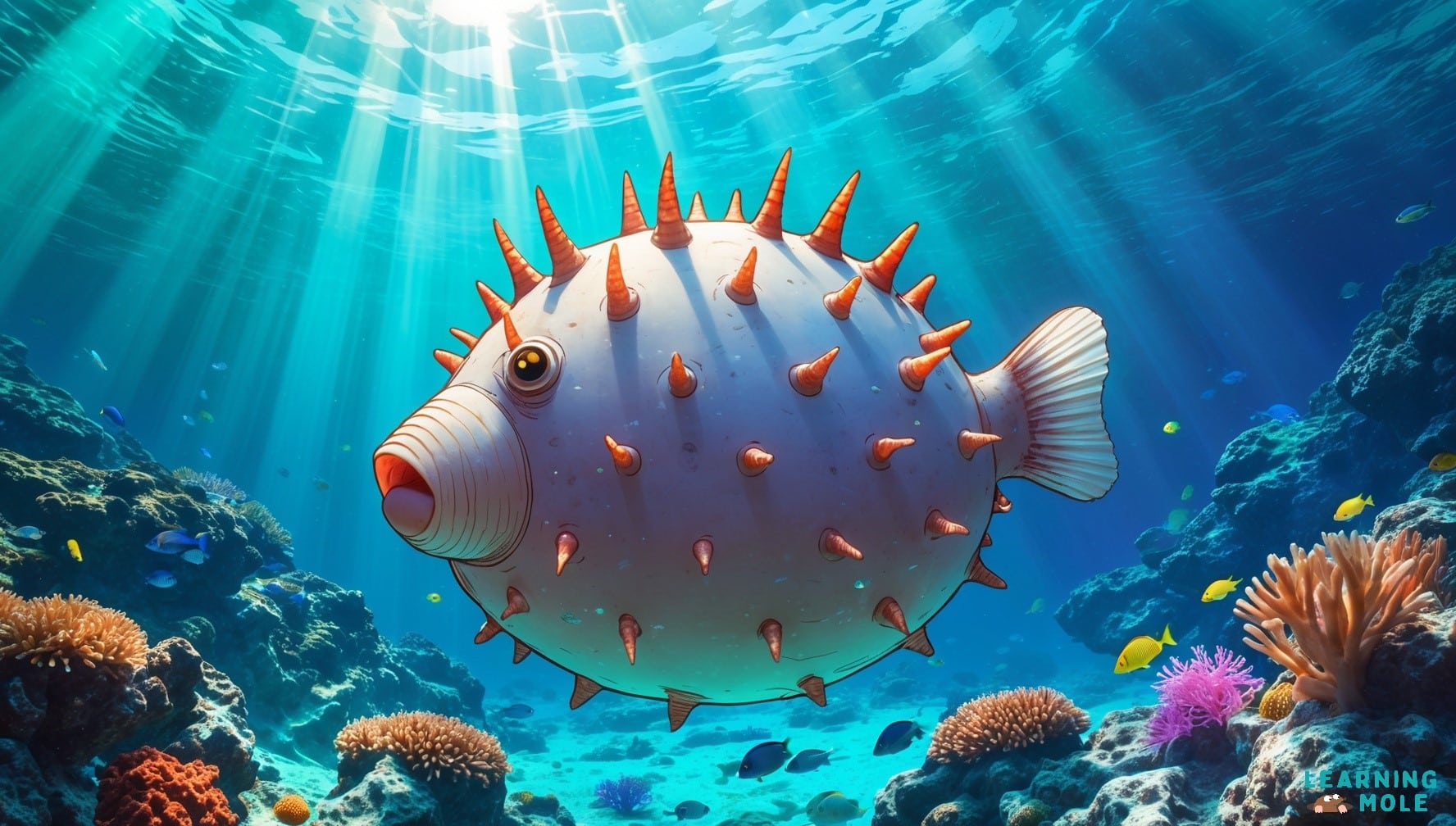
Pufferfish are one of the most poisonous animals on Earth, even though they look comical when they puff up into a spiky ball. They inflate by gulping large amounts of water, which makes them too big and awkward for most predators to swallow. Many species also contain tetrodotoxin, a powerful nerve poison found mainly in the liver, ovaries and skin.
There is no antidote to tetrodotoxin, which is why pufferfish (known as fugu in Japan) can only be prepared in Japanese restaurants by specially licensed chefs who remove the toxic parts. The danger comes from eating the fish rather than swimming near it, so pufferfish are a useful example of a poisonous animal rather than a venomous one.
2. Bobcats
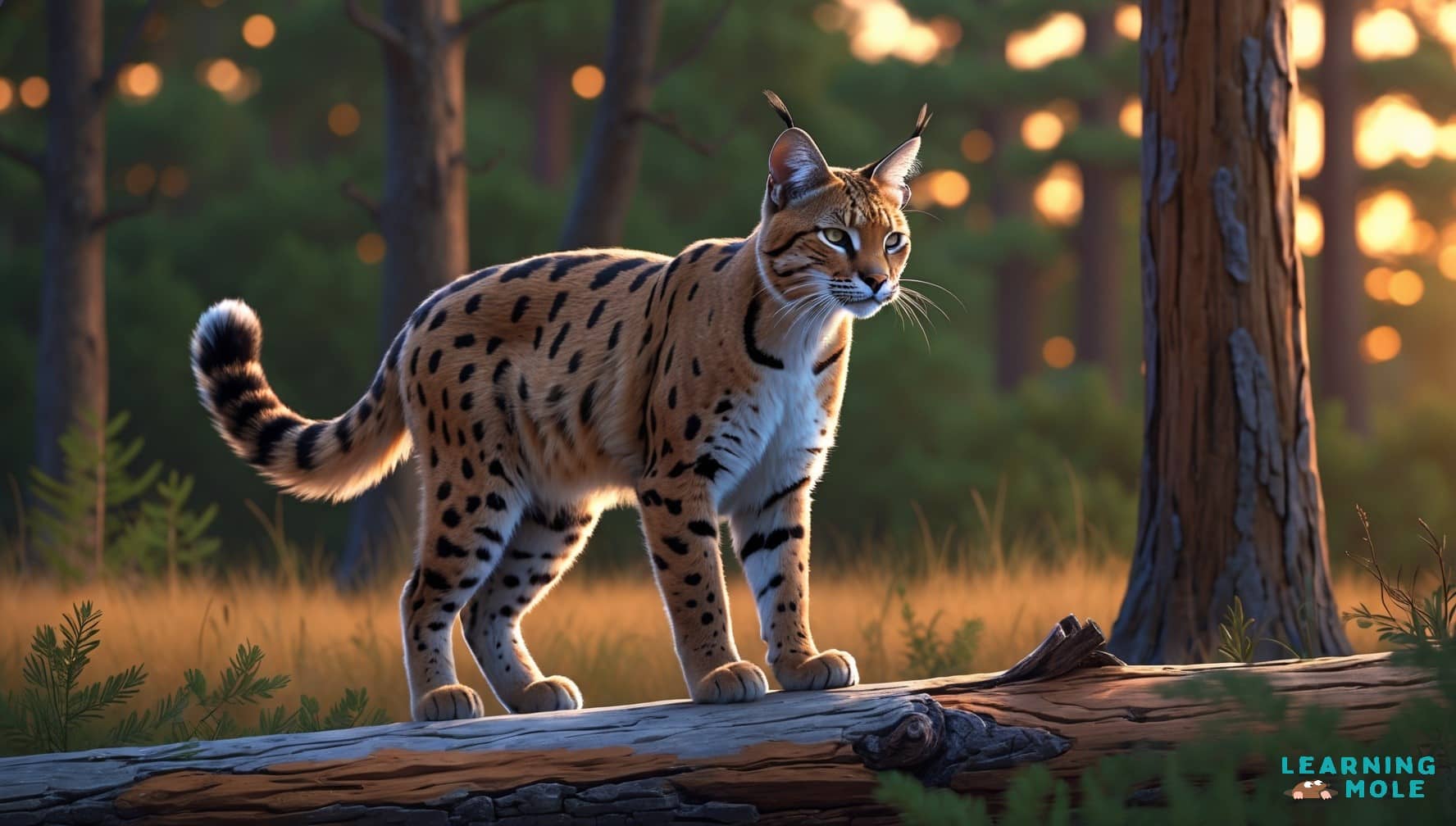
Bobcats look like oversized tabby cats, with tufted ears, a spotted coat and the short “bobbed” tail that gives them their name. They live across North America, from southern Canada down into Mexico, and are roughly twice the size of a pet cat.
Bobcats are skilled hunters of rabbits, rodents and birds, and they will also take small pets such as cats and chickens. Attacks on people are extremely rare and are usually linked to an animal that is sick with rabies or has been cornered. Even so, bobcat kittens should never be approached, because a mother bobcat will defend them fiercely.
3. Slow loris
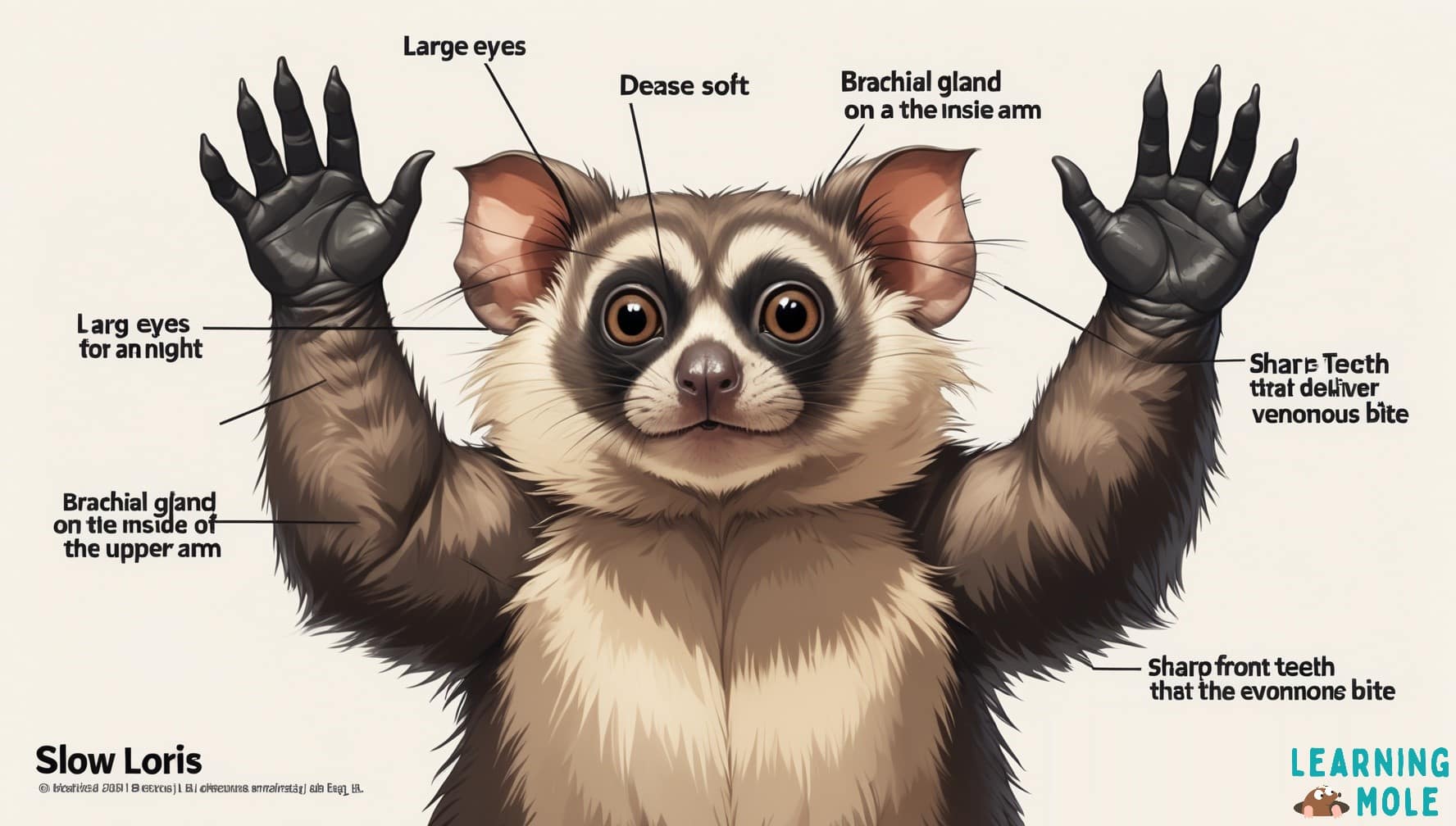
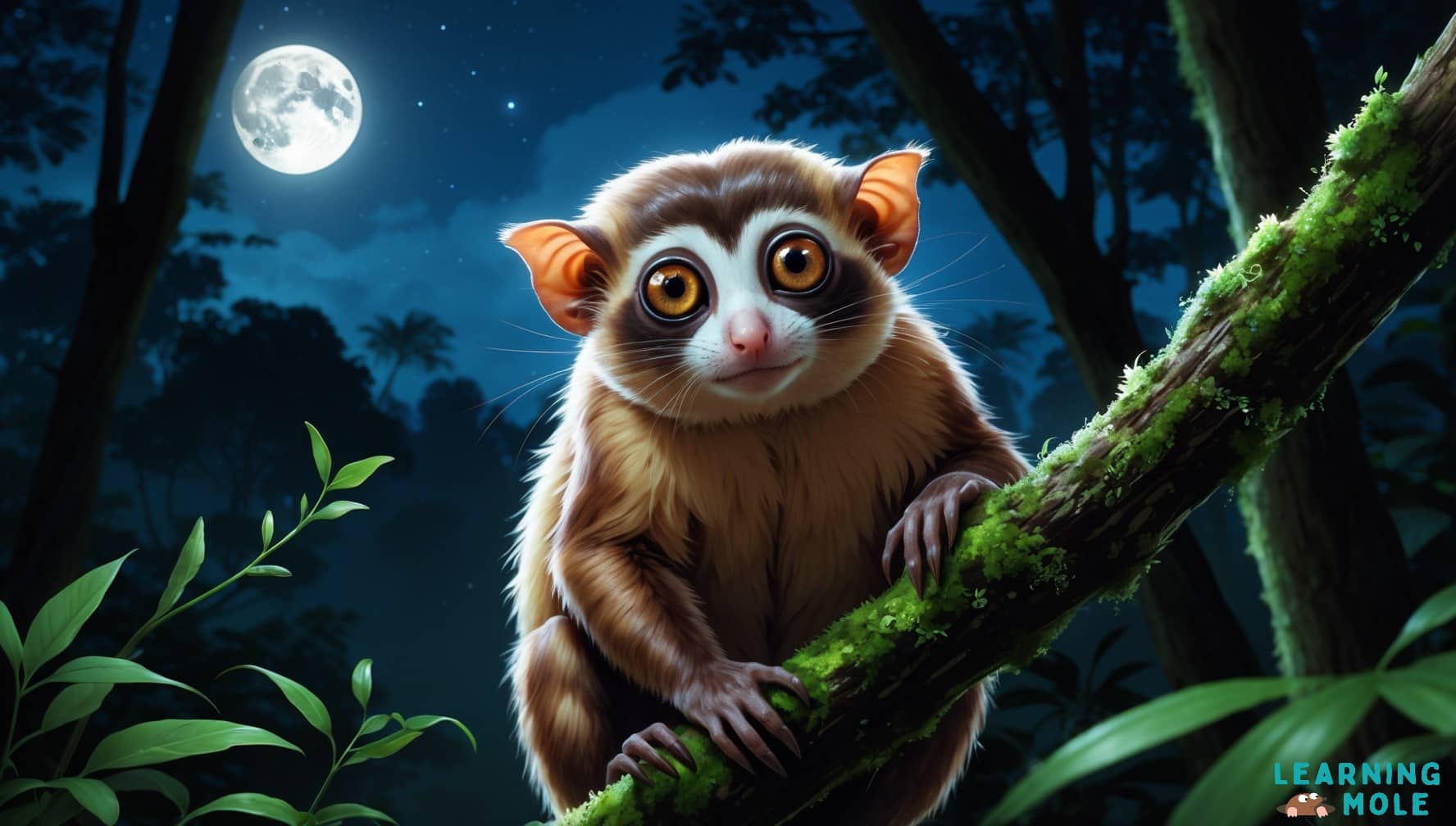
The slow loris is the only venomous primate known to science, which makes it one of the most surprisingly cute but deadly animals on this list. Slow lorises live in the forests of South and Southeast Asia and move slowly through the branches at night, using their enormous eyes to see in the dark.
When threatened, a slow loris raises its arms above its head and licks a gland on the inside of its upper arm. The oily liquid from this gland mixes with saliva to create venom, which is delivered through a bite. Bites cause pain and swelling, and in rare cases people have suffered a serious allergic reaction called anaphylactic shock. Videos of slow lorises “enjoying being tickled” with their arms raised actually show a frightened animal preparing to defend itself, and the illegal pet trade has pushed several species towards extinction.
4. Poison dart frogs
Poison dart frogs are tiny rainforest frogs whose bright colours act as a warning to predators. They live in Central and South America, and scientists call this kind of warning colouring aposematism. A predator that tastes one of these frogs quickly learns to avoid anything that looks similar.
The golden poison frog of Colombia is one of the most poisonous animals in the world. Indigenous hunters traditionally wiped their blow darts on its skin, which is how the group got its name. Interestingly, the frogs get their toxins from the ants and mites they eat in the wild, so poison dart frogs raised in zoos on a different diet are not poisonous at all.
5. Bears
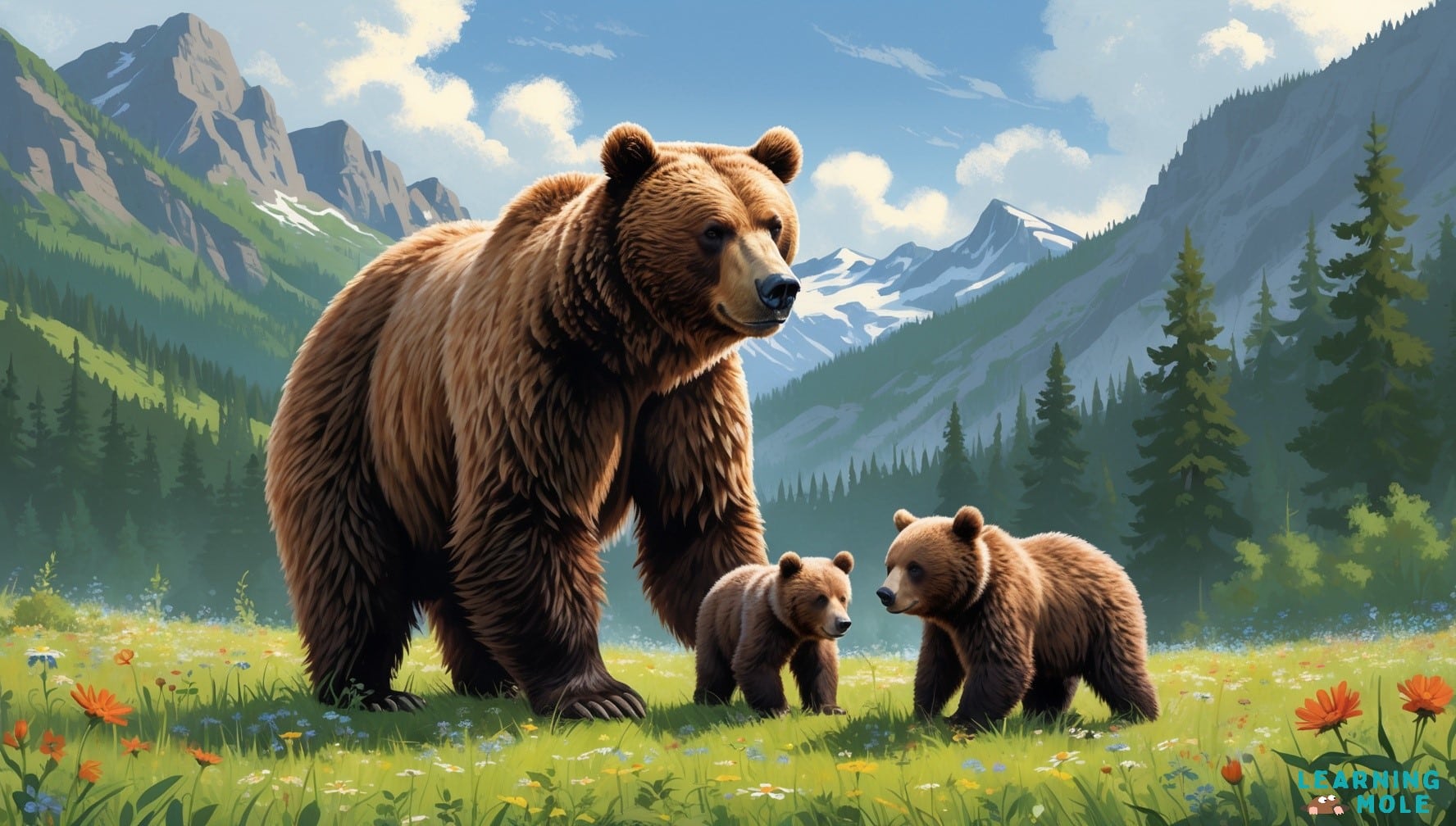
Bears look like giant teddy bears, but they are large, powerful animals with long claws and strong jaws. Brown bears and black bears live across North America, Europe and Asia, and they can run much faster than any person, even over rough ground.
Most bears avoid humans, and attacks are rare. Danger usually comes when a bear is surprised at close range, when it is protecting food, or when a mother believes her cubs are under threat. Bears that learn to find food in bins or campsites can lose their natural fear of people, which is why wildlife parks ask visitors never to feed them. You can read about two smaller species in our article on moon bears and sun bears.
6. Leopard seal
Leopard seals have a spotted coat and a wide mouth that looks like a permanent smile, but they are top predators in the waters around Antarctica. They are one of the largest seals in the Southern Ocean and feed on penguins, fish, krill and even other seals.
Unlike many seals, leopard seals usually live alone, and males are known to sing underwater during the breeding season. They have powerful jaws and long teeth, and they have been known to approach and bite people in the water. In 2003, a leopard seal fatally attacked a British Antarctic Survey scientist who was snorkelling near Rothera Research Station, which is why researchers now follow strict safety rules around them.
7. Mute swan
Mute swans are one of the most familiar birds in the UK, gliding across parks, rivers and lakes with their white feathers and bright orange bills. In Ireland, they are linked to the legend of the Children of Lir, in which four children are turned into swans for 900 years, and in England and Wales, unmarked mute swans on open water are traditionally owned by the Crown.
Swans become protective during spring, when they are guarding nests and young cygnets. A swan that feels threatened will hiss, raise its wings and may charge or strike with its wings and beak. The popular claim that a swan can break a person’s arm is very unlikely, according to the RSPB, but a wing strike can still cause bruises and knock a small child over near water. Our article on the life cycle of a cygnet explains why spring is such a protective time for swan families.
8. Red fox
Red foxes are native to the UK and are now common in towns and cities as well as the countryside. With their fluffy tails and dog-like faces, they are often seen as one of the friendliest-looking wild animals in Britain.
Foxes almost always run away from people rather than fight, which makes them one of the least dangerous animals on this list. They can bite if they are cornered or hand-fed, and they can carry mange, fleas and parasites such as roundworm. The UK is free of rabies, but foxes elsewhere in the world can carry the disease. Foxes play an important part in local food chains by eating rats, mice and rabbits, so they are best enjoyed by watching quietly from a window.
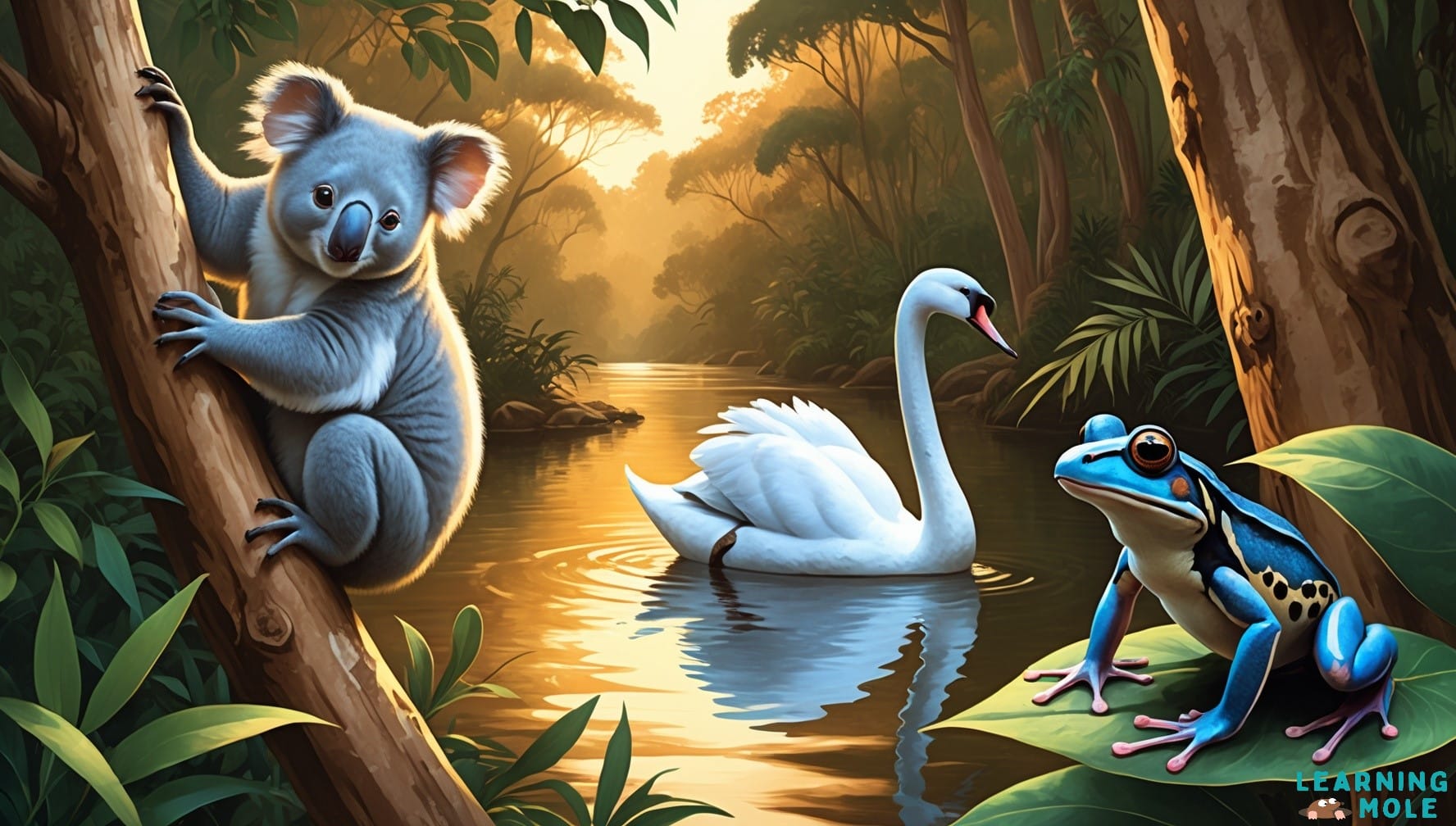
9. Koalas
Koalas are marsupials rather than bears, despite the common nickname “koala bear”. They live in the eucalyptus forests and woodlands of eastern and south-eastern Australia and can sleep for up to 18 to 22 hours a day, because their leafy diet provides very little energy.
Koalas have two thumbs on each front paw and long, curved claws that let them grip smooth tree trunks. Those same claws can cause deep scratches if a koala is frightened or handled, and koalas can also bite. In the wild, many koala populations are affected by a disease called chlamydia, which spreads between koalas and causes illness and infertility. Many Australian wildlife experts now discourage koala cuddling because handling causes the animals stress.
10. Kangaroos
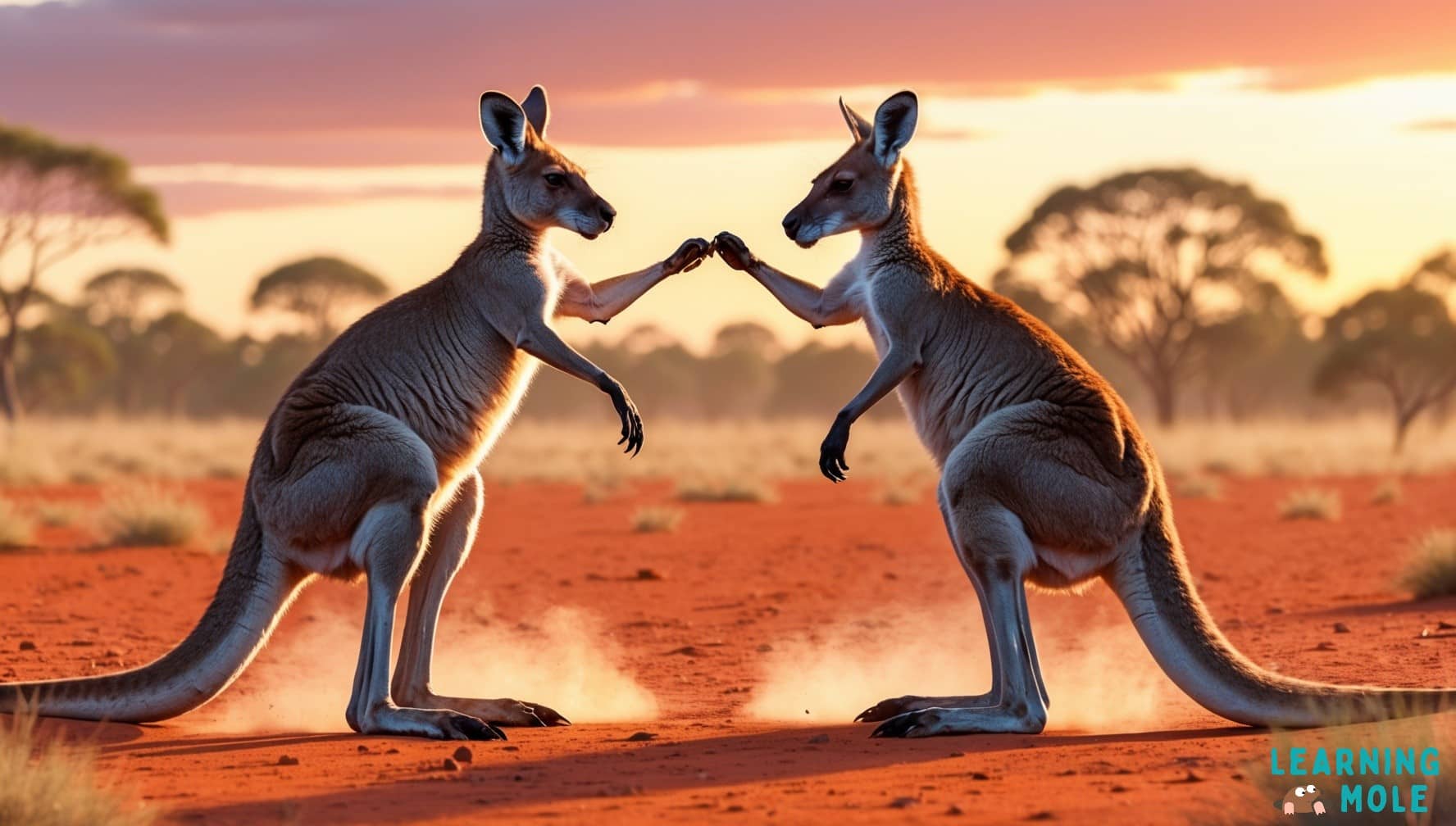
Kangaroos are Australia’s most famous animals, and their big eyes and bouncing movement make them look gentle and friendly. The red kangaroo is the largest marsupial in the world, and large males standing upright can be as tall as an adult person.
Male kangaroos fight each other by “boxing”, grabbing with their front paws while balancing on their thick tails and kicking with their powerful back legs. Those back feet have strong claws and can cause serious injuries. Most problems happen when people try to feed or approach kangaroos, or when dogs chase them. Our guide to Australian animals for kids includes more facts about kangaroos and their neighbours.
11. Platypus
The platypus is one of the strangest animals on Earth, with a duck-like bill, a beaver-like tail and webbed feet. It lives in rivers and streams in eastern Australia and Tasmania, and it is one of only five living species of monotremes, which are mammals that lay eggs.
Male platypuses have a sharp spur on the inside of each back ankle, connected to a venom gland. The venom is not known to have killed a person, but it causes extreme pain that ordinary painkillers do little to relieve, and the swelling and discomfort can last for days or even weeks. The platypus is a perfect example for Year 6 classification lessons, because it breaks so many of the rules children learn about mammals.
The LearningMole video above introduces the platypus alongside kangaroos, koalas and Tasmanian devils. It works well as a starting point before pupils compare the Australian animals in the summary table.
12. Dolphins
Dolphins are mammals that breathe air through a blowhole, and their curved mouths make them look as though they are always smiling. They are intelligent, social animals that live in groups called pods, and bottlenose dolphins can be seen around the UK coast in places such as Cardigan Bay in Wales and the Moray Firth in Scotland.
Wild dolphins are strong animals that can bite and ram, and they sometimes behave aggressively towards each other and towards swimmers who get too close. Feeding wild dolphins changes their natural behaviour and can make them more likely to approach boats and people. The safest way to see them is from the shore or on a licensed wildlife boat that follows marine wildlife guidelines.
13. Hooded pitohui
The hooded pitohui is a small orange and black songbird from New Guinea, and it was the first poisonous bird identified by scientists. The American researcher John Dumbacher noticed his mouth tingling after handling the birds, and his team published their findings in the journal Science in 1992.
The pitohui’s skin and feathers contain batrachotoxin, the same family of toxins found in poison dart frogs. Scientists believe the birds get this toxin from the beetles they eat. Touching the feathers can cause numbness and tingling, and the poison helps protect the birds from predators and parasites. It is a fascinating example of two completely different animals, a frog and a bird, developing the same defence.
14. Giant pandas
Giant pandas are some of the most loved animals in the world, with their black and white fur and slow, gentle way of eating. They live in mountain forests in central China and eat bamboo for almost all of their diet.
Pandas belong to the bear family, and they have the jaws and teeth of a meat-eater, even though they mainly eat plants. Their powerful bite allows them to crush tough bamboo stems, and their claws are long and sharp. Pandas are usually calm, but there have been cases of zoo visitors being bitten after climbing into panda enclosures. Conservation work has helped panda numbers recover, and the species is now listed as vulnerable rather than endangered.
15. Hippopotamus
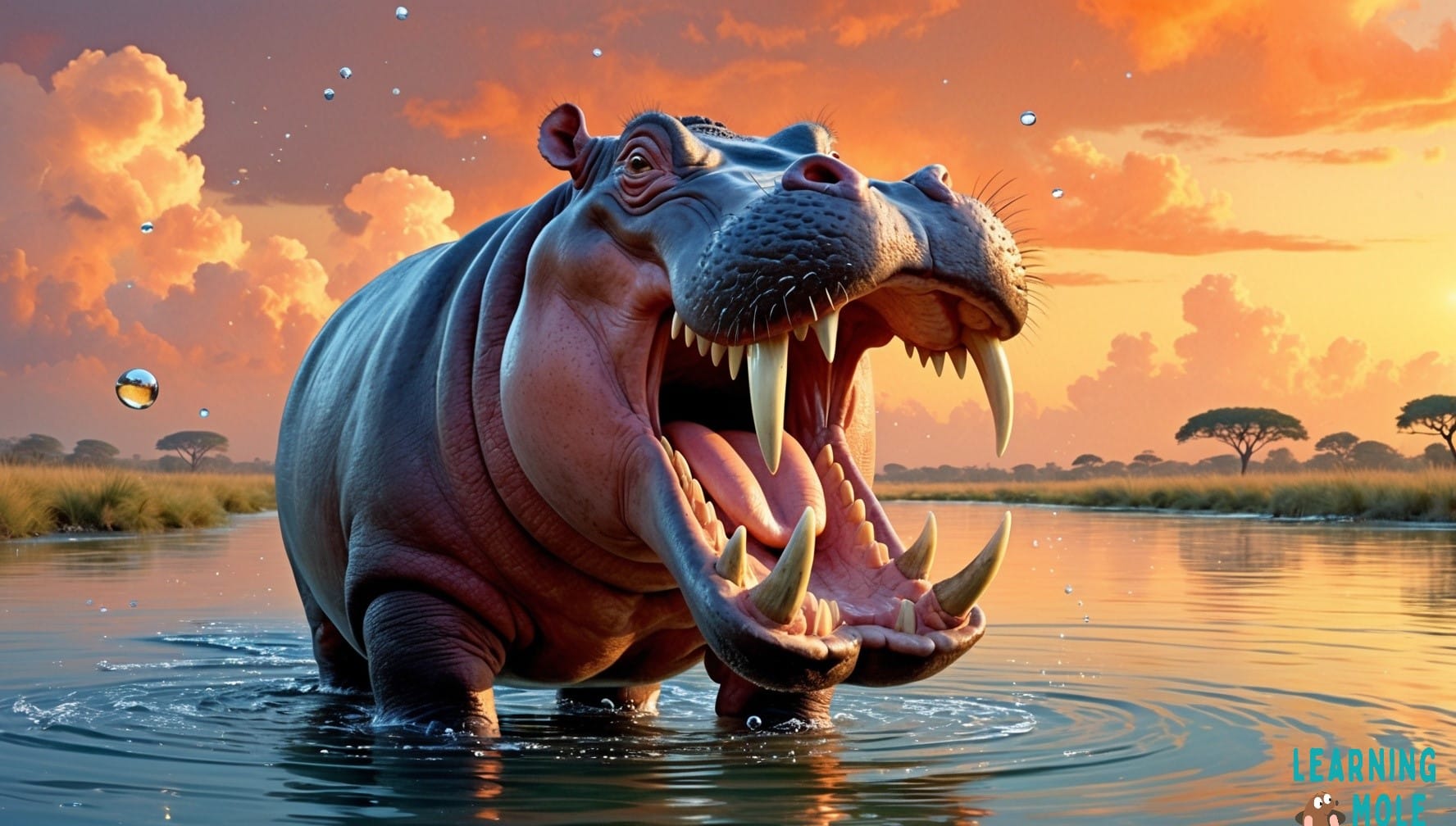
Hippos have round bodies, small ears and stubby legs, which can make them look like gentle, cartoon-style animals. They live in rivers and lakes across sub-Saharan Africa and spend most of the day in water to keep cool. They even produce a reddish oily liquid that works like a natural sun cream.
Hippos are often described as one of the most dangerous large animals in Africa. They are fiercely territorial in the water, and mothers are very protective of their calves. Their tusk-like teeth can grow very long, and despite their size, they can run faster than most people over short distances. Surprisingly, hippos cannot swim, so they move through water by walking or bouncing along the riverbed.
16. Domestic cats
Pet cats belong on this list because they are skilled hunters, even though they are not a danger to most people. Cats are cute, cuddly and intelligent, but their hunting instinct remains strong, and UK pet cats catch large numbers of birds and small mammals every year.
For people, the main risks come from scratches and bites, which can become infected. A condition called cat scratch disease can cause swollen glands and a fever, and cat litter can carry toxoplasmosis, which is why the NHS advises pregnant women to wear gloves or avoid cleaning litter trays. Handling cats gently, keeping scratches clean and washing hands afterwards keeps both cats and children safe.
17. Polar bears
Polar bears look like soft white teddy bears, but they are the largest land carnivores on Earth. They live in the Arctic and hunt seals from the sea ice. Their fur looks white, but each hair is actually see-through, and the skin underneath is black to help absorb heat from the sun.
Attacks on people are rare because few people live near polar bears. Hungry polar bears can see humans as possible prey, which makes them more dangerous than most other bears. As Arctic sea ice melts earlier each year, polar bears spend more time on land and closer to towns. The species is listed as vulnerable, and our article on polar animals explains how they and other Arctic animals are adapted to the cold.
18. Rats
Rats are intelligent, social animals, and pet rats (often called fancy rats) can be friendly, clean and easy to handle. Wild brown rats are a different matter, because they often live in sewers, bins and drains where they pick up germs.
Wild rats can spread leptospirosis through their urine. In its severe form, known as Weil’s disease, it can damage the liver and kidneys. Bites can also cause an infection called rat-bite fever. Children should never touch wild rats or their droppings, and everyone should wash their hands after outdoor activities near rivers, canals or farm buildings.
19. Giant anteaters
Giant anteaters have long noses, bushy tails and a slow, shuffling walk that makes them look gentle and a little clumsy. They live in grasslands and forests in Central and South America and use a sticky tongue up to 60 cm long to eat thousands of ants and termites every day. Their eyesight is poor, but their sense of smell is excellent.
Their front claws are about 10 cm long and are used to rip open ant and termite nests. Anteaters walk on their knuckles to protect these claws. When threatened, a giant anteater rears up on its back legs, balancing on its tail, and swipes with its claws. Attacks on people are rare, but a few fatal cases have been recorded in Brazil.
20. Raccoons
Raccoons have a black “mask” across their eyes, a striped tail and small hands that can open jars, bins and even door latches. They live across North America and have also spread into parts of Europe, including Germany, after animals were released or escaped from fur farms.
Raccoons can carry rabies in North America, and their droppings can contain raccoon roundworm, a parasite that can make people seriously ill. They can also spread leptospirosis and salmonella. Raccoons bite and scratch when cornered, and they are wild animals that should never be kept as pets or fed by hand.
How cute but deadly animals fit the National Curriculum
Cute but dangerous animals link directly to several parts of the National Curriculum for science in England, which makes this topic far more than a fun list of facts. Teachers can use these animals to introduce classification, adaptation and habitats in a way that holds children’s attention from the first slide, and LearningMole’s free science articles and videos cover each of the units listed below.
Year group
National Curriculum topic
How these animals help
Year 2
Living things and their habitats
Matching animals to habitats such as rainforests, rivers and the Arctic, and building simple food chains
Year 3
Animals, including humans
Comparing skeletons, claws and teeth, and discussing what each animal eats
Year 4
Living things and their habitats
Grouping animals with classification keys and discussing how environmental change affects polar bears and koalas
Year 5
Living things and their habitats
Comparing life cycles, including the platypus as an egg-laying mammal
Year 6
Living things and their habitats, and Evolution and inheritance
Classifying animals scientifically and explaining how venom, poison and warning colours are adaptations
The full requirements are set out in the National Curriculum science programmes of study on GOV.UK. Teachers in Northern Ireland can use the same animals within The World Around Us, through strands such as Interdependence and Place. Our article on food chains and how animals depend on each other offers a useful next step once pupils understand how predators and prey fit together.
Teaching resources and support for cute but deadly animals
LearningMole provides free curriculum-aligned videos, articles and activities that help teachers and parents turn surprising animal facts into real science learning. The activities below work with the table and profiles in this article and need little preparation.
Classroom activities that build scientific thinking
A card sort is one of the simplest ways to use this topic in class, and it pairs well with the free classification articles on LearningMole. Print the names and photos of eight animals from the list and ask pupils to sort them into four groups: venomous, poisonous, disease-carrying, and physically dangerous. Pupils then explain how each animal’s danger helps it survive in its habitat. Some animals fit more than one group, which leads to useful discussion about how scientists decide where to place things.
A myth-busting investigation works well for Year 5 and Year 6. Give pupils the claim that “a swan can break a person’s arm” and ask them to research swan anatomy, including the fact that birds have light, hollow bones. Pupils decide whether the claim is likely, unlikely or false, and present their evidence. This builds the working scientifically skill of using evidence to support or refute ideas, and it shows children that a fact repeated many times is not always true.
Michelle Connolly, LearningMole founder, has over 15 years of experience as a primary school teacher, and she sees this topic as an ideal way into adaptation. “Children often assume a dangerous animal will look fierce, so a fluffy koala with sharp claws makes them stop and think. Once pupils understand that every claw and every toxin has a survival purpose, their fear usually turns into respect for the animal.”
Supporting learning about animals at home
Parents can extend this topic at home by watching wildlife documentaries together and pausing to ask which animals might be dangerous and why. A visit to a zoo, aquarium or local park becomes a learning opportunity when children look for the features that help each animal survive. Talking calmly about safety rules, such as never feeding wild animals and washing hands after touching pets, gives children practical knowledge without making them frightened.
LearningMole’s free animal resources and our guide to animal habitat activities offer more ideas for both classroom and home learning. Our article on endangered animals is a good follow-up for children who want to know why the slow loris, giant anteater and polar bear need protection.
Frequently asked questions about cute but deadly animals
What is the most dangerous cute animal in the world?
The golden poison frog is often described as the most dangerous cute animal because its skin contains enough toxin to be deadly to people. It is only about the size of a paperclip and is bright yellow, which makes it look harmless. In terms of large animals, the hippopotamus is usually considered one of the most dangerous in Africa because it is territorial, fast and extremely strong. Both are excellent examples of how appearance can hide real danger.
Can a mute swan really break a person’s arm?
A mute swan breaking an adult’s arm is very unlikely. Birds have light, hollow bones, and the RSPB describes the claim as a myth that is often repeated. Swans can still strike hard with their wings and may hiss, chase or knock over a small child, especially when guarding a nest or cygnets in spring. The safest approach is to keep a calm distance from swans and never get between a swan and its young.
What is the difference between a poisonous animal and a venomous animal?
A venomous animal injects toxins through a bite, sting or spur, while a poisonous animal causes harm when it is eaten or touched. The slow loris and the male platypus are venomous because they deliver toxins through a bite or ankle spur. The pufferfish, poison dart frogs and hooded pitohui are poisonous because their toxins are inside their bodies or on their skin and feathers. A simple rule for children is that if it bites you and you feel ill, it is venomous, and if you bite or touch it and feel ill, it is poisonous.
Are cute but deadly animals a suitable topic for younger children?
Cute but dangerous animals are suitable for KS1 and KS2 when the focus stays on survival and safety rather than on frightening details. Younger children enjoy learning that a swan is protecting its babies or that a frog’s bright colours are a warning sign. These ideas fit well with Year 2 work on habitats and simple food chains. Older KS2 pupils can explore venom, poison and adaptation in more scientific depth.
Why do slow lorises raise their arms?
Slow lorises raise their arms to reach the venom gland on the inside of their upper arm. They lick this gland to mix its oily liquid with their saliva, which makes their bite venomous. The pose looks like an animal enjoying a tickle or asking for a cuddle, but it is actually a defensive position. This misunderstanding has fuelled the illegal pet trade, which is one reason slow lorises are now endangered.
Are platypuses venomous to humans?
Male platypuses are venomous to humans, but their venom is not known to have caused a human death. The venom is delivered through a sharp spur on each back ankle and causes severe pain and swelling that can last for days or weeks. Standard painkillers do very little to ease it. Female platypuses are born with spurs but lose them as they grow, so only males can deliver venom.
Where can teachers find free resources on animal adaptations?
Teachers can find free animal resources on LearningMole, including articles, videos and activity ideas linked to the UK National Curriculum. The classification, habitat and food chain articles linked throughout this guide work well alongside the activities above. LearningMole’s resources are designed by experienced educators for children aged around 4 to 11, and they can be used for whole-class teaching or independent learning at home.
Enjoying wild animals safely from a distance
Cute animals that are deadly show children that appearance tells us very little about how an animal lives or protects itself. The slow loris, the platypus and the poison dart frog look gentle, yet each has developed a powerful way to defend itself. Bears, hippos, swans and kangaroos use strength rather than toxins, while rats, raccoons and even pet cats can spread germs. Every one of these features is an adaptation that helps the animal survive in its habitat.
The most important lesson from this list is that almost all of these animals would prefer to avoid people. Danger usually comes when humans get too close, try to feed wild animals or come between a mother and her young. Teaching children to watch animals quietly, keep a respectful distance and wash their hands after contact with animals gives them safe habits for life, whether they are in a local park, a zoo or on holiday abroad.
Many of the animals on this list, including the slow loris, giant anteater, polar bear and koala, also face serious threats from habitat loss, climate change and the illegal pet trade. Learning about them is the first step towards caring about their future. Explore LearningMole’s free animal articles, videos and activities to keep children curious about the natural world, and use the classroom ideas above to turn this list of surprising animals into a memorable science lesson.
Maths Circus, an innovative platform we've crafted, presents a captivating realm where children learn mathematics through the exciting theme of a circus. The joy of juggling numbers and solving circus...
The 9 times table multiplication has a reputation for being tricky, yet it holds more mathematical magic than any other table in the primary curriculum. Every answer follows two neat...
Article Summary What this article covers: Ten differences between river otters and sea otters, from size, fur and swimming style to diet, tool use and family life, plus which otter...
Article Summary What this article covers: The nine main types of natural disasters, how each one works and how they are measured, which hazards genuinely affect the UK, and how...




Leave a Reply