Establishing a calm-down corner in your classroom can be an immensely beneficial addition, providing a dedicated space for students to manage their emotions and regroup when needed. This tranquil area serves as a safe haven where children can practise self-regulation and develop coping mechanisms for when they feel overwhelmed. By integrating this peaceful zone, you offer a tangible tool that promotes emotional learning and support within the educational environment.
In setting up a calm-down corner, it’s crucial to tailor the space to the diverse needs of your students. This might entail incorporating soft furnishings for comfort, visual elements for calm, or sensory tools to aid in self-soothing. Michelle Connolly, founder of LearningMole and educational consultant with 16 years of classroom experience, notes, “A calm-down corner isn’t just a ‘time out’ space—it’s a strategic area for emotional development, carefully crafted to encourage independence in emotional regulation.”
Understanding the Need for a Calm-Down Corner
Classrooms can be vibrant hubs of learning, but they can also be sources of stress and big emotions for children. Recognising the value of emotional regulation and providing a safe space is crucial for a child’s well-being and learning process.
Recognising Big Emotions
Children often experience a range of emotions that can be overwhelming. When a child feels overwhelmed, angry, or anxious, their ability to focus and engage in learning is compromised. Michelle Connolly highlights that “Children need to understand and express their emotions in a healthy way; a calm-down corner can provide that nurturing environment.” Recognising these signs early is the first step in preventing emotional distress from escalating.
The Role of Emotional Regulation
Emotional regulation is the ability to manage and respond to an emotional experience in an appropriate manner. It is a key component of social-emotional learning, which includes emotional literacy and emotional self-regulation. Teaching children emotional regulation helps them gain emotional awareness, equipping them to handle future challenges more effectively. A dedicated space like a calm-down corner can aid in teaching these invaluable skills.
Essential Elements of a Safe Space
Creating a safe space, like a calm-down corner in the classroom, is pivotal for students to self-regulate and find peace away from the bustle of the classroom. The key components not only cater to their emotional needs but also address sensory preferences.
Designating the Right Location
Choosing the right location for your classroom’s safe space is crucial. You’ll want to identify a low-traffic and quiet area where students can retreat without being amidst the hubbub of classroom activities. The location should be easily accessible yet provide a sense of privacy and separation from the main learning area.
Incorporating Comforting Sensory Items
Sensory items play a significant role in a calm-down space. Items such as soft rugs, tactile objects, or weighted lap pads can provide comfort and sensory input that helps students to self-regulate. Including a variety of options allows students to find what best helps them to soothe and calm.
Choosing Appropriate Seating Arrangements
The seating within a calm-down corner should be comfortable and inviting. Consider options like bean bags, floor cushions, or soft chairs that support relaxation. The goal is to make the designated space inviting enough that students feel compelled to use it when they need a moment to self-regulate.
Michelle Connolly, founder of LearningMole, emphasises that “The success of a safe space is often in its appeal to the child; it should feel like a personal sanctuary, not a timeout zone.” With her 16 years of classroom experience, Michelle understands that the right combination of location, sensory items, and seating can make a significant difference in a student’s day.
Setting Up a Calm-Down Corner
Creating a calm-down corner in your classroom involves more than just designating a space. It’s about carefully crafting an environment that invites tranquillity and offers a peaceful retreat for children needing a break from classroom chaos.
Selecting Calming Colours and Decor
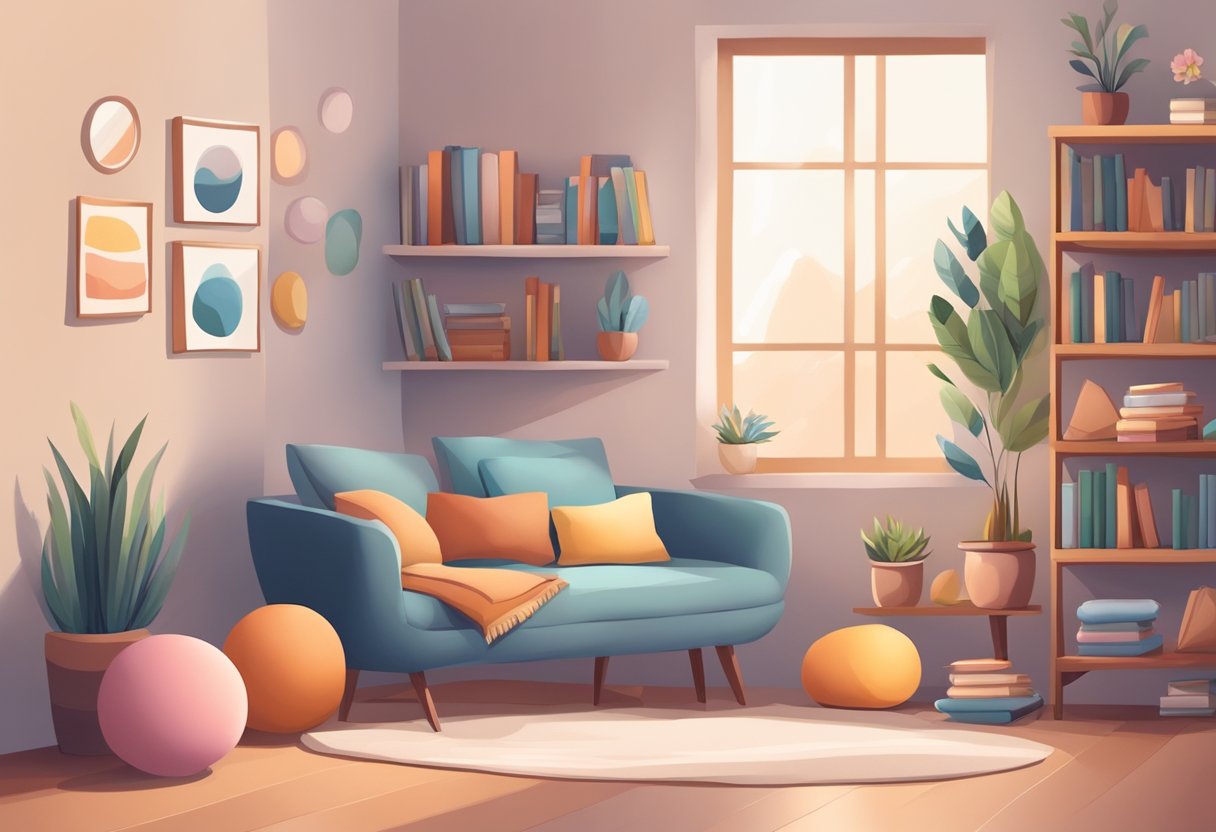
In your calm-down corner, choose colours that naturally soothe, such as blues, greens, and soft purples. These hues are renowned for their calming effects. Decorate with accessories like pillows and blankets that not only complement these colours but also provide comfort. A soft rug can add a layer of cosiness underfoot, making the space feel secure and grounded.
“Ensuring that the colours and textures promote a sense of tranquillity is vital in creating an effective calm-down corner,” says Michelle Connolly, a seasoned educational consultant with over 16 years of classroom experience.
Stocking with Relevant Books and Materials
Incorporate a classroom library within the calm-down corner that houses books focusing on feelings, mindfulness, and relaxation. These can be instrumental in helping children process their emotions. Art materials can also be included for expressive purposes, while calming lights could reduce sensory overload. Remember, the aim is to provide an array of options for children to find their own path to relaxation.
Ensure that your choices for books and materials cater to varied interests and needs, embodying the inclusive ethos of platforms like LearningMole, which offers diverse educational resources for every child.
Integrating Calm-Down Tools and Resources
Creating a calm-down corner equipped with the right tools and resources can be instrumental in helping students manage their emotions and behaviours in the classroom. By incorporating a variety of items and strategies, you can establish a space that caters to the needs of all pupils, providing them with the means to self-regulate.
Using Timers and Signage
In your calm-down corner, utilising timers can help students understand how long they should stay in the area to cool off or regroup. A simple, visible timer demonstrates that the space is available for short intervals, ensuring it is accessible to multiple students throughout the day. Alongside timers, clear and accessible signs can guide the students in the use of the space. With phrases like “Take a Break” or “Time to Reflect”, signage serves as simple instructions that encourage autonomous use of the calming corner.
Providing Emotional Literacy Resources
To encourage emotional growth, incorporating emotional literacy resources such as emotion charts is beneficial. These charts assist students in identifying and articulating their feelings, which is a critical first step in emotional regulation. Additionally, games and activities that foster understanding and discussion of emotions can be included. Fidget toys and sensory bottles provide physical outlets that can help students calm down through tactile engagement.
Remember, a well-equipped calm-down corner with appropriate tools and resources not only supports emotional regulation but also encourages consistent practice of these invaluable skills. Michelle Connolly, a founder and educational consultant with 16 years of classroom experience, notes that “Carefully chosen resources in calm-down corners empower students to independently manage their emotional states, which has a profound impact on their learning and development.” By setting up this space with thought and care, you create an invaluable resource for your classroom.
Implementing Self-Regulation Strategies
Creating a calm-down corner or safe space in your classroom is a proactive way for you to help students manage their own emotions and behaviours. It’s about equipping them with the tools to calm themselves and return to learning with a renewed focus.
Breathing Exercises and Mindfulness
Breathing exercises are a cornerstone of self-regulation. Simple techniques, such as deep breathing, can be a powerful way for students to calm their nervous system. Encourage students to use deep breathing exercises where they inhale slowly through the nose, hold for a count, and exhale through the mouth. Embedding mindfulness into the routine, where students focus on the present moment and their breathing, can further enhance the calming effect.
Example Breathing Exercise:
Inhale for a count of four.
Hold for a count of four.
Exhale for a count of six.
Introducing yoga poses can help as well. Simple poses that can be done within the confines of a classroom allow for physical release and mental focus. Michelle Connolly, a founder and educational consultant with 16 years of classroom experience, asserts, “Incorporating yoga into the school day brings a sense of peace to the classroom dynamic.”
Coping Strategies and Skills Development
A variety of coping strategies can be integrated within the calm-down corner to cater to individual needs. Stress balls or sensory objects provide a tactile experience, enabling students to channel excess energy or anxiety.
Skills Development Activities:
Practice identifying emotions with flashcards.
Use role-playing games to navigate and resolve conflicts.
Teaching students to recognise signs of stress and giving them the skills to manage it is crucial. Equip them with a vocabulary to articulate their emotions and offer them an array of coping skills. Show them that strategies like taking a break, talking about feelings, and engaging in quiet activities can make a positive difference in their emotional state.
Managing the Calm-Down Corner
To effectively manage a calm-down corner, prioritise clear guidelines for its use and ensure that time spent in this space is beneficial.
Establishing Clear Rules and Expectations
You’ll need to set clear rules and expectations for the calm-down corner. This could be a mutual effort, where you and your students collaborate to define what behaviours are appropriate and when it is acceptable to use this area. Emphasise the purpose of the space as a place for students to practise self-regulation and self-management. For example, the calm-down corner should be a quiet zone where students reflect, not socialise or play. Michelle Connolly, an educational consultant with over a decade and a half of experience in the classroom, reinforces this by saying, “A well-managed calm-down corner fosters a culture of respect and self-awareness.”
Setting a Time Limit for Use
Implementing a time limit is another crucial aspect of managing your calm-down corner. Typically, 5 to 10 minutes is sufficient for a student to reset emotionally. Use visual timers or sand timers as a non-disruptive way to signal the end of their time. By doing so, you encourage students to model good practice in time management, and prevent the calm-down corner from becoming an escape from classroom activities. Remember, it’s about helping them regroup quickly and return to learning.
Incorporating Calm-Down Activities
When creating a calm-down corner in your classroom, incorporating specific activities is crucial to its effectiveness. These activities should engage students’ senses and help them regulate their emotions through focused, calming tactics.
Guided Meditation and Sensory Play
Introducing guided meditation can be a highly effective way for students to find inner peace and manage stress. Meditation sessions don’t have to be long; even a few minutes can make a difference. Use simple scripts that encourage students to focus on their breathing and visualise peaceful scenes. Alongside meditation, sensory play with items such as stress balls, kinetic sand, or fidget tools can help students settle their minds.
“Meditation and sensory play allow students to explore calming strategies that work for them individually,” notes Michelle Connolly, an educational consultant with over 16 years in the classroom.
Engaging in Art and Colouring Exercises
Providing art materials like crayons, markers, and paper will enable students to express their emotions through creativity. Colouring books designed for mindfulness are particularly useful, as they require concentration and help children to relax. Setting up a station where students can quietly engage in these exercises will nurture a sense of tranquillity and focus within your quiet corner.
Michelle Connolly suggests, “Art exercises are not just about keeping busy; they’re a form of personal expression that can significantly aid in emotional regulation for pupils.”
Facilitating Emotional Learning and Support
Calm-down corners or safe spaces within the classroom play a pivotal role in fostering students’ emotional literacy and providing them with the necessary support and understanding. By integrating these elements, you can create an environment conducive to nurturing both the mind and body, allowing for effective soothing, processing of emotions, and development of self-awareness.
Teaching Emotional Literacy
Emotional literacy is the foundation of self-awareness and coping strategies. It involves recognising and understanding one’s own emotions, as well as those of others. In your classroom, encourage children to articulate how they feel by using “I feel…” statements. For instance, “I feel upset when I can’t complete my work.” Use visual aids like emotion charts in your calm-down corner to help them identify different emotions. This not only aids in soothing but also empowers them with the vocabulary to express their mental state, which is a crucial step towards processing and managing their feelings effectively.
Michelle Connolly, a renowned educational consultant, states that “Emotional literacy is essential in early education as it lays the groundwork for mature emotional understanding and the development of empathy.”
Offering Support and Understanding
Creating a supportive environment involves validating students’ feelings and showing empathy. Understanding is key here — reassure pupils that feeling a range of emotions is normal and provide them with strategies to cope. Teach them soothing techniques like deep breathing or counting to ten. This helps in calming their body and mind, improving their ability to process challenging emotions and situations. Make sure to tailor calming activities to individual needs, so every child feels heard and supported.
“Each child’s emotional journey is unique, and it’s our role as educators to guide them through their experiences with patience and empathy,” comments Michelle Connolly, who brings significant classroom experience to the conversation.
By equipping children with the skills to navigate their emotions, you’re setting them on a path to a more resilient and emotionally intelligent future.
Adapting the Space for Different Needs
Creating a classroom calm-down corner or safe space involves tailoring the environment to accommodate a diverse range of sensory needs and preferences. Your goal is to provide a supportive area that students can use when feeling overwhelmed or in need of a moment to regulate their emotions.
Making the Area Accessible
To ensure the calm-down corner is accessible to all students, consider the physical layout and accessibility. Furniture should be arranged to allow easy movement for all, including those with physical disabilities. Include elements such as sensory tools or fidgets within easy reach so that students can utilise them independently as needed. It’s also vital to make sure the space is not overly secluded, promoting a sense of safety while remaining within the supervision of an educator.
Customising for Individual Sensory Preferences
Each student may have unique sensory preferences, and the aim is to adapt the calm-down area to these various needs. For individuals who are sensitive to noise, offering noise-cancelling headphones can make a significant difference. A selection of sensory tools that include different textures and weighted items can help manage sensory overload. Michelle Connolly, a seasoned educational consultant, advises, “Include a variety of options in your calm-down kit to cater to different sensory triggers, helping each child find their personal route to regulation.”
Creating a Culture of Self-Soothing
Cultivating self-soothing abilities in children enables them to manage their emotions and gives them tools to face challenging situations. It is a crucial element of self-regulation, promoting a positive atmosphere where each child can thrive.
Modelling Self-Regulation Behaviours
You can foster self-regulation skills in your students by being a role model. Displaying calmness and demonstrating self-soothe techniques in real time allows children to learn these practices. Use your body language and voice to convey peacefulness. For instance, take deep breaths when addressing an issue and discuss your thought process aloud. “When you see me taking deep breaths before responding, I’m using a self-soothing technique to stay calm”, says Michelle Connolly, an educational expert with extensive classroom experience.
Encouraging Independence
Giving children the tools to manage their emotions independently is vital. Create a quiet place in the classroom stocked with sensory objects like squishy pencils or soft fabrics that can aid in the process. Encourage children to identify their own regulation zones and decide when to visit the calm-down corner. Provide journals or notebooks where they can reflect personally, promoting a sense of ownership over their emotional journey. As Michelle Connolly puts it, “Encouraging students to recognise and act upon their need to self-regulate is empowering—it teaches them essential life-long coping skills.”
Through these methods, children will learn that they have both the right and the ability to take control of their emotions and behaviours.
Maintaining and Refreshing the Calm-Down Area
Creating a calm-down corner or safe space in your classroom is an ongoing commitment. To maintain the effectiveness of this area, you need to regularly update the resources and assess their impact on your learning environment.
Regularly Updating Resources
In your calm-down area, keep a variety of resources and activities that cater to different coping mechanisms. This may include tactile objects like squishy balls or sensory mats, as well as calming visual aids. Rotate items such as bean bags and cushions to ensure they remain clean and inviting. The inclusion of new resources can also revitalise the area and keep students interested.
Michelle Connolly, an educational consultant with 16 years of classroom experience, said, “It’s essential to ensure your calm-down area evolves with your pupils’ needs, often refreshing it with new activities that draw their interest and engagement.”
Assessing the Effectiveness of the Space
To ensure the calm-down area remains a beneficial part of the learning environment, conduct regular evaluations. This can involve observing student interactions within the space and seeking feedback from the students themselves. Promptly address any issues to maintain a safe and effective area. Remember, the goal is to provide a secure spot where students can practice coping strategies and return to learning refreshed and ready to engage.
Maths Circus, an innovative platform we've crafted, presents a captivating realm where children learn mathematics through the exciting theme of a circus. The joy of juggling numbers and solving circus...
Mexican traditions blend the customs of ancient Mesoamerican peoples, such as the Aztecs and the Maya, with Catholic festivals brought by Spanish settlers in the sixteenth century. The result is...
The moose (Alces alces) is the largest member of the deer family alive today, and a fully grown bull can stand about 2 metres tall at the shoulder, which makes...




Leave a Reply