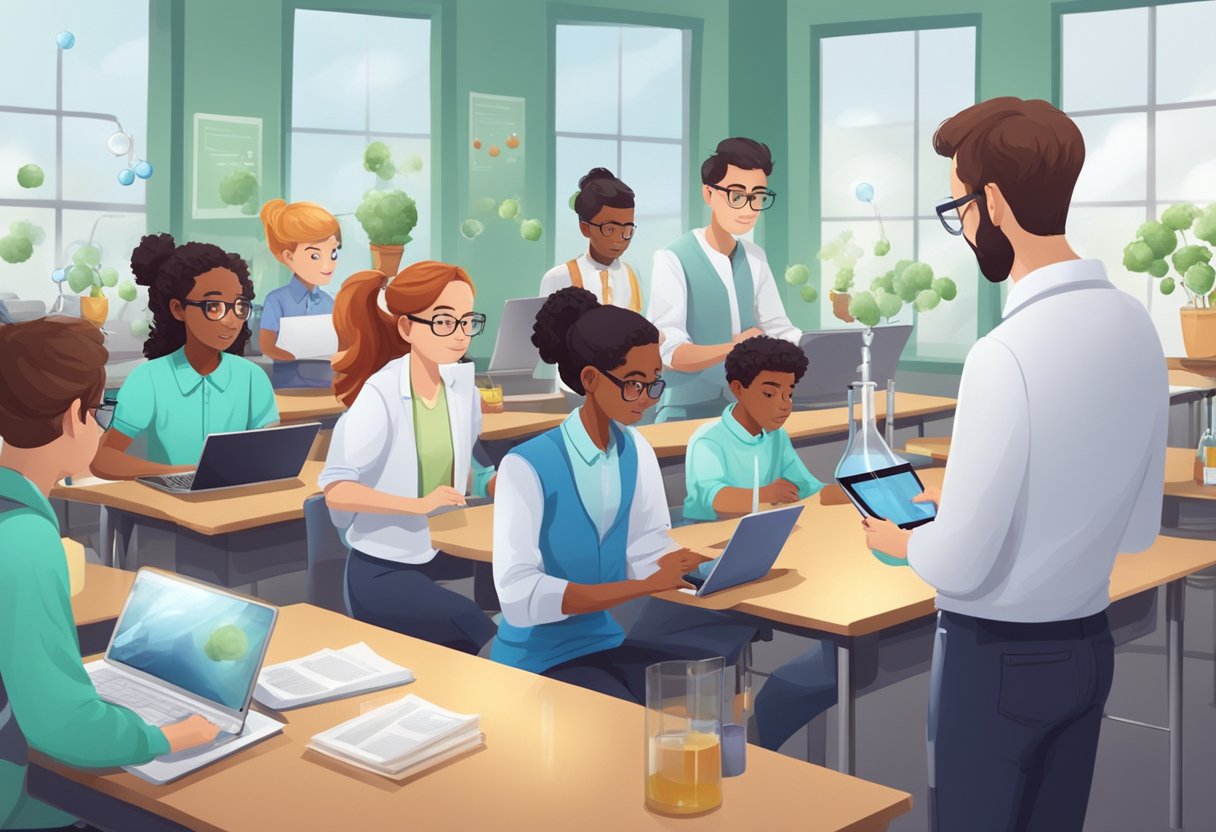
Hands-on activities make abstract concepts tangible, breathing life into chemistry classrooms. Effective chemistry activities bridge the gap between theory and real-world applications. They transform complex ideas into memorable learning experiences. The best classroom activities for teaching chemistry combine safety, accessibility, and the wow factor that sparks curiosity and encourages deeper understanding of chemical principles.
“As an educator with over 16 years of classroom experience, I’ve found that students retain chemistry concepts far better when they can see, touch and experiment with them,” says Michelle Connolly, educational consultant and founder of LearningMole. “The most effective activities connect chemistry to everyday life, making the invisible world of molecules and reactions visible and relevant.”
Whether you’re teaching about chemical reactions, molecular structures, or periodic table properties, the right classroom activities can turn challenging topics into exciting discoveries. From card activities for teaching elements and compounds to experiments using household items, these approaches create powerful learning conditions that enhance student engagement in chemistry classrooms.
Understanding the Basics of Chemistry
The foundation of chemistry learning begins with exploring essential concepts that make this subject accessible. Creating a strong knowledge base helps pupils grasp more complex ideas later in their studies.
Exploring the Periodic Table
The periodic table serves as the roadmap to understanding chemical elements and their properties. When teaching this fundamental tool, consider these engaging classroom activities:
Element Scavenger Hunt: Create cards with clues about different elements and have pupils search for them on the periodic table. This helps them become familiar with element locations and properties.
Periodic Table Battleship: Using a simplified version of the table, pupils can play this classic game by calling out coordinates like “Transition Metals, Period 4” instead of traditional grid references.
“As an educator with over 16 years of classroom experience, I’ve found that pupils remember the periodic table best when they interact with it physically,” says Michelle Connolly, founder of LearningMole and educational consultant.
Try creating a human periodic table where each pupil represents an element and must arrange themselves correctly. This reinforces understanding of groups, periods, and element relationships.
Recognising Physical Properties
Physical properties, such as colour, density, melting point, and solubility, offer tangible ways for pupils to understand chemistry through observation and measurement.
Properties Testing Station: Set up stations where pupils can test and record different properties:
Density comparison using various liquids
Solubility tests with different substances
Melting point observations using safe materials
Mystery Substance Investigation: Provide unknown substances and challenge pupils to identify them using physical property tests. This encourages analytical thinking and observation skills.
“Having worked with thousands of students across different learning environments, I’ve noticed that hands-on experimentation with physical properties creates those ‘aha’ moments that truly cement understanding,” explains Michelle Connolly.
Use a simple properties chart to help pupils organise their findings:
Substance
Colour
Solubility in Water
Density
Other Observations
Salt
White
High
2.16 g/cm³
Crystalline structure
Sugar
White
High
1.59 g/cm³
Sweet taste
Laboratory Fundamentals
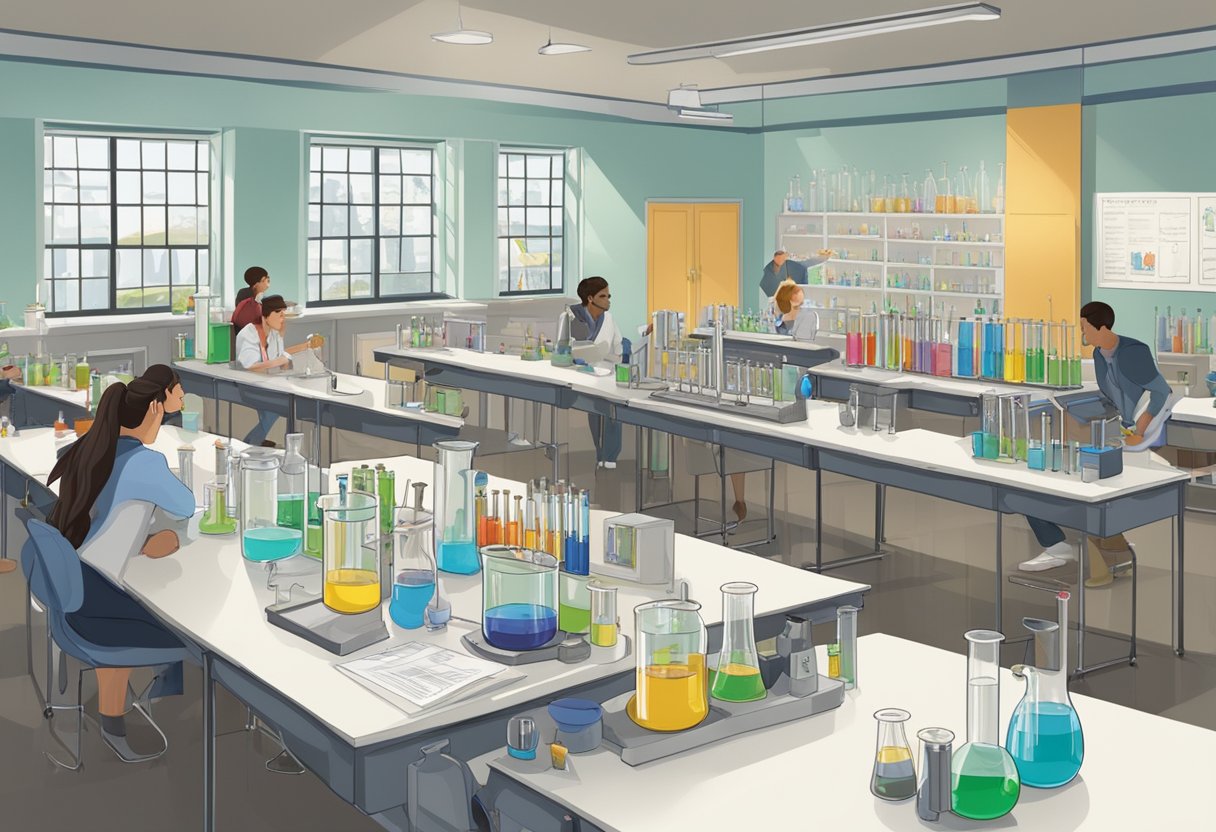
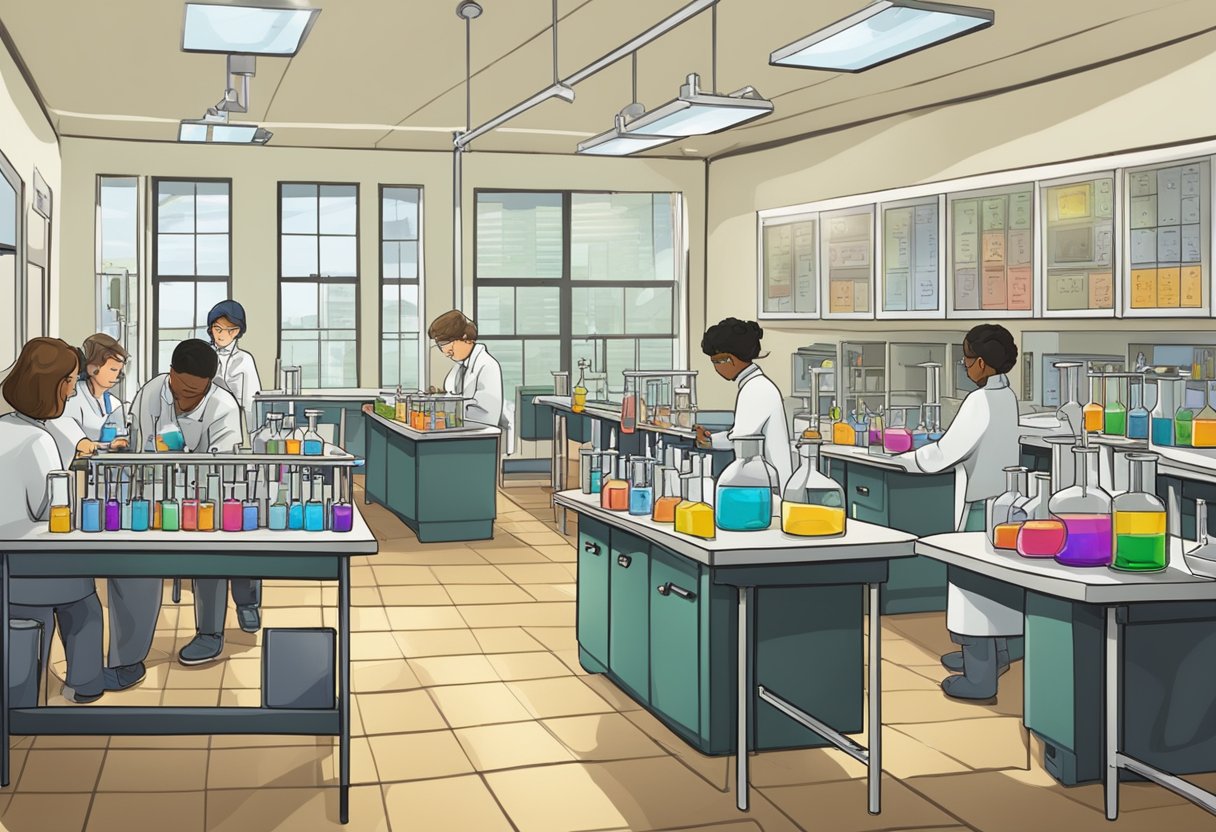
The chemistry lab offers hands-on learning experiences that bring scientific concepts to life. Proper equipment knowledge and safety protocols form the foundation of successful laboratory activities that engage students while keeping them safe.
Familiarisation with Lab Equipment
Getting your students comfortable with lab equipment is essential before conducting any experiments. Start with a lab scavenger hunt where pupils identify and learn about common apparatus such as:
Beakers and flasks: For holding and mixing chemicals
Bunsen burners: For heating substances safely
Pipettes and burettes: For precise measurement of liquids
Test tubes and racks: For small-scale reactions
“Having worked with thousands of students across different learning environments, I’ve found that allowing pupils to handle equipment before actual experiments reduces anxiety and improves technique,” says Michelle Connolly, chemistry education specialist with 16 years of classroom experience.
Create visual aids showing proper handling techniques. Laminated equipment cards with diagrams and functions work brilliantly for revision.
Have students create their own laboratory equipment glossaries to reinforce learning.
Emphasising Laboratory Safety
Safety must be your top priority in the chemistry lab. Begin by establishing clear rules and consequences that all students understand.
Conduct regular safety drills so students know emergency procedures. Show the locations of eye wash stations, fire extinguishers, and emergency exits.
Create engaging safety posters designed by students to reinforce key concepts. Safety symbols recognition is crucial—make a matching game to help students learn laboratory safety symbols.
Demonstrate proper waste disposal methods for different types of materials. Always review specific safety concerns before each experiment, not just at the beginning of the term.
Dynamic Chemistry Demonstrations
Visual demonstrations bring chemistry concepts to life in the classroom. These hands-on activities help students see chemical changes happening right before their eyes, making abstract concepts concrete and memorable.
Chemical Reactions in Action
Dynamic visualisations create powerful learning experiences that help students understand molecular interactions. You can easily set up these eye-catching demonstrations:
“As an educator with over 16 years of classroom experience, I’ve found that students remember concepts far better when they can see dramatic chemical changes happening in real-time,” says Michelle Connolly, educational consultant and chemistry specialist.
For whole-class engagement, position demonstrations where all students can observe closely. Consider using CD-ROM resources as preparatory materials before live demonstrations for better understanding.
Physical Change Exhibits
Physical change demonstrations help students distinguish between chemical and physical transformations. These activities work brilliantly alongside virtual laboratories for reinforcement.
Maximise learning by implementing research-based lab modules that connect observations to molecular theory. Students benefit from seeing both static and dynamic representations of these changes. For optimal results, pair these demonstrations with worksheet activities where students predict, observe and explain what’s happening at the molecular level.
Hands-On Activities to Boost Engagement
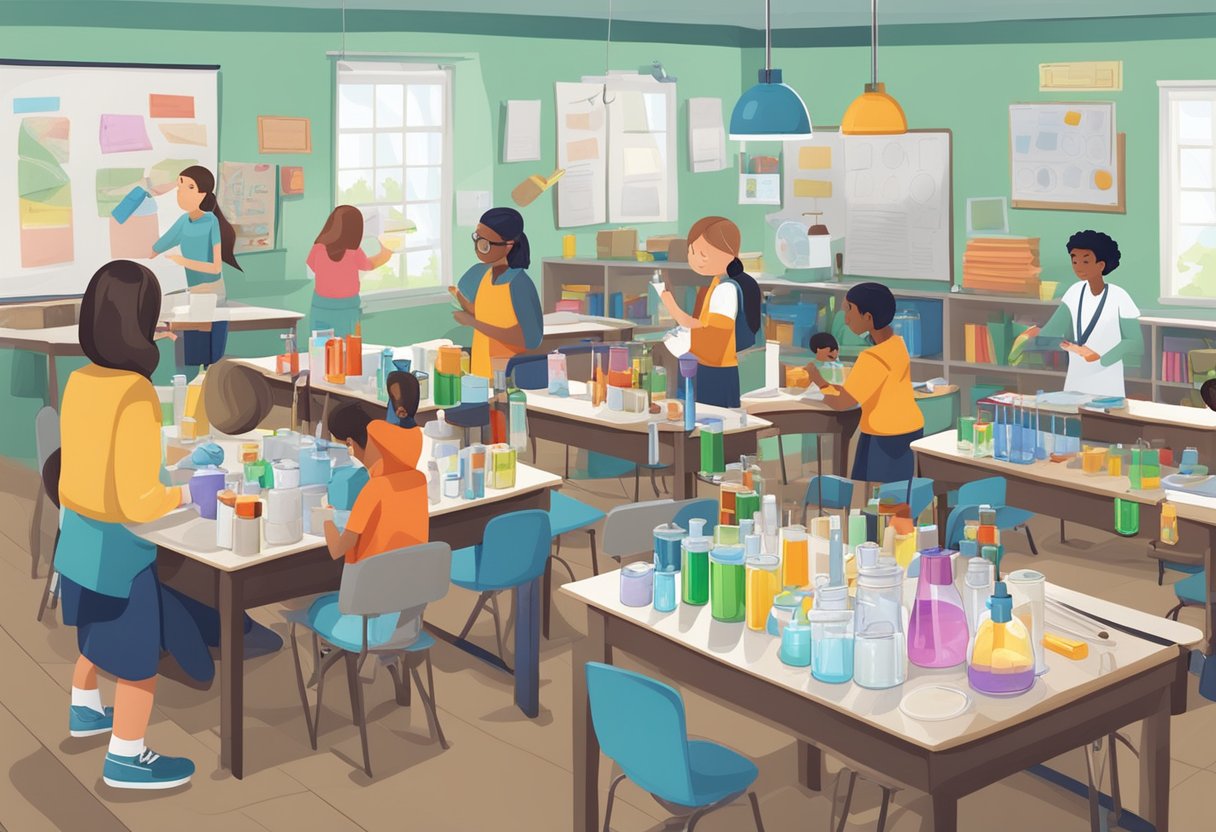
Practical chemistry activities create memorable learning experiences that help students understand complex concepts through direct experimentation. These activities allow learners to see science in action and develop critical thinking skills while having fun.
Designing Experiments for Active Learning
Hands-on instruction has been shown to increase student engagement during lessons and develop curiosity in chemistry. When you design experiments for your classroom, focus on making them accessible and relevant to everyday life.
Try creating experiment stations where small groups rotate through different activities. This approach allows students to explore multiple concepts in a single session and allows everyone to participate actively.
“As an educator with over 16 years of classroom experience, I’ve found that the most effective chemistry lessons involve students making predictions, testing hypotheses, and discussing results,” says Michelle Connolly, educational consultant and founder.
Consider using affordable materials so students can replicate experiments at home. Home-based, hands-on lab activities have proven effective for engaging STEM students even during remote learning situations.
Collaborative Science Projects
Group science projects encourage teamwork whilst developing a deeper understanding of chemistry concepts. Assign research questions that require experimental evidence and collaborative problem-solving.
Building molecular models to explain chemical bonding
Collaborative work helps students develop communication skills alongside scientific knowledge. You can enhance engagement by incorporating competitions or challenges into the projects.
Have groups document their process and findings to share with the class. This creates accountability and helps students learn from each other’s approaches and discoveries.
Research shows that hands-on activities can enhance achievement in challenging chemistry topics like stoichiometry, benefiting students of all genders.
Incorporating Everyday Items
Chemistry is all about understanding the world around us. Using common household items in your classroom can make abstract concepts tangible and exciting for students while keeping costs low.
Kitchen Chemistry with Vinegar
Vinegar is a versatile chemical that can transform your chemistry lessons into engaging hands-on experiences. This acidic liquid opens up numerous possibilities for demonstrations and experiments.
Try the classic baking soda and vinegar reaction to teach about acids, bases and gas formation. Students can measure different quantities to observe how reaction rates change.
For a more structured approach, create a simple volcano model using:
Small plastic bottle
Cardboard base
Clay or papier-mâché
2 tablespoons baking soda
Red food colouring
Washing-up liquid
100ml white vinegar
Vinegar can also demonstrate acid-base indicators. Have students use red cabbage juice as a natural pH indicator, adding vinegar to observe colour changes.
“As an educator with over 16 years of classroom experience, I’ve found that vinegar experiments create those ‘aha’ moments when students suddenly connect chemistry with their everyday lives,” says Michelle Connolly, educational consultant and founder of LearningMole.
Household Product Experiments
Your students’ homes are filled with chemistry waiting to be explored. Household products make excellent teaching tools that help connect scientific principles to daily life.
Create a density column using household liquids like honey, washing-up liquid, water, cooking oil and rubbing alcohol. Students can predict and observe how different liquids layer based on their densities.
Surface tension experiments with water, soap and pepper demonstrate molecular attractions. Place pepper on the water’s surface, then add a drop of washing-up liquid to watch the pepper scatter instantly.
These activities help students visualise chemical concepts while developing critical thinking skills through observation and experimentation.
Utilising Technology in Chemistry Education
Technology has transformed how chemistry is taught in classrooms today. Digital tools make abstract chemical concepts more visible and help students analyse data more effectively, creating engaging learning experiences.
Interactive Simulations
Interactive simulations bring chemistry to life without needing physical labs or dangerous chemicals. These virtual environments allow you to demonstrate complex chemical reactions safely and cost-effectively.
Tools like PhET simulations and Molecular Workbench let students visualise atomic structure and molecular interactions that would otherwise be impossible to see.
“Having worked with thousands of students across different learning environments, I’ve found that interactive simulations dramatically improve understanding of abstract chemical concepts when students can manipulate variables themselves,” says Michelle Connolly, chemistry education specialist with over 16 years of classroom experience.
Try these activities with simulations:
Virtual titrations where students control reagent addition
Molecular modelling exercises to explore chemical structures
Reaction rate experiments with adjustable temperature and concentration
These tools are particularly valuable for flipped classroom approaches, allowing students to explore concepts before formal lessons.
Graphing Software for Data Analysis
Chemistry experiments generate significant data that requires proper analysis and visualisation. Modern graphing software helps students make sense of experimental results through visual representations.
Popular options include:
Excel or Google Sheets for basic plotting
Vernier LoggerPro for real-time data collection
Origin for advanced scientific graphing
When students use these tools, they develop critical analysis skills while making connections between experimental observations and chemical principles.
For beginning chemistry students, try these graphing activities:
Plot solubility curves at different temperatures
Create linear calibration curves for spectrophotometry
Analyse reaction rates through concentration vs time graphs
These data analysis activities help students see patterns and relationships in chemistry that might otherwise be missed in traditional lab work.
Student-Centred Learning Approaches
Moving away from traditional methods, student-centred approaches put chemistry students in control of their learning journey. These techniques foster deeper understanding and greater engagement by making learners active participants rather than passive observers.
Peer-to-Peer Teaching Techniques
Peer teaching transforms chemistry students into knowledge-sharers, deepening their understanding through explanation. The ‘jigsaw method’ works brilliantly—divide complex topics like periodic trends or chemical bonding into smaller pieces, with each student becoming an ‘expert’ on one section before teaching others.
“Having worked with thousands of students across different learning environments, I’ve observed that children retain nearly 90% of what they teach to others, compared to just 10% of what they read,” says Michelle Connolly, chemistry education specialist with 16 years of classroom experience.
Concept Carousel: Students rotate between stations, teaching different chemistry concepts
Mistake Analysis: Pairs identify and correct errors in sample lab procedures
Mini-Lectures: Students prepare and deliver 3-minute explanations of complex topics
Consider using a simple feedback form for listeners to complete, helping both the student-teacher and learners reflect on their understanding.
Role-Playing the Scientific Process
Role-playing brings abstract chemistry concepts to life by allowing students to embody scientific processes. You can transform your classroom into a ‘molecular world’ where students become atoms forming bonds, or create a scientific conference where they present research as famous chemists.
A particularly effective approach involves students role-playing as peer reviewers for each other’s lab reports. This develops critical thinking whilst reinforcing proper scientific methodology.
Try these role-play scenarios:
Molecular Dance: Students become atoms and demonstrate different types of reactions
Chemical Debate: Teams argue from the perspective of competing theories
Industry Simulation: Students take on roles in a pharmaceutical company developing a new drug
“Based on my experience as both a teacher and educational consultant, role-playing creates emotional connections to abstract concepts, making them stick in students’ minds long after the lesson ends,” notes Michelle Connolly, founder of innovative chemistry teaching methodologies.
Assessment and Feedback Strategies
Effective assessment methods and meaningful feedback are critical tools that enhance chemistry learning outcomes. They provide both you and your students with valuable insights about progress and understanding, creating opportunities for growth and improvement.
Performance-Based Assessments
Performance-based assessments are powerful tools for measuring students’ chemistry knowledge in practical contexts. These assessments move beyond traditional paper tests by asking students to demonstrate their understanding through hands-on activities.
“As an educator with over 16 years of classroom experience, I’ve found that performance-based assessments reveal what students truly understand about chemistry concepts in ways multiple-choice tests simply cannot,” explains Michelle Connolly, founder and educational consultant.
Consider these effective performance-based assessment strategies:
Laboratory practical exams: Students demonstrate lab techniques and solve problems using actual equipment
Chemistry demonstrations: Learners explain reactions while performing them
Project-based assessments: Creating models, designing experiments, or developing solutions to real-world problems
These approaches are particularly effective when integrated throughout the problem-solving process, providing ongoing measurement of student learning rather than just end-of-unit evaluation.
Constructive Feedback Models
Providing timely, specific feedback helps students improve their chemistry understanding and skills. Effective feedback should identify strengths while offering clear guidance for improvement.
Try these feedback strategies:
Two-way feedback sessions: After major assessments, schedule brief one-on-one meetings to discuss results and set improvement goals
Targeted written comments: Focus on specific aspects rather than general statements
Peer feedback protocols: Teach students to evaluate each other’s work using rubrics
Research shows that chemistry teachers who use varied feedback methods and incorporate student input into their teaching see better outcomes.
Consider using exit tickets or out-of-class assessment activities to gather quick feedback on lesson comprehension. These brief check-ins provide valuable data without consuming too much class time.
Enrichment Activities for Advanced Learners
Advanced chemistry students need specialised activities that go beyond the standard curriculum to keep them engaged and challenged. These enrichment opportunities allow gifted learners to explore complex concepts and develop higher-level thinking skills.
Challenging Hands-On Physics Activities
Introducing cross-disciplinary hands-on physics activities can provide valuable enrichment for chemistry students who excel. These activities help students understand the fundamental connection between chemistry and physics.
Try creating molecule motion models where students can visualise how particles behave under different temperature and pressure conditions. This helps them grasp kinetic molecular theory in a tangible way.
“As an educator with over 16 years of classroom experience, I’ve found that advanced learners thrive when they can explore the physics behind chemical reactions,” says Michelle Connolly, educational consultant and founder of LearningMole.
Consider these challenging activities:
Spectroscopy experiments: Have students build simple spectroscopes to analyse light spectra
Molecular modelling: Use advanced software to predict chemical properties
Radioactivity investigations: Create cloud chambers to observe radiation tracks
These activities work best in small groups where students can work at a more advanced level and tackle complex problems collaboratively.
Chemistry Olympiad Preparation
Preparing for the Chemistry Olympiad offers excellent enrichment for your most talented students. This prestigious competition challenges participants with university-level problems and laboratory work.
Start by introducing past Olympiad questions as extension activities in your regular lessons. This exposes students to the expected depth and complexity without overwhelming them.
Form a weekly study group where students can work together on advanced chemistry topics like thermodynamics, organic mechanisms, and coordination chemistry. The peer learning environment fosters healthy competition and collaboration.
Create a resource library with:
Past papers and mark schemes
University-level textbooks
Online lecture videos
Practice problems
Many schools find that a 10-week enrichment cluster approach works well, giving students time to develop their skills before competitions. Encourage students to design their own experiments that go beyond the set curriculum.
Resources for Ongoing Teacher Development
Continuous learning is vital for chemistry teachers to stay current with teaching methods and subject knowledge. These resources can help you enhance your skills and connect with other educators for better classroom outcomes.
Professional Development Workshops
Chemistry teachers can greatly benefit from professional development programmes that focus specifically on chemistry education. These workshops often provide hands-on experience with inquiry-based teaching methods. With these methods, you can immediately apply what you learn in your classroom.
“As an educator with over 16 years of classroom experience, I’ve found that targeted professional development is the cornerstone of chemistry teaching excellence. The best workshops don’t just teach content—they transform how you approach complex concepts with students,” explains Michelle Connolly, educational consultant and founder.
Look for workshops that offer:
Laboratory safety updates
Inquiry-based teaching techniques
Assessment strategies
Curriculum development support
Many universities and science education centres offer Target Inquiry programmes that have proven effective in helping chemistry teachers develop their expertise.
Online Educational Communities
Joining online communities can provide you with continuous support and fresh ideas for your chemistry classroom. These digital spaces allow you to connect with fellow teachers, share resources, and discuss challenges.
Popular platforms for chemistry teachers include:
Chemistry teaching forums
Social media groups focused on science education
Virtual professional learning networks
Chemistry education webinars
“Having worked with thousands of students across different learning environments, I’ve discovered that teachers who actively participate in online communities tend to be more innovative in their teaching approaches,” says Michelle Connolly, who brings 16 years of classroom wisdom to her consultancy work.
These communities often share classroom resources like experiment demonstrations, lesson plans, and assessment tools that can save you preparation time while enhancing your teaching practice.
Frequently Asked Questions
Chemistry teachers often look for innovative ways to engage students and make complex concepts more approachable. These practical questions address common challenges in chemistry education at various levels and learning environments.
What fun experiments can I introduce in my high school chemistry lessons?
High school chemistry lessons come alive with exciting experiments that demonstrate key concepts while capturing student interest. Flame tests using different metal salts create vibrant colours that students won’t forget when learning about electron configurations and energy levels. “As an educator with over 16 years of classroom experience, I’ve found that combining visual spectacle with scientific principles creates those ‘aha’ moments students remember long after the lesson ends,” says Michelle Connolly, founder of LearningMole and chemistry education specialist. The classic elephant toothpaste demonstration shows exothermic reactions and catalysis in an unforgettable foam eruption. For a more practical connection, try having students create quality learning conditions through inquiry-based experiments where they design investigations around household chemistry.
Could you suggest some interactive activities for college students studying chemistry?
College chemistry courses benefit greatly from classroom activities that promote quality learning through interactive engagement. Molecular model building competitions challenge students to construct complex organic molecules accurately and quickly. Case studies based on real-world chemistry applications create relevance and a deeper understanding. You might ask teams to solve industrial problems requiring the application of chemical principles. Student-generated questions make excellent discussion starters. Have students prepare challenging conceptual questions for their peers, fostering both preparation and critical thinking skills.
What are the most effective strategies for teaching chemical concepts online?
Online chemistry education works best when combining synchronous discussions with asynchronous explorations. Virtual simulations from resources like PhET or ChemCollective allow students to manipulate variables and observe outcomes that would be difficult in physical labs. “Having worked with thousands of students across different learning environments, I’ve discovered that successful online chemistry teaching requires a deliberate balance of structured content and interactive exploration,” explains Michelle Connolly, educational consultant and chemistry curriculum developer. The flipped classroom approach proves particularly effective online. Pre-record concept explanations so class time can focus on problem-solving, questions, and deeper discussions.
How might I incorporate practical hands-on activities in chemistry classes?
Hands-on chemistry activities create memorable learning experiences through direct engagement with materials and reactions. Micro-scale experiments reduce waste and safety concerns whilst still providing authentic lab experiences. Kitchen chemistry projects using household items make excellent homework assignments that reinforce classroom concepts. Simple activities like investigating acids and bases with red cabbage indicator give students ownership of their learning. Design-based challenges work brilliantly, too. Ask students to engineer solutions to problems using their chemical knowledge, such as creating effective cold packs or developing eco-friendly cleaning products.
In what ways can I make the theory-based chemistry curriculum engaging for middle school students?
Middle school students engage best with chemistry when theory connects to their everyday experiences. Create scavenger hunts where students identify chemical principles in their homes and surroundings, strengthening connections between abstract concepts and tangible examples. “Drawing from my extensive background in educational technology, I’ve seen how digital tools combined with physical demonstrations create the perfect learning environment for curious young scientists,” notes Michelle Connolly, founder of LearningMole with 16 years of classroom expertise. Teacher questions play a crucial role in making chemistry accessible. Use thought-provoking questions that connect theoretical concepts to real-world applications that students care about.
Which teaching methods have proven most successful in sparking interest in chemistry subjects?
Project-based learning consistently ignites chemistry interest by giving students meaningful problems to solve. Challenge classes to design and conduct investigations into local environmental issues requiring chemical analysis. Storytelling brings chemistry to life through historical narratives of scientific discovery. Share the dramatic stories behind major breakthroughs, complete with the personalities, conflicts and “eureka” moments. Cross-curricular connections help students see chemistry’s relevance. Partner with art teachers for pigment chemistry projects or with food technology for culinary chemistry investigations that demonstrate practical applications beyond the laboratory.
Maths Circus, an innovative platform we've crafted, presents a captivating realm where children learn mathematics through the exciting theme of a circus. The joy of juggling numbers and solving circus...
The Latin alphabet, also called the Roman alphabet, is the most widely used writing system in the world. Used by over 100 languages today, including English, French, Spanish, German and...
Venus, the Hottest Planet: Ask most children which planet is hottest, and they'll say Mercury, it's the closest to the Sun, so the logic seems obvious. But the correct answer...
Imagine looking up from a Dorset beach 190 million years ago and seeing a creature with leathery wings gliding over the waves. Many children would call it a flying dinosaur,...







Leave a Reply