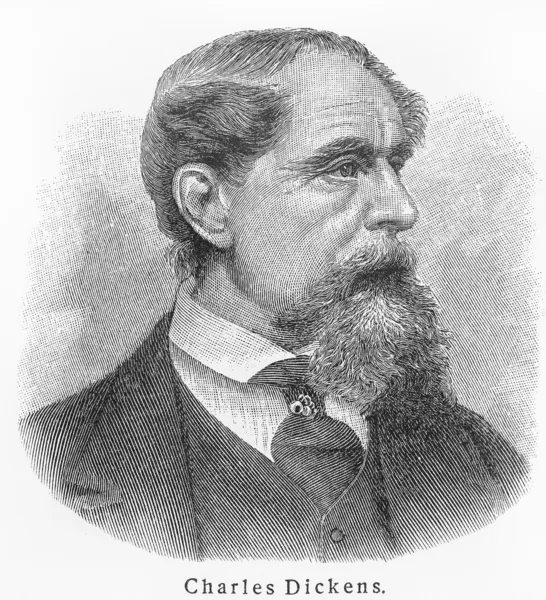
Charles JohnHuffam Dickens (7 February 1812 – 9 June 1870)
He was known by his literary name Charles Dickens, a novelist, social critic, and English writer. He unanimously consensus among the most significant English novelists in the Victorian era, and many of his works still maintain his popularity to this day. His style is distinguished by ingenious humour and harsh mockery.
Charles Dickens portrayed an aspect of the lives of the poor and criticised those responsible for the orphanages, schools, and prisons. Among his most famous novels, we mention Oliver Twist (1839), ATale of Two Cities (1859), Hard Times, and David Copperfield (1850). He was a member of the Royal Arts Association, an English novelist from the most famous Victorian era writers and a social activist nicknamed as a pseudonym, “Boz”.
Table of Contents
Dickens was famous for his excellence in prose, his continuous innovations of unique personalities, and the strength of his social sense. But he was sometimes criticised for his excessively emotional works, and their encounters were occasionally impossible, in addition to his exaggerated depiction of his characters. Because of the popularity of Dickens’s novels and short stories, their printing never stopped. Many of Dickens’s novels appeared in patrols and magazines in serial formula first, which was the preferred form of literature at the time.
Unlike many other authors who ultimately ended their novels before publishing a series, Dickens often composed his work on parts in the order he wanted to appear work. This practice led to finding a unique rhythm for its stories, characterised by the sequence of small, sexy situations one behind the other to keep the audience waiting for the new part.
Charles Dickens for Kids
Charles Dickens: His Early Life
Charles Dickens was born in Landport on Portsea Island in southern England in 1812. He was the second among his eight brothers. His father, John Dickens, was a naval pay clerk who dreamed of better things for his son. His mother, Elizabeth Dickens, was kind and gentle. She died when Dickens was only nine years old.
After his mother’s death, Dickens was sent to work in a blacking factory. He later said that this experience was one of the most painful of his life. It made him determined to get an education and make something of himself. He lived a miserable childhood because his father worked in a humble job and supported his large family. His father was in debt and could not pay, so he was imprisoned.
Charles left school when he was young and got involved in hard work with little pay to participate in the family’s expenses. The experiences of this unfortunate childhood impacted him, leaving deep human impressions on his senses, which were subsequently reflected in his works.
Charles Dickens: His Childhood
Charles wrote about these impressions and bitter experiences that he experienced during his childhood in many of his stories and novels. He wrote about heroes of young children who suffered a lot and tasted torment in colours and lived in complete loss due to the complex social conditions that prevailed in (England) in his time.
We find that his wonderful personality was clearly manifested, despite the hardship he suffered in his childhood, but he was taking advantage of his spare time from hard work. A miserable and outlaw life at times. He was influenced by the liberal laws of his time. He described the workhouses that arose according to the English Poor Law of 1834 in his famous novel, Oliver Twist, and in many of the stories and novels that were among his creations.
Charles Dickens: Early Writings
Dickens described these slums in all their details and all the tragedies that take place in them, and when he reached the age of twenty, the family was finally able to enroll him in a school to complete his education. At the same time, he was working as a reporter for a small local newspaper for a small fee, but he did not care about the wage.
He devoted himself to this journalistic work, which was his first step to achieving his dreams. It was an exercise in the craft of literature, and this journalistic work allowed him to reflect on the conditions of people at their various social and moral levels, so he came out with many human and moral experiences that expanded his horizons and his literary and life perceptions.
Charles Dickens for Kids
Charles Dickens: Important Works
Dickens has published over a dozen important novels, a large number of short stories – including several Christmas-themed stories and a number of plays, as well as non-fiction books. Dickens’s novels were first serialised in weekly or monthly magazines and then reprinted as books.
At the age of twenty-four, precisely in 1836, Dickens published his first literary novel, entitled The Pickwick Papers, which already met with overwhelming success and made him one of the most popular and famous English writers. Then his fame increased in England and abroad when his works continued in the world in different languages.
One of his most famous novels, which was internationally renowned and was translated into several international languages and published in 1861, is Great Expectations, which became the focus of filmmakers’ attention, making more than 250 theatre and television works from it.
Dickens continued to write novels throughout his life. Some of his best-known works include Nicholas Nickleby (1838), A Christmas Carol (1843), and Bleak House (1852). Dickens also wrote several travel books and short stories. He was a top-rated public speaker and gave many readings from his work.
Charles Dickens: Features of Dickens’s Writing
Dickens’s works are characterised as a realistic portrayal in an attractive way to the reader, in addition to the detailed description of the various social classes. He is known for his accurate description of the characters, constructive criticism, and reversing street problems, which contributed to reform. Emotion and especially sadness and grief in many of his writings are other prominent features of his writings.
Although Charles Dickens was known as a writer who deeply sympathised with the underprivileged in Britain, he shared with many prominent writers of his day attitudes that might be considered racist and xenophobic in his regular and fictional writings. Although we cannot say that he opposed the fundamental liberties of minorities in British society or supported racial or employment discrimination, he defended the privileges of colonial Europeans and rejected what he believed to be primitive cultures.
In the Oxford Dictionary of English Literature, Dickens is described as a patriot, often stigmatising foreign European cultures, and hardens his stance on “colonial peoples” to the point of “genocide”, albeit based primarily on a view of British virtue rather than any concept of heredity. He does not think he advocated any form of scientific racism regarding genetics – but he intensely disliked the lifestyles of indigenous peoples in the British colonies and believed that the sooner they urbanised, the better.
Charles spent most of his life writing articles, writing novels and short stories, and lecturing. In most of his work, Charles constantly advocated the need for social reform and the strengthening of charitable and health institutions that care for the poor. Dickens believed that all evil and bad conditions could be fixed, no matter how deteriorating they were, so he used his eloquent pen to call for the liberation of human society from the evils and unjust social conditions surrounding it.
Charles Dickens: Novels
As one of the most prolific writers of the Victorian era, Charles Dickens is best known for his novels. While some of his works were published in serial form, they were later collected and published as complete works. Many of Dickens’s novels are set in London and feature characters that represent the different social classes of the time.
Dickens often used his novels to comment on social issues of the day, such as poverty and child labour. He also used humour and satire to significant effect in his writing. While Dickens is no longer as widely read as he once was, his novels remain classics of English literature and are loved by many worldwide.
Charles Dickens: His Influence
Charles Dickens is considered one of the greatest Victorian novelists. His work continues to influence writers today. Dickens was a master at creating characters and stories that resonated with readers. His work often tackled social issues, which helped to raise awareness and bring about change. Dickens was also a gifted storyteller, able to keep readers engaged from beginning to end. It is no wonder that his work has remained popular for over 150 years.
Through his use of characters, plot, and language, Dickens created an artistic power to compel readers to feel certain emotions. For this reason, critics refer to this creative power as ‘Dickensian.’ When describing a character, author or characterise with cunning detail that we feel but cannot define.
These forces are recognised in literature when discussing a particular book or author using terms such as “gritty” or “heartwarming”. Without these intangible qualities, timeless stories, such as A Christmas Carol or Oliver Twist, would lose much of their impact.
Charles Dickens: Dickens’s Legacy
Charles Dickens is one of the most celebrated novelists of the Victorian era. His works have been adapted for stage and screen, and his stories are still beloved by readers worldwide. Dickens was a master of creating vivid characters and telling tales of social injustice and personal struggle. Dickens’s novels are still popular today, and his legacy continues to inspire new generations of writers and storytellers. He is also credited with helping to promote literacy and education for all.
Charles Dickens’s novels offer a vivid picture of life in that time period, and his characters are some of the most memorable in all literature. If you’re interested in learning more about Dickens and his work, we highly recommend starting with one of his most famous novels, Oliver Twist.
Charles Dickens is the most famous Dickensian author and continues to be a source of inspiration to other authors. Throughout his lifetime, Dickens wrote 14 novels and several short stories, essays, non-fiction, poetry and travel narratives. Though he is most famously known for Oliver Twist and A Christmas Carol, many people read Dickens’s works but few are aware of just how prolific a writer he was.
Though there is no singular opinion on what makes Dickens great or how he compares to other great authors, readers have agreed on one thing: they enjoy reading The Man Who Lived Once or Hard Times because they find them easy to relate to. These works expose societal problems in a realistic manner while simultaneously inspiring readers with their strong characters and compelling plotlines. Ultimately, these works will live long after any reader has passed on to the next world.
Charles Dickens: His Death
In 1870 Charles Dickens died at 65 after leaving humanity with this enormous legacy of literary treasures. He died due to an acute brain crisis and was buried in the cemetery of Westminster Abbey. Since he died, other authors have penned works inspired by his life story, from novels to movies to plays.
Charles Dickens: Best Quotes
As we come to the end of Dickens’ life story, it seems only right that we end on some of Dickens’ best quotes and insights to carry with you into the future.
“It was the best of times, it was the worst of times.” – From “A Tale of Two Cities” This famous opening line captures the contrasting nature of the era in which the novel is set.
“Please, sir, I want some more.” – From “Oliver Twist” This line is spoken by the orphan Oliver Twist when he asks for more gruel, symbolizing his desperate situation and the novel’s themes of poverty and injustice.
“A loving heart is the truest wisdom.” – From “David Copperfield” Dickens often emphasized the importance of compassion and kindness in his works.
“No one is useless in this world who lightens the burdens of another.” – From “Our Mutual Friend” Dickens highlighted the value of helping others and making the world a better place.
“Reflect upon your present blessings, of which every man has plenty; not on your past misfortunes, of which all men have some.” – From “A Christmas Carol” This quote is a reminder to focus on gratitude and the potential for positive change.
“Have a heart that never hardens, and a temper that never tires, and a touch that never hurts.” – From “Great Expectations” Dickens encouraged emotional resilience and empathy in his characters and readers.
These quotes reflect Dickens’ timeless themes of social justice, compassion, and the human spirit, making his works enduring classics in literature.
Mathematics and nature intertwine in fascinating ways, creating patterns and sequences that delight and educate. As we observe the world around us, we find that counting petals and leaves isn't...
Maths on the farm is not just about profits and yields; it's a fundamental part of daily farm life, especially when it comes to managing livestock. Our days begin with...
Exploring the vast and enchanting underwater world provides a unique backdrop for engaging children in the essential subject of mathematics. At LearningMole, we believe that bringing together the excitement of...




Leave a Reply