Charity and Giving: As we embark on the journey of parenting, one of the most profound lessons we can instil in our children is the value of generosity. It’s not simply about teaching them to share; it’s about nurturing young minds to understand the importance of giving and the impact it has on both the giver and receiver. Michelle Connolly, founder of LearningMole and an educational consultant with an impressive 16-year tenure in the classroom, often emphasizes that “generosity is not an innate trait, but a learned behaviour that parents and educators must actively teach.”
Charity and Giving: People are donating food
When we encourage our children to engage in charitable acts and understand the concept of donations, we lay the groundwork for empathy and compassion. This is more than just a lesson in morality; it’s about exposing them to real-world issues and encouraging them to be a part of the solution. Our role as guardians involves modelling positive behaviour, celebrating acts of kindness, and consistently reinforcing the idea that we can make a difference in our communities, both big and small.
Key Takeaways
Fostering generosity in children creates a foundation for empathy and compassionate action.
Parents and educators play a crucial role in teaching children the value of giving through example and positive reinforcement.
Celebrating and acknowledging charitable behaviour encourages a continued willingness to help others.
The Importance of Generosity
In our communities, the act of giving is more than just a nice thing to do. It’s a vital practice that can have profound effects on everyone involved, especially children.
Generosity’s Impact on Society
Generosity plays a critical role in the cohesion and wellbeing of our society. When we give, we are making a statement that we care about the welfare of others in our community, which in turn encourages a culture of support and mutual aid. Michelle Connolly, founder and educational consultant, with her extensive classroom experience, wisely notes that “Generosity is the fabric that keeps the community tightly woven together.” Our acts of kindness can ripple out to create positive changes beyond our immediate circle, enhancing the overall emotional well-being of society as a whole.
Benefits on Child Development
Teaching children about generosity is a direct investment in their emotional and social development. When children engage in acts of giving, they develop a sense of empathy and learn the importance of considering the needs and feelings of others. This not only nurtures their emotional health but also prepares them for a lifetime of positive social interactions. As a team of dedicated teachers at LearningMole points out, “Engaging children early in life with acts of charity lays the groundwork for them to grow into well-rounded and caring adults.” Encouraging them to contribute reinforces the notion that they can make a meaningful impact within their community and society, helping boost their confidence and self-esteem.
Empathy begins with awareness. When toddlers see that their actions affect others’ feelings, they learn to share emotions and develop a sense of compassion. It’s essential to create opportunities where children can recognise and express their feelings in a supportive environment. Michelle Connolly, an educator with over 16 years of experience, suggests, “Create moments for children to express their emotions and ensure they understand it’s safe to share how they feel.” We can encourage toddlers by naming emotions and verbalising our own feelings to model empathy.
Stories and Role Models
We often use stories to convey moral lessons and the value of sharing. When children hear tales of characters displaying kindness, they’re inspired to imitate these actions. Reading together about generous individuals or characters can spark discussions on why sharing and empathy matter. Additionally, acting as role models is crucial since toddlers emulate adults’ behaviours. Connolly says, “Stories are not just for entertainment; they are a powerful tool in teaching life’s important lessons, including empathy.” By personally demonstrating empathy, we show toddlers real-life applications of this critical skill.
Values and Behaviours Through Hands-on Experiences
Through practical involvement, children discover the impact of generosity on their community. Hands-on experience instils a sense of social responsibility and the importance of contributing positively.
Community Engagement
Engaging with the local community allows youngsters to see the tangible results of their efforts. Whether it’s participating in a clean-up day or helping at a community garden, these experiences reinforce the values of teamwork and civic duty. Our role in fostering these values is crucial; as Michelle Connolly puts it, “Kids learn the joy of helping others when they can see the difference they’re making in their own community.”
Real-life Volunteering Opportunities
Providing real-life volunteering opportunities for children is another way to teach valuable life skills. Organising food collections for a local food bank or spending time with the elderly can teach empathy and the importance of donating one’s time. Volunteering also promotes positive behaviour, as it leads kids to understand that they can play a part in making a difference. We recognise the power of these experiences; they are not just about the act of giving, but about building a generation that values community and helping others as a way of life.
Teaching about Money and Donations
In this part of our article, we focus on instilling financial literacy in children and how we can integrate the concept of donations within their understanding of money.
Financial Literacy and Giving
Financial literacy equips children with the skills to manage money wisely. It’s more than just distinguishing coins and banknotes; it’s about understanding the value of money and how it can be used to help others. By teaching kids the importance of budgeting and saving, we pave the way for them to grasp why we might donate money to a worthy cause. “It’s essential to teach financial literacy from a young age; it enables children to make informed decisions about donations later in life,” shares Michelle Connolly, an expert with extensive classroom experience.
Projects Involving Monetary Support
Integrating children into projects that require monetary support is an effective method to teach about charity and generosity. Examples could include a school fundraiser or a local community project where kids can see the direct impact of their donations. We involve them in every step of the process, from planning to execution, highlighting that their financial contributions can yield positive changes. “Observing firsthand the difference their money makes can be incredibly empowering for children,” Michelle Connolly notes, providing her unique insight.
Charitable Acts and Compassion Learning
In a world where self-interest often takes precedence, it is vital that we, as a community, instil the value of generosity in the younger generation. Our approach should be practical and relatable, integrating charity and acts of kindness into everyday life.
Acts of Kindness at Home
Charity begins at home, and this adage holds true when teaching children about compassion. We can encourage small acts of kindness within the family, like helping with household chores or making a sibling’s bed. These simple gestures lay the foundation for a caring attitude towards others.
Making cards for neighbours to brighten their day
Cooking a meal for a family friend in need
Donating old toys and clothes to a local charitable organization
“It is through acts of kindness at home that children learn the joy of giving and understand charity as a natural part of life,” shares Michelle Connolly, an educational consultant with extensive classroom experience.
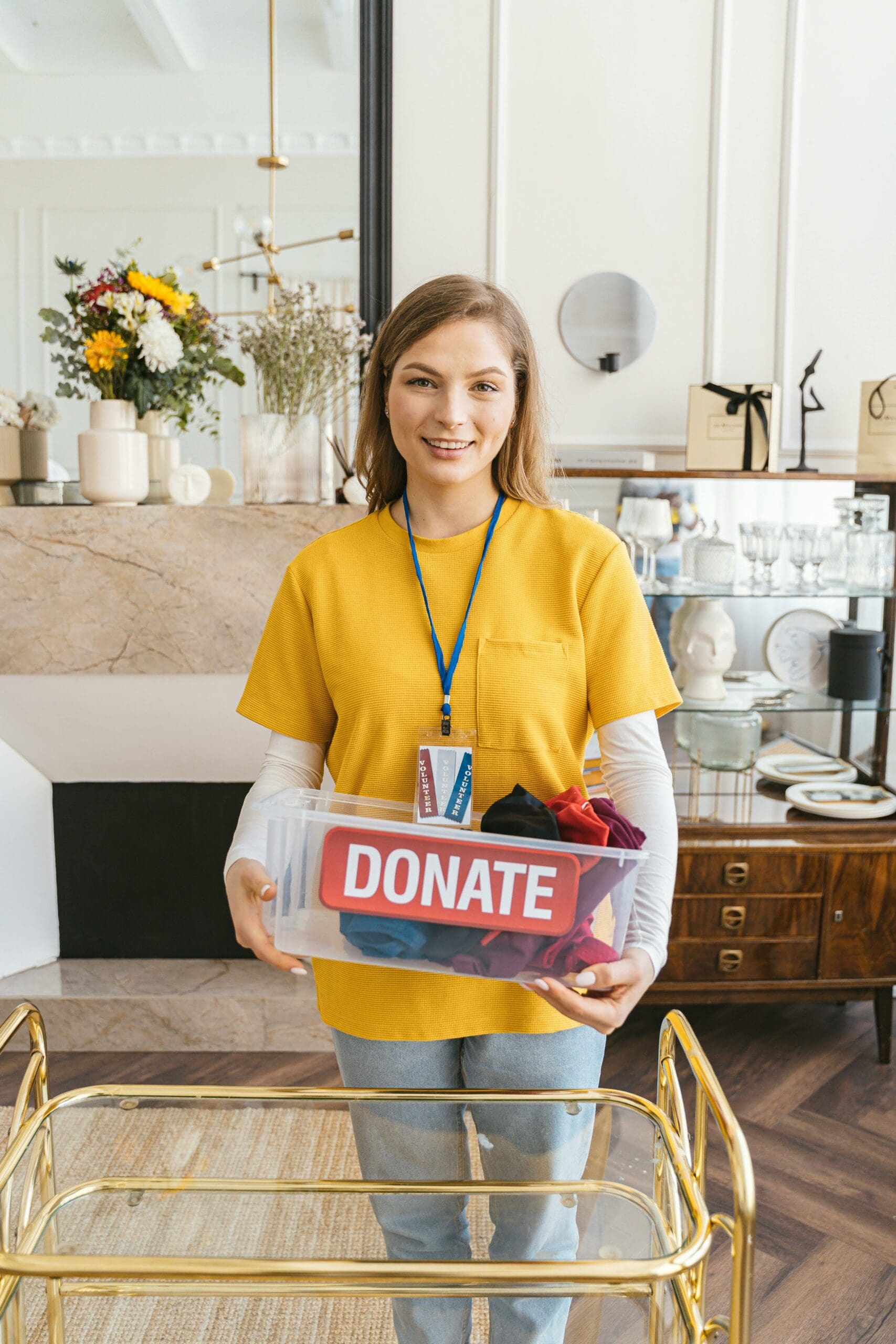
Charity and Giving: Portrait of smiling woman with donation box
Supporting Local Charitable Organisations
Engagement with local charitable organisations offers tangible experiences of the impact of generosity. We can involve our children in activities like:
Visiting a local animal shelter to understand their needs.
Donating blankets
Spending time with the animals
Participating in charity events such as fun runs or bake sales.
By supporting these organizations, children witness first-hand how their contributions make a difference – fostering a sense of empathy and social responsibility.
Encouraging Responsibility and Community Service
We recognise the importance of instilling a sense of responsibility and the value of contributing to the community in our children. Through active participation in community service, kids can learn about civic duty and the impact of their actions on the wider society.
Civic Duty and Social Responsibility
Inculcating a sense of civic duty and social responsibility in children sets the foundation for a lifetime of community involvement. Responsibility to the community starts with understanding one’s role in society and the ways one can contribute positively. We encourage discussions about societal needs and how children, as active members, can fulfill those needs. Michelle Connolly, founder and educational consultant at LearningMole, emphasises, “Introducing children to the concept of ‘giving back’ nurtures empathy and reinforces the role they play within the wider community. “
Age-Appropriate Volunteering Tasks
Identifying age-appropriate volunteering tasks is key to ensuring that children feel confident and capable in their efforts to serve others. For younger children, tasks like helping to sort donations at a food bank or crafting greeting cards for residents in care homes can be both manageable and rewarding. Older children might engage in more demanding tasks such as organising a community clean-up, volunteering at a local shelter, or tutoring younger students. Listing specific tasks suitable for various age groups encourages participation and ensures that volunteer work is safely and effectively executed.
The Role of Parents and Guardians in Modelling Generosity
As we guide our children through life, it’s crucial for us as parents and guardians to actively demonstrate the values we wish to instil in them. Generosity is no exception; it thrives when consistently modelled by the adults in a child’s life.
Daily Exhibitions of Generosity
It’s in the everyday moments that we, as parents, can have the most impact. Whether it’s sharing our time with a neighbour or making donations to those in need, our daily actions speak volumes. Our children observe and absorb these behaviours, understanding that generosity is not just a concept, but a way of living. Through our example, they learn that being generous forms an integral part of a caring family unit.
Parent-Child Charitable Activities
Engaging in charitable activities together cements the value of giving back. By involving our children in choices like selecting toys for donation or participating in local community service, we not only spend quality time together but also demonstrate hands-on generosity. Michelle Connolly, founder and educational consultant at LearningMole, emphasises, “Engaging children in acts of kindness from a young age sets the foundation for them to become compassionate adults.”
By our active role modelling and including them in giving practices, we teach our children that generosity is a shared family value. In essence, we become the living role models they can look up to and emulate in their future actions.
Sharing Resources and Reducing Materialism
In addressing the culture of excessive consumption, it’s essential to guide children to share resources and identify the difference between needs and wants.
Encouraging Sharing over Ownership
By fostering a culture of sharing rather than owning more possessions, children learn the value of communal resources. Toys in the classroom or at home can be used as a practical way to teach these principles. For instance, if we have a set of building blocks, encouraging kids to build a structure together rather than individually can promote teamwork and reduce the desire for personal ownership.
Share clothes among siblings or with less fortunate peers
Organize toy-swaps to keep playtime fresh without buying new items
Books can circulate within a network of friends or community library groups
“Sharing is a pragmatic approach to reducing materialism, it cultivates generosity and fosters a sense of community,” says Michelle Connolly, who brings her 16 years of classroom experience to underline the benefits of communal use over individual ownership.
Understanding Needs versus Wants
Distinguishing between needs and wants is a vital step to curbing materialistic values. Through dialogue, we can help children understand that needs are essentials, such as food and shelter, whereas wants are additional items like the latest electronic gadgets or trendy sneakers.
List the essential items (needs) versus extras (wants) in a table format
Illustrate with children that while some possessions can bring temporary joy, lasting happiness often stems from non-material sources, such as relationships and experiences
As Michelle Connolly emphasises, “When children recognise the importance of prioritising needs over wants, they are better prepared to make responsible and ethical choices throughout their lives.”
Positive Reinforcement and Celebrating Generosity
In teaching children the value of generosity, we often find that acknowledging their kind acts through positive reinforcement and celebration leads to a deeper understanding and more consistent practice of giving.
Praise and Gratitude Practices
We recognise every act of kindness a child engages in, knowing that praise serves as a powerful reinforcement. “Every generous action your child takes is a step towards a kinder world,” says Michelle Connolly, founder of LearningMole, with her vast experience in the classroom over 16 years. We use verbal affirmations and small rewards to show appreciation for their generosity. It’s crucial that our gratitude is specific; tell the child exactly what they did well and how it helped others. This not only boosts their self-esteem but solidifies the behaviour as valuable.
Generosity during Holidays and Events
The holidays and various charity events provide us with exceptional opportunities to nurture the spirit of giving in children. Whether it’s participating in a fundraising event or donating during the festive season, we help children associate these times with kindness and charity. We organise events where children can contribute, emphasizing that the joy of giving often surpasses that of receiving. By doing so, holidays and events become more than just celebrations; they become lessons in empathy and community engagement.
By fostering positive reinforcement and celebrating generosity in our teaching practices, we aim to embed the values of kindness and giving into the hearts of the children, creating a ripple effect of generosity in their lives.
Frequently Asked Questions
In this section, we’ll answer the most common questions about helping kids understand and embody the principles of charity and generosity.
Why is it important to instil the spirit of generosity in children?
Instilling generosity in children builds empathy and social responsibility. “When kids learn to give, they learn to look beyond themselves and understand the needs of others,” shares Michelle Connolly, an educational consultant with a rich classroom background.
What are effective methods for encouraging charitable behaviours among young people?
To encourage charitable behaviours, we can provide opportunities for children to volunteer, educate them about causes, and create giving traditions within the family. As Michelle Connolly says, “Active participation in charity work can profoundly influence young minds, making giving a habit rather than an obligation.”
How can parents demonstrate the importance of giving to their children?
Parents can demonstrate giving by involving their children in the process of selecting charities to support or volunteering together. They show, through action, that giving has a meaningful impact on both the giver and the recipient.
In what ways can children learn about the impact of charity?
Children learn about the impact of charity through stories, engaging in community service, and seeing real-life examples of how their contributions make a difference. Highlight the tangible outcomes of charity work to make the concept more relatable to them.
What activities can help kids understand and practise generosity?
Involve children in charity drives, encourage them to donate old toys, or assist in community gardens. These activities can help children experience firsthand the joys and benefits of being generous.
How do conversations about altruism influence a child’s development?
Conversations about altruism foster critical thinking and an understanding of humanitarian values in children. Michelle Connolly notes that “Discussing the reasons and impacts of generosity can help develop a child’s moral compass and sense of justice.”
Maths Circus, an innovative platform we've crafted, presents a captivating realm where children learn mathematics through the exciting theme of a circus. The joy of juggling numbers and solving circus...
The 9 times table multiplication has a reputation for being tricky, yet it holds more mathematical magic than any other table in the primary curriculum. Every answer follows two neat...
Article Summary What this article covers: Ten differences between river otters and sea otters, from size, fur and swimming style to diet, tool use and family life, plus which otter...
Article Summary What this article covers: The nine main types of natural disasters, how each one works and how they are measured, which hazards genuinely affect the UK, and how...




Leave a Reply