When you select the right autumn term resources, you can boost your teaching effectiveness and student engagement. Knowing the types, quality, and formats of resources helps you make choices that save time and improve learning.
Definition and Scope of Autumn Term Resources
Autumn term resources include all teaching materials for the first school term. These cover curriculum-aligned content for Key Stage 1 and 2 such as seasonal topics, subject units, and cross-curricular activities.
You can use more than just worksheets. There are dance sessions, music programmes, assembly materials, and interactive content linked to autumn themes.
Cross-curricular projects: History, science, and art integrated activities
Michelle Connolly, founder of LearningMole, says, “Autumn resources work best when they connect classroom learning to children’s real-world experiences of seasonal changes.”
Early years need specialised materials. Reception learning focuses on personal development, motor skills, and basic literacy.
Choosing High-Quality Teaching Materials
High-quality resources have features that set them apart. Choose materials that match National Curriculum objectives and show clear learning steps.
Essential quality indicators:
Feature
What to Look For
Curriculum alignment
Explicit links to learning objectives
Differentiation
Multiple difficulty levels included
Assessment support
Built-in evaluation tools
Time efficiency
Ready-to-use format
Good resources give teacher guidance alongside student materials. They include extension activities for advanced pupils and support for those who need extra help.
Choose resources that cover whole units, not just single activities. Comprehensive planning materials save time and keep learning on track.
Check if resources get updated regularly. Publishers who update content show commitment to standards.
Quick quality checklist:
Clear learning outcomes
Age-appropriate language
Visually engaging for students
Teacher notes included
Digital Versus Printable Resources
Digital resources use interactive features and multimedia to boost engagement. You can update them easily and store them without taking up space.
Digital advantages:
Interactive videos and animations
Accessible from any device
Regular content updates
Lower printing costs
Printable resources are great for hands-on tasks and displays. You can use them without technology and students can handle them physically.
Printable benefits:
No tech issues
Tactile learning
Easy to write on and personalise
Reliable for classroom displays
Many teachers mix both formats. Digital resources help with introductions, while printables support independent work and assessment.
Consider your school’s tech setup before choosing. Good internet and enough devices make digital resources more effective.
Format selection factors:
Available technology
Student digital skills
Lesson goals
Budget
Curriculum Planning for the Autumn Term
Effective autumn term planning uses structured approaches that blend seasonal themes with core learning goals. Flexible frameworks help teachers adapt lessons while keeping assessment consistent.
Integrating Seasonal Themes into Lessons
Autumn brings natural learning chances across subjects. You can add harvest festivals, weather changes, and animal hibernation to your curriculum.
Autumn lesson planning resources show how seasonal themes make lessons more engaging. Your science lessons can cover leaf colour changes, and your maths lessons can involve counting conkers or measuring rainfall.
Michelle Connolly, founder of LearningMole, says, “When you connect learning to children’s immediate environment, you create memorable experiences that stick long after the lesson ends.”
Set up harvest displays in your school. Each class can add artwork, writing, or autumn collections.
Interactive harvest workshops involve families and the wider community. Arrange bread-making or apple-pressing sessions.
Community Connections:
Partner with garden centres
Invite grandparents to share stories
Connect with environmental groups
Harvest assemblies unite the school. Children share songs, poems, and presentations about gratitude and seasonal change.
Capture your harvest activities with photos and children’s work. Create displays that celebrate learning and community through the autumn term.
Autumn Term Assembly Ideas
Autumn assemblies give you chances to explore seasonal themes and build school community. You can create presentations that celebrate harvest, discuss gratitude, and connect students to the changing world.
Planning Seasonal Assemblies
Start your autumn assembly planning by choosing themes that fit your school. Focus on harvest, gratitude, change, and new beginnings.
Use a simple planning sheet with columns for theme, activities, and resources. This helps you stay organised and ready for assembly day.
Michelle Connolly, founder of LearningMole, says, “When planning seasonal assemblies, I always encourage teachers to think about what children can actually see and experience around them. Autumn gives us so many concrete examples to work with.”
Think about your audience. Younger children need short, visual assemblies, while older pupils can handle deeper discussions.
Essential planning elements include:
A clear main message
Interactive parts to keep children interested
Visual props or displays
Songs or fitting music
A reflection or action point
Book your hall early and check any technology you will use. Testing ahead prevents disruptions during the assembly.
Incorporating Major Autumn Events
Harvest assemblies are the most popular autumn celebration in UK schools. You can make them fresh by focusing on different aspects each year.
Try a global harvest theme. Children can learn about different crops from around the world.
This connects to geography and cultural awareness. You can maintain the traditional gratitude message.
Anti-Bullying Week in November provides another excellent assembly opportunity. Link it with autumn themes by discussing how we can help each other through changes, just like trees support each other in forests.
Remembrance Day assemblies require sensitivity and offer powerful learning moments. Connect the theme of remembering to autumn’s cycle of change and renewal.
Key autumn events to consider:
Harvest Festival (September/October)
Black History Month (October)
Diwali (October/November)
Anti-Bullying Week (November)
Remembrance Day (11th November)
Children in Need (November)
Choose 2-3 events that match your school values. Explore them thoroughly.
Interactive Presentations and Scripts
Turn your assemblies into engaging, interactive presentations. Use call-and-response techniques to keep everyone involved.
Let children share their own experiences. Ask them to bring autumn leaves, describe seasonal changes, or share family harvest traditions.
Ready-made assembly resources can save planning time. Personalise them with local references or school-specific examples.
Interactive techniques that work well:
Use props generously. Real pumpkins, colourful leaves, harvest vegetables, and autumn photographs create visual interest and help younger children stay focused.
Invite different year groups to contribute different elements. Year 1 might sing a harvest song while Year 5 presents facts about autumn around the world.
Keep your script flexible. If children are interested in one element, spend more time on it.
Festivals and Cultural Celebrations
Autumn term brings a variety of festivals that create meaningful learning opportunities. These celebrations help children explore different cultures and build empathy in your classroom.
Notable Autumn Term Festivals
Your autumn calendar includes many celebrations in October and November. Diwali marks the Hindu new year and celebrates light conquering darkness with oil lamps, fireworks, and family feasts.
Halloween on 31st October blends ancient Celtic traditions with modern festivities. Pupils can explore how it evolved from spiritual customs to today’s costume celebrations.
Guy Fawkes Day on 5th November remembers the failed Gunpowder Plot. This British celebration connects to history through bonfires and fireworks.
Key Autumn Festivals Timeline:
Mid-October: Oktoberfest celebrations
Late October/November: Diwali (dates vary by lunar calendar)
31st October: Halloween
1st November: Día de los Muertos
5th November: Guy Fawkes Day
Día de los Muertos lets you discuss different cultural attitudes toward death and remembrance. Families create ofrendas (altars) decorated with marigolds, photographs, and favourite foods of loved ones.
Michelle Connolly, founder of LearningMole, says: “Autumn festivals create natural cross-curricular connections – from the science of fireworks to the geography of global celebrations.”
Inclusion Through Multicultural Resources
You can create inclusive celebrations by planning thoughtfully and honouring pupils’ backgrounds. Start by asking families about their autumn traditions.
Some schools include multiple festivals instead of focusing on only one. This approach validates all pupils’ experiences and broadens everyone’s cultural awareness.
Inclusive Festival Strategies:
Consider pupils who do not celebrate certain festivals for religious or cultural reasons. Offer alternative activities that focus on harvest, gratitude, or seasonal change.
Showcase the global nature of autumn celebrations in your displays. Include festivals like Canada’s Thanksgiving, Thailand’s Loy Krathong, and Japan’s Shichi-Go-San.
Creative Approaches to Festival Lessons
Use hands-on activities to make festival learning engaging. Create rangoli patterns with coloured rice or chalk to explore Diwali and develop fine motor skills.
Set up mock festival experiences in your classroom. Arrange desks in traditional formations, sample foods, and play cultural music to immerse pupils in the atmosphere.
Cross-Curricular Festival Activities:
Bring festivals to life with drama activities. Pupils can act out historical events like the Gunpowder Plot or recreate family celebration scenes.
Use technology to enhance festival learning. Try virtual museum visits or video calls with schools celebrating the same festivals.
Pupils can research family histories, interview community members, or create multimedia presentations about different cultural celebrations.
Autumn-Themed Literacy and English Resources
Autumn offers many chances to develop reading comprehension through seasonal texts. You can inspire creative writing with harvest themes and explore poetry that captures the changing seasons.
You can use texts about harvest festivals, animal migration, or autumn weather patterns to engage young readers.
Effective autumn reading materials include:
Create autumn-themed comprehension passages with vocabulary specific to the season. Include words like harvest, migration, hibernation, and deciduous.
Michelle Connolly, founder of LearningMole, says: “Seasonal reading materials connect children’s experiences with literacy learning, making comprehension more meaningful.”
Quick implementation tips:
Use autumn photographs to prompt prediction activities before reading
Create vocabulary walls featuring seasonal terms
Include cross-curricular connections linking science concepts to reading texts
Creative Writing with an Autumn Focus
Autumn writing prompts inspire creativity and help develop composition skills. The season offers rich sensory experiences for descriptive writing.
Structure writing activities around the five senses. Ask students to describe the crunch of leaves, the smell of bonfire smoke, or the sight of golden trees.
Successful autumn writing activities include:
Seasonal writing centres provide structured approaches to autumn composition. These resources include picture prompts, word banks, and writing frameworks for different year groups.
Create a collaborative class book about autumn experiences. Each child contributes a page to build writing skills and a sense of shared learning.
Autumn Poetry and Storytelling
Poetry and storytelling help children explore rhythm, rhyme, and narrative structure using autumn themes. These activities build language appreciation and creative confidence.
Start with simple autumn poems for group recitation. Use poems with seasonal vocabulary and clear rhythmic patterns.
Engaging poetry activities include:
Storytelling activities work well with autumn folklore and traditions. Explore stories about harvest celebrations, animal preparation for winter, or the changing natural world.
Autumn literacy activities often combine poetry and storytelling. These resources provide age-appropriate content that supports language development.
Maths and Science Resources for Autumn
Autumn term brings unique opportunities to link classroom learning with seasonal changes outside. You can use falling leaves for counting, explore weather patterns with experiments, and develop data skills by tracking observations.
Autumn-Inspired Maths Activities
Make maths lessons engaging with seasonal themes. Autumn-themed maths resource packs include counting worksheets, number bonds, and size matching exercises with autumn leaves.
Create engaging counting activities using real autumn leaves. Ask students to collect leaves and sort them by size, shape, or colour.
Key Activities to Try:
Michelle Connolly, founder of LearningMole, says: “Seasonal maths activities help children see numbers in their everyday world.
Autumn is perfect for hands-on science exploration. You can investigate why leaves change colour, explore weather patterns, and observe animal behaviour.
Weather and Climate Studies:
Plant and Animal Observations:
Fall science activities provide 19 lesson plans that connect science concepts to autumn themes. These activities help students understand seasonal changes through investigations.
Create simple experiments with autumn materials. Test which leaves decompose fastest, see how temperature affects plant growth, or explore density with different autumn fruits and vegetables.
Data Handling and Observation Skills
Autumn gives students great chances to build data collection and analysis skills. Students can gather real information about seasonal changes and show their findings using charts and graphs.
Data Collection Activities:
Daily weather recording charts
Leaf colour change tracking over time
Animal sighting frequency tables
Tree height and growth measurements
Ask students to keep observation journals. They record daily changes like temperature, weather, and seasonal observations.
This practice builds scientific recording skills and improves writing.
Chart and Graph Practice:
Data Type
Graph Style
Skills Developed
Daily temperature
Line graph
Trend analysis
Leaf colours
Bar chart
Comparison skills
Weather types
Pie chart
Proportion understanding
Animal sightings
Tally chart
Counting and recording
Encourage students to predict patterns using their data. Ask questions like, “Will next week be warmer or cooler?” or “Which tree will lose leaves first?”
These prediction activities help students develop critical thinking and mathematical understanding.
Students can share their findings with other classes. Create autumn data displays that show weather patterns, leaf results, or seasonal observations.
This gives a real purpose to their maths work and helps build presentation skills.
Design displays that decorate the classroom and serve as learning tools. Autumn classroom displays can feature word walls, seasonal vocabulary, and interactive elements.
Essential Display Elements:
Autumn word walls with vocabulary cards
Weather tracking charts
Seasonal colour wheels
Interactive “What’s Changing?” boards
Add student participation elements to your bulletin boards. Place pockets for children to add daily weather observations or findings from outdoor explorations.
Michelle Connolly, founder of LearningMole, says: “Interactive displays work best when children can contribute to them daily. This keeps the learning fresh and gives students ownership of their classroom environment.”
Use materials like pressed leaves, twigs, and acorns for borders and frames. This brings nature indoors and offers tactile experiences.
Paper plate scarecrows: Simple materials create fun displays
Handprint trees: Each child’s handprint makes autumn leaves
The class tree project lets students make individual leaves, use real pressed leaves, or create handprint leaves in autumn colours.
Leaf collages with tissue paper in reds, oranges, and yellows help children practise fine motor skills. Children scrunch and tear the paper before gluing it onto leaf templates.
Include mindfulness in your craft sessions. Tree painting and grounding exercises help students connect with nature and develop emotional regulation.
Showcasing Student Work
Display student artwork to celebrate their achievements. Rotate displays often so every child’s work is featured.
Display Organisation Tips:
Use different heights for visual interest
Group similar projects together
Add labels explaining learning objectives
Include photos showing students at work
Create gallery walls that show your autumn learning journey. Start with September nature walks and move through harvest festivals to November weather observations.
Twig frames add a natural touch to artwork. Cut frames from card and glue twigs around the edges.
Connect displays to curriculum objectives. Label each piece with skills like “observational drawing” or “colour mixing techniques.” This helps parents see the educational value.
Music and Performing Arts Resources
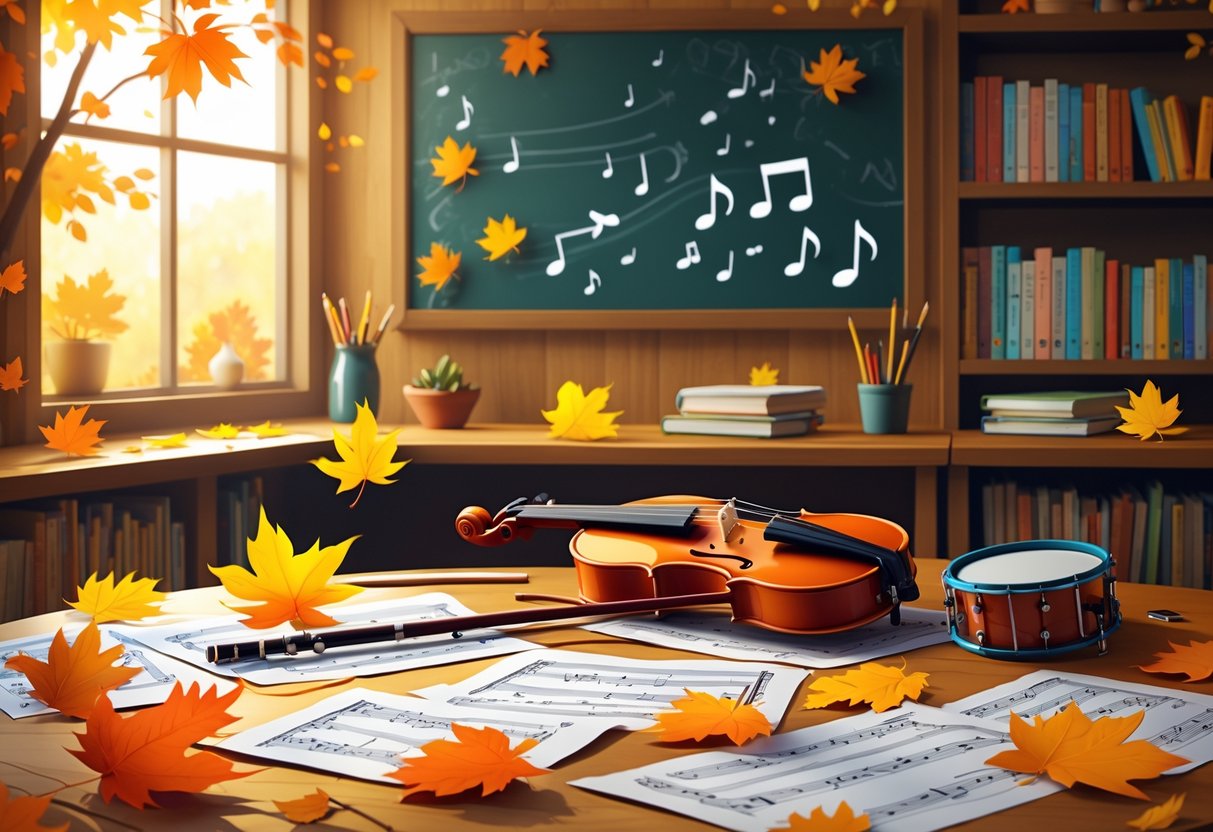
Music and performing arts make autumn learning lively with seasonal songs, drama, and cross-curricular connections. These resources help you create engaging lessons that celebrate the season and build key skills.
Seasonal Music Lesson Plans
Autumn brings musical opportunities that connect students with nature. Fall music resources include folk songs and rhythm activities with autumn themes.
Japanese Folk Songs for Autumn
Try “Donguri Korokoro,” a Japanese children’s song about acorns. It works well for younger students and teaches pentatonic scales.
Older pupils can sing “Akatonbo,” which uses triple metre and a dragonfly melody. Both songs can be sung as rounds to develop listening skills.
Rhythm Activities Using Autumn Words
Build rhythm patterns with seasonal words like “conkers,” “harvest,” and “golden leaves.”
Michelle Connolly, founder of LearningMole, says: “Autumn vocabulary creates perfect rhythm patterns that children can feel and hear, making abstract musical concepts concrete and memorable.”
Voice Exploration Activities
Use autumn imagery for vocal warm-ups. Guide students to move their voices like falling leaves or birds getting ready for winter.
Autumn Term Drama Activities
Drama activities thrive in autumn with rich themes and storytelling. Focus on building confidence while exploring seasonal stories.
Harvest Festival Performances
Organise simple harvest plays using known stories or local traditions. These performances build speaking confidence and community spirit.
Let students create character voices for autumn animals preparing for winter. They can practise different ways animals might speak and move.
Autumn Story Theatre
Turn autumn poems into movement pieces. “The North Wind Doth Blow” or “Autumn Leaves” work well for this.
Use seasonal props like leaves, conkers, and branches for student-created stories.
Improvisation Games
Set improvisation games in autumn scenes such as harvest markets, bonfire preparations, or woodland adventures. These settings are familiar and exciting for children.
Try “autumn emotions” exercises where students show how different weather feels through movement and voice.
Integrating Music into Other Subjects
Link music with science, literacy, and geography during the autumn term.
Science Connections
Explore sound vibrations using autumn materials. Compare the sounds of dried and fresh leaves to show how materials affect pitch and tone.
Study how birds change their songs during autumn migration. This links music with animal behaviour.
Literacy Links
Set autumn poems to simple tunes. This helps children memorise verses and learn musical phrasing.
Create sound effects for autumn stories using instruments or voices. Students build both musical and narrative skills.
Mathematics Integration
Use autumn songs for counting activities and rhythm patterns for multiplication tables.
Measure musical phrases with autumn leaf lengths or count beats using conker collections. These hands-on materials make musical maths easier to understand.
Physical Education and Outdoor Learning
Autumn is perfect for combining physical activity with seasonal learning through outdoor exploration and nature-based activities. The changing weather and environment help children develop physical skills and promote mental wellbeing.
Autumn-Themed PE Activities
Add seasonal elements to PE lessons to boost engagement and movement skills. Autumn physical education resources offer activities that match curriculum goals.
Leaf Collection Relays help children build agility and teamwork. Set up stations for collecting leaves, sorting them, or making patterns while running between points.
Harvest Games like apple picking races or pumpkin rolling develop hand-eye coordination and gross motor skills.
Michelle Connolly, an expert in educational technology, says, “Seasonal PE activities help children connect movement with their environment, making exercise feel like play.”
Weather Adaptation Activities prepare children for changing conditions. Include warm-ups that mimic animals preparing for winter or create obstacle courses using natural materials.
Outdoor Exploration and Nature Walks
Fun fall outdoor learning activities mix exercise with environmental education. These activities build observation skills and keep children active.
Structured Nature Walks cover several subjects at once. Create scavenger hunts where children walk, climb, and explore while spotting autumn changes.
Seasonal Fitness Challenges use natural items for exercise. Children balance on logs, make stepping stone courses with leaves, or jump over puddles.
Mindful Movement helps children connect with nature and build body awareness. Try tree yoga poses, listening walks, or barefoot exploration in safe areas.
Weather Monitoring Walks combine physical activity with science. Children walk regular routes to observe and record weather changes, building both stamina and observation skills.
Promoting Wellbeing During the Autumn Term
Shorter days and changing weather make wellbeing support important. Outdoor exercise boosts mood and helps children handle seasonal changes.
Mood-Boosting Activities fight autumn blues with energetic outdoor games. Plan activities that bring warmth and laughter, helping children stay positive as daylight decreases.
Vitamin D Maximisation is important in autumn. Hold PE lessons during daylight hours when possible, even if sessions are shorter due to weather.
Seasonal Adjustment Strategies help children adapt. Teach layering for outdoor activity, discuss how animals adapt to autumn, and create positive links to cooler weather with fun activities.
Community Connection activities build social bonds. Organise group projects like nature art or outdoor challenges that require teamwork and communication.
Supporting Diverse Learning Needs in Autumn
Autumn brings chances to make learning inclusive and celebrate differences. Adapt seasonal activities and resources to support all learning styles and needs while keeping the autumn theme engaging.
Autumn Resources for SEN and Inclusion
Autumn-themed resources work well for children with special educational needs when adapted. Visual learners enjoy sorting leaves by colour, while tactile learners like pumpkin investigations and conker counting.
Create sensory autumn bins with dried corn, small pumpkins, and textured leaves. These bins offer calming sensory input and connect to curriculum goals.
Multi-sensory autumn activities:
Scented playdough in autumn colours (cinnamon, apple, pumpkin spice)
Autumn sound matching games with wind, rain, and crackling leaves
Textured autumn books with fabric leaves and raised surfaces
Weighted lap pads in autumn themes for proprioceptive input
Michelle Connolly, founder of LearningMole, says: “Autumn materials naturally engage multiple senses, making them perfect for supporting children with different processing needs whilst keeping everyone involved in the same learning experience.”
Support children with autism using visual schedules that show seasonal changes. Use monthly photos of your school grounds to help children understand and predict environmental changes.
Adapting Seasonal Activities for All Learners
You can modify traditional autumn activities so every child participates meaningfully. Use larger leaves and chunky crayons or provide hand-over-hand support to help children with fine motor difficulties during leaf rubbing activities.
Let children investigate pumpkins in ways that match their strengths. Some can measure circumference, while others describe textures or colours. Children who enjoy maths can calculate weights and volumes, and others can explore pumpkins through sensory play.
Differentiation strategies for autumn activities:
Activity
Emerging Learners
Developing Learners
Confident Learners
Leaf Classification
Sort by colour only
Group by shape and size
Create detailed classification keys
Autumn Stories
Picture sequences
Simple sentence writing
Complex narrative development
Harvest Maths
Basic counting
Addition and subtraction
Data handling and graphs
Think about physical accessibility when planning outdoor autumn learning. Offer alternative indoor experiences for children who cannot go outside.
Bring autumn materials inside and set up investigation stations at heights suitable for wheelchair users. Apply Universal Design for Learning principles to make activities work for everyone from the beginning.
Tips for Inclusive Classroom Environments
Maintain familiar routines when adding seasonal touches to your classroom. Introduce autumn elements gradually and keep core organisation the same, adding autumn features only to specific areas.
Create quiet autumn spaces for children who need a break. Set up a reading corner with soft autumn-coloured cushions and seasonal books to provide comfort and learning opportunities.
Essential inclusive environment features:
Clear visual boundaries between autumn learning stations
Consistent daily schedules with seasonal activities marked
Noise-reducing headphones for busy craft times
Multiple ways to join group discussions (speaking, drawing, pointing)
Use autumn themes to teach social skills and emotional regulation. Talk about how animals prepare for winter and relate this to handling changes in daily life.
Support communication needs with autumn vocabulary displays using visual symbols. Include autumn signs for non-verbal children and make communication boards for AAC users.
Create flexible classroom environments that support different learning preferences, especially during busy seasonal activities with more sensory input.
Time-Saving Tips and Teacher Resource Management
Smart planning and efficient resource management help you keep the autumn term organised. Use strategic organisation and work with colleagues to make the most of free educational platforms and lower your workload.
Efficient Planning and Organisation
Batch-plan lessons for similar topics to save research time. Plan all maths lessons for the week on Sunday evening instead of daily.
Create master templates for different lesson types. For example, use a literacy template with sections for warm-up, main activity, and plenary, and adapt it as needed.
Michelle Connolly, founder of LearningMole, says, “The most organised teachers I’ve worked with spend 20 minutes on Sunday planning their entire week rather than scrambling each evening.”
Weekly Planning System:
Monday: Review upcoming week’s objectives
Tuesday-Thursday: Prepare materials during lunch breaks
Friday: Set up following week’s resources
Weekend: Batch-plan similar lessons
Use colour-coded systems for different subjects or year groups. Store frequently used materials close to your teaching area.
Set up automated email templates for common parent communications. Create standard responses for homework, absences, and progress updates.
Set up shared Google Drives for year group resources. Upload worksheets, assessment materials, and displays so colleagues can access them easily.
Collaboration Framework:
Subject leads: Coordinate planning for their specialist areas
Year group partners: Share weekly planning responsibilities
Resource buddies: Exchange materials and ideas regularly
Hold monthly resource-sharing meetings. Bring successful activities, share what needs improvement, and divide upcoming planning tasks.
Pair up for peer observations focused on resource management. Watch how colleagues organise materials and manage classroom systems.
Making the Most of Free Resource Platforms
Focus your search on a few quality platforms instead of browsing randomly. Bookmark 5-7 trusted sites that consistently offer curriculum-aligned materials.
Classroom Central and similar organisations provide free school supplies and resources. Register early in the term when supplies are available.
Top Free Resource Categories:
Interactive presentations: Save creation time
Assessment templates: Standardise marking
Display materials: Professional classroom appearance
Differentiated worksheets: Support all learners
Download resources in bulk during school holidays. Organise them on your computer with clear folder names like “Year4_Autumn_Science_Materials.”
Set up email alerts from educational websites for new resource releases. Many sites notify you about seasonal content for autumn planning.
Use search filters by key stage, subject, and term to find what you need quickly.
Frequently Asked Questions
Students preparing for autumn term often have questions about study materials, time management, and accessing academic resources. Here are practical answers to help you make the most of your upcoming semester.
What are the best ways to prepare for the upcoming academic term?
Start by reviewing your course syllabi and creating a master calendar with all assignment due dates and exam schedules. This gives you a clear overview of your workload.
Set up your study space before classes begin. Organise notes from previous terms and gather textbooks for your autumn modules.
Michelle Connolly says, “Preparation isn’t just about gathering materials—it’s about creating systems that will support your learning throughout the term.”
Contact your lecturers during the first week if you have questions about course requirements. Many professors hold office hours for students who want to clarify expectations early.
Can you suggest some effective study materials for the autumn semester?
Digital note-taking apps like Notion or OneNote help you organise information across subjects. These platforms let you create searchable databases for your courses.
Use a good planner or calendar app to track assignment deadlines and exam dates. Physical planners work well for visual learners, while digital calendars send reminders.
Form study groups with classmates in challenging subjects. Group sessions reveal different perspectives and help identify knowledge gaps.
Create flashcards for memorisation-heavy subjects. Apps like Anki use spaced repetition to boost retention.
Where could I find online resources to support my learning this term?
Your university library’s digital collection gives you access to academic journals, e-books, and research databases. Many students overlook these resources.
Khan Academy and Coursera offer free courses to strengthen your understanding of key concepts, especially in maths and science.
Subject-specific websites and forums connect you with other students. Reddit communities for your field often share helpful resources and tips.
Look for YouTube channels by university professors for visual explanations. Search for channels related to your degree for the most relevant content.
How can I access library resources for your courses this autumn?
Register for your university library account during your first week. This unlocks access to both physical and digital collections, including special databases.
Attend library orientation sessions at the start of each term. These teach you how to use the catalogue and find resources quickly.
Book study rooms in advance, especially during exams. Many libraries allow online reservations weeks ahead.
Ask librarians for help finding sources for assignments. They can suggest databases and resources you might not know about.
Are there any workshops or seminars available to help with autumn term subject preparation?
Most universities run study skills workshops in the first weeks of term. These cover note-taking, research methods, and exam preparation.
Academic support centres offer subject tutoring and writing workshops. Sign up early, as popular sessions fill quickly.
Student societies related to your degree host guest speakers and events. These activities add to your learning and help you build connections.
Career services run CV workshops and interview practice sessions throughout autumn. Attending these early helps you prepare for future job applications.
What strategies should I use to manage your time effectively for the term ahead?
Use the two-minute rule. If a task takes less than two minutes to complete, do it right away instead of adding it to your to-do list.
This stops small tasks from piling up.
Block out specific times for studying each subject. Focusing on one topic at a time helps you learn better.
Plan buffer time around major assignments and exams. Start projects a few days early to handle any unexpected problems.
Schedule regular breaks and social activities. Your brain needs downtime to process and remember what you learn.
Maths Circus, an innovative platform we've crafted, presents a captivating realm where children learn mathematics through the exciting theme of a circus. The joy of juggling numbers and solving circus...
Trees are like the Earth's superheroes! They're big and strong, and they help our planet in so many ways. Imagine if the Earth was a giant garden; trees would be...
A flood happens when water covers land that is normally dry. Most floods follow heavy rain, melting snow, a river bursting its banks or a storm pushing the sea inland....
Wolfgang Amadeus Mozart (1756 to 1791) was an Austrian Classical-period composer who wrote more than 600 works, including operas, symphonies, and piano concertos, in a life of only 35 years....







Leave a Reply