Lions Facts for Kids: When you think of the king of the animal kingdom, which creature comes to mind? For most people, it’s the magnificent lion, with its golden mane flowing in the wind and its powerful roar echoing across the African savannah. Lions have captured human imagination for thousands of years, appearing in ancient myths, royal crests, national flags, and countless stories. They symbolise strength, courage, and nobility across cultures worldwide.
Lions are truly remarkable animals that belong to the cat family, making them relatives of your pet cat at home, though considerably larger and more powerful! These majestic creatures are apex predators, meaning they sit at the top of the food chain in their habitat. With their muscular bodies, sharp claws, powerful jaws, and incredible hunting skills, lions are perfectly adapted for life as one of nature’s most formidable hunters.
Unlike most other big cats, lions are highly social animals that live in groups called prides. This social behaviour makes them unique among wild cats and has fascinated researchers for generations. From their impressive physical attributes to their complex social structures, lions are extraordinary creatures with many surprising characteristics that go beyond the popular image of them as fierce hunters.
In this article, we’ll explore five luxurious facts about lions that will help you appreciate why these magnificent animals deserve their royal reputation. You’ll discover details about their social lives, their amazing physical abilities, the differences between males and females, their communication methods, and the challenges they face in the modern world. Prepare to be amazed by these incredible big cats!
Fact 1: Lions Are the Only Truly Social Big Cats
One of the most distinctive and luxurious features of lions is their social nature. Whilst most big cats, such as tigers, leopards, and jaguars, are solitary animals that prefer to live and hunt alone, lions have developed a complex social system in which they live together in family groups called prides. This makes them unique among all the wild cat species and contributes to their success as apex predators.
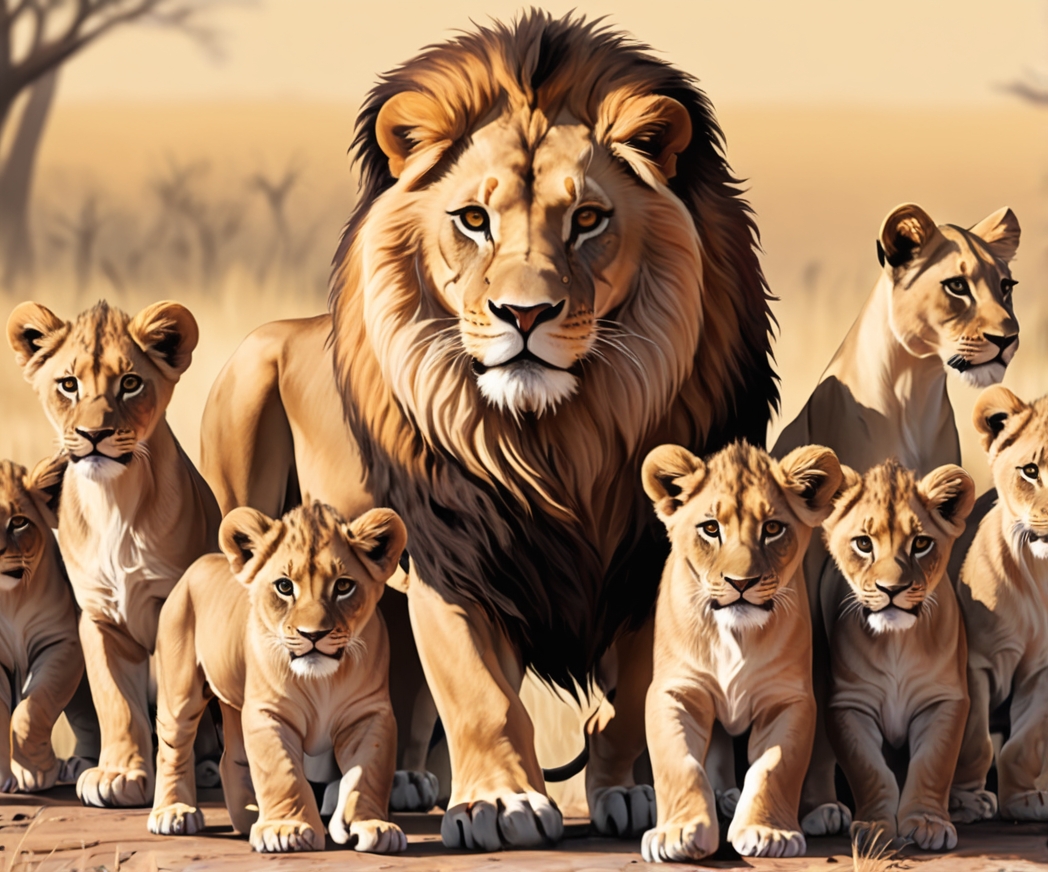
A typical lion pride consists of related females, their cubs, and a small number of adult males. The size of a pride can vary considerably, from as few as three individuals to as many as forty, though most prides contain between ten and twenty lions. The core of any pride is formed by generations of related females, daughters, sisters, mothers, and grandmothers who remain together throughout their lives. These females cooperate in almost every aspect of pride life, from hunting to raising cubs.
Male lions, on the other hand, have a different role in the pride structure. Young males are forced to leave their birth pride when they reach maturity, usually between two and three years of age. These males then spend several years as nomads, either alone or in small groups called coalitions, often with their brothers or male cousins. During this nomadic period, they must fend for themselves and avoid established prides until they’re strong enough to challenge resident males for control of a pride.
When males finally take over a pride, their tenure typically lasts only 2 to 4 years before younger, stronger males challenge and defeat them. This might seem harsh, but it ensures that only the fittest lions pass on their genes to the next generation. During their time with a pride, males defend the territory from intruders and protect the cubs from dangers, whilst the females do most of the hunting.
The social structure of lion prides offers numerous advantages. When hunting large prey such as buffalo, zebras, or wildebeest, cooperation significantly improves success rates. Lionesses work together, using sophisticated strategies to surround and ambush their prey. Some lions chase the prey towards others lying in wait, demonstrating impressive coordination and teamwork. This collaborative hunting allows lions to tackle prey much larger than themselves, which would be impossible for a single lion.
Another crucial benefit of pride living is cooperative cub-rearing. Female lions often give birth around the same time and will nurse each other’s cubs, a behaviour called communal nursing. If a mother dies or is unable to care for her young, other females in the pride will adopt orphaned cubs. This cooperative approach to raising young significantly improves cub survival rates compared to what might happen if lionesses raised their cubs alone.
Pride life also provides better defence against threats. A group of lions can more effectively defend their territory and kill against scavengers like hyenas, which often try to steal food from them. Spotted hyenas are formidable competitors that live in large clans, and a single lion would struggle against multiple hyenas, but a pride can successfully defend their meals and territory.
The bonds between pride members are reinforced through various social behaviours. Lions spend considerable time grooming each other, rubbing their heads together in greeting, and lying close together whilst resting. These activities strengthen social bonds and maintain the pride’s cohesion. Young cubs play-fight with their siblings and cousins, not only building strength and hunting skills but also establishing relationships that will last their entire lives.
Interestingly, whilst males are often portrayed as lazy because they don’t hunt as frequently as females, they play a vital protective role. Their impressive size and strength make them formidable opponents to any threat, whether it’s rival males, hyena clans, or even humans. Males also occasionally participate in hunts, particularly when tackling very large prey like adult buffalo or giraffes that require extra strength to bring down.
The social nature of lions has made them subjects of extensive scientific study. Researchers have spent decades observing lion prides in various African locations, documenting their behaviour, relationships, and survival strategies. This research has revealed that lions have complex social lives with individual personalities, long-term relationships, and sophisticated communication methods. The pride system is truly one of nature’s most successful social structures and represents a luxurious adaptation that sets lions apart from all other big cats.
Fact 2: A Lion’s Roar Can Be Heard from Eight Kilometres Away
If you’ve ever heard a lion’s roar, even in a film or nature documentary, you’ll understand why it’s one of the most iconic and spine-tingling sounds in the natural world. The lion’s roar is not just impressive for its volume; it’s an essential tool for communication, territorial defence, and maintaining the social structure of the pride. In fact, a lion’s roar can reach volumes of up to 114 decibels, which is about as loud as a thunderclap or a rock concert, and can be heard clearly from approximately eight kilometres away!
To put this in perspective, imagine standing in the centre of your town and hearing someone’s voice clearly from a neighbouring town several kilometres away. That’s the power of a lion’s roar. On a still night in the African savannah, when sound travels particularly well, a lion’s roar might be heard from even greater distances. This incredible volume makes the lion’s roar one of the loudest vocalisations produced by any land animal.
How do lions produce such a powerful sound? The secret lies in the unique structure of their vocal cords and the shape of their larynx, or voice box. Lions have specially adapted vocal folds that are square-shaped and have a flat, elastic ligament that can withstand strong stretching and shearing forces. When a lion roars, these vocal cords vibrate at low frequencies, creating the deep, rumbling sound that characterises their call. The lion’s large chest cavity acts as a resonating chamber, amplifying the sound and giving it that distinctive power and depth.
Lions use their roar for several important purposes. Firstly, roaring serves as a territorial announcement, effectively saying “this area belongs to me” to any other lions within earshot. Male lions, in particular, roar to advertise their presence and warn rival males to stay away. By roaring, a male can patrol his territory without having to physically be everywhere at once, saving valuable energy while still maintaining his claim to the area.
Roaring also helps pride members stay in contact with each other across large distances. Lions often spread out whilst hunting or patrolling their territory, and roaring allows them to communicate their locations to one another. A lioness separated from her pride might roar to announce her position, and other pride members will roar in response, helping them find each other across the vast savannah landscape.
Additionally, roaring can be a show of strength and confidence. Lions often roar after making a kill or when they’re feeling particularly bold. The power and duration of a roar can tell other lions about the roaring individual’s size, health, and fitness. Researchers have found that lions can distinguish between the roars of different individuals and can even estimate how many lions are roaring based on the sounds they hear.
Interestingly, lions aren’t born with the ability to produce this magnificent roar. Young cubs make various squeaks, mews, and purrs, similar to those of domestic cats. As they grow and mature, their vocalisations deepen and strengthen. Lions typically don’t develop their full roaring ability until they’re about two years old, coinciding with their physical maturation.
Both male and female lions roar, though males generally roar more frequently and with greater intensity. A male’s roar tends to be deeper and more powerful than a female’s, partly because males are larger overall. Males often roar at dawn and dusk, the times when they’re most active and when sound travels particularly well in the cool air.
Lions also produce a variety of other vocalisations besides roaring. They purr when content, though unlike domestic cats, lions can only purr whilst exhaling, not continuously. They make a soft “puffing” sound as a friendly greeting when approaching pride members. They grunt, snarl, growl, and even make a sound called “woofing” when surprised or alarmed. Mother lions use special soft calls to communicate with their cubs, and cubs have distinctive distress calls that immediately alert adults to danger.
The roar of a lion has held symbolic significance for humans throughout history. It represents power, authority, and courage, which is why lions have been chosen as symbols by kingdoms, empires, and nations. The famous roar of the MGM lion at the beginning of films, which many people have heard, captures just a fraction of the impressive sound a lion can produce in the wild.
In the wild, hearing a lion’s roar is an unforgettable experience. People who have visited African game reserves often describe the thrill of lying in their tent at night and hearing that deep, rumbling roar echo across the landscape. It’s a sound that connects us to our ancient past, when early humans shared the African landscape with these magnificent predators, and it reminds us of the wild, untamed power of nature.
Fact 3: Male Lions Have Magnificent Manes for Important Reasons
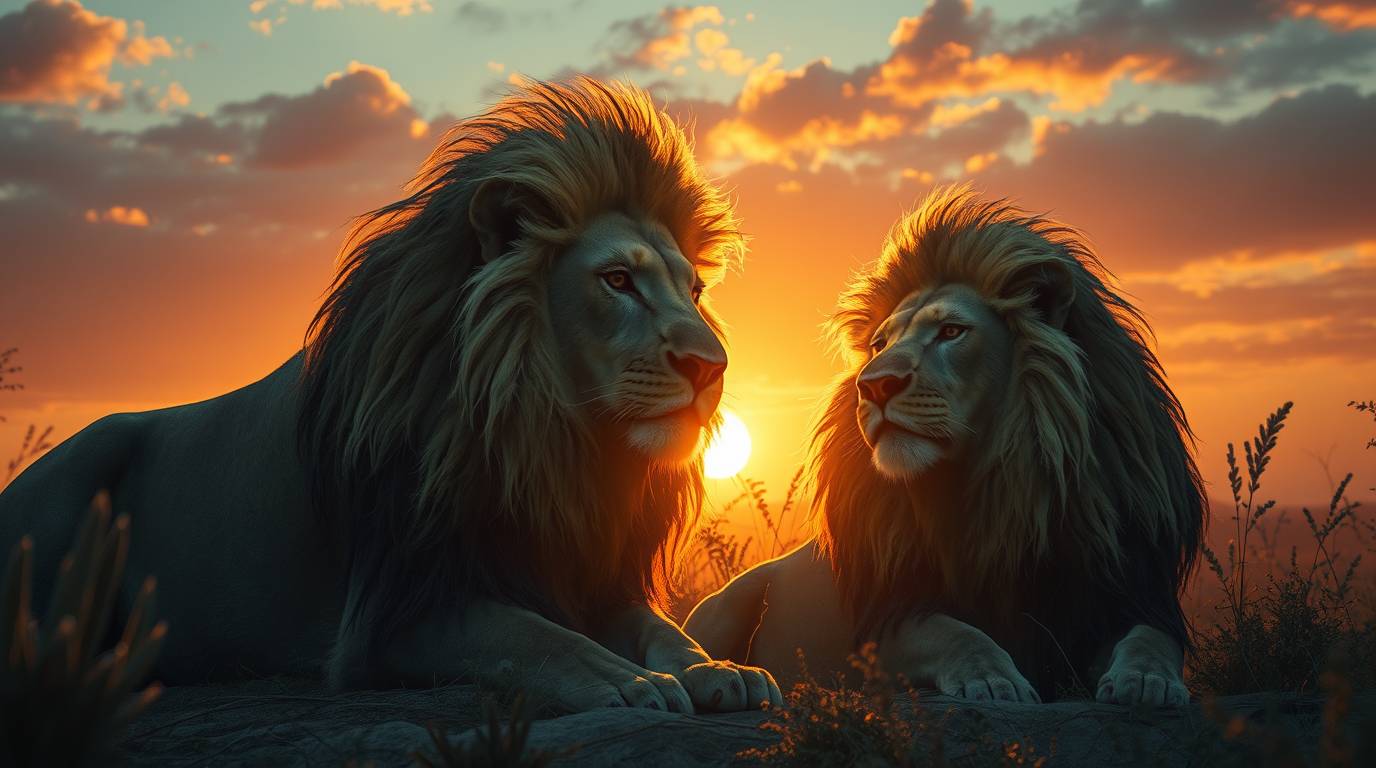
Perhaps the most recognisable and luxurious feature of lions is the male’s magnificent mane, that thick, flowing collar of hair that frames his face and covers his neck, shoulders, and sometimes extends along his belly. No other big cat has such an impressive adornment, and the mane is so distinctive that it’s become the universal symbol of the lion. But this beautiful feature isn’t just for show—the mane serves several important biological and social functions.
A male lion’s mane begins to grow when he reaches puberty, around one to two years of age, and continues to develop and darken as he matures. The colour and size of a mane vary considerably between individual lions, ranging from blonde to black, and from relatively sparse to incredibly thick and full. Generally, as a male lion ages, his mane becomes darker and more impressive, reaching its peak magnificence when the lion is in his prime years, usually between five and eight years old.
One of the primary functions of the mane is to make male lions appear larger and more intimidating. When a male puffs up his mane, he looks significantly bigger and more formidable, which can be crucial during confrontations with rival males. Lions are highly territorial animals, and males regularly face challenges from other males seeking to take over their pride. During these encounters, which can be fierce and sometimes fatal, the mane serves as both a visual deterrent and physical protection.
The protective function of the mane is vital during fights. Most serious injuries in lion battles occur around the head, neck, and shoulders, precisely the areas covered by the mane. The thick hair provides cushioning and protection against bites and claw strikes, potentially preventing fatal wounds. Research has shown that males with fuller manes suffer fewer injuries during fights, suggesting the mane acts as a kind of natural armour.
Interestingly, the mane also plays a crucial role in attracting females. Lionesses are drawn to males with darker, fuller manes, which signal good health, genetic quality, and higher testosterone levels. In essence, the mane is an honest advertisement of a male’s fitness. Growing and maintaining a luxurious mane requires good nutrition and health. A male suffering from injury, illness, or poor diet will have a thinner, lighter-coloured mane, immediately revealing his compromised condition.
The quality of a male’s mane can determine his success in taking over a pride and keeping it. Males with impressive manes are more likely to win fights against rivals, more successful at attracting and keeping females, and generally father more cubs. This creates a cycle where genes for impressive manes are passed on to the next generation, maintaining this distinctive feature in the population.
However, growing and maintaining such a magnificent mane comes with costs. Thick hair can be uncomfortable in hot weather, making males more prone to overheating than females. This might explain why males often rest in shade during the hottest parts of the day and why they allow females to do most of the hunting, which requires considerable exertion. Some researchers have suggested that in particularly hot environments, males develop slightly smaller manes to avoid overheating.
There’s also geographic variation in mane development. Lions in cooler climates or at higher elevations tend to develop fuller, darker manes, whilst those in extremely hot areas may have less impressive manes. The famous Tsavo lions of Kenya, made infamous by their man-eating behaviour in the 1890s, were unusual in that the males were almost completely maneless. Scientists still debate whether this was due to genetic factors, environmental conditions, or other causes.
Curiously, a small population of lions in the Okavango Delta in Botswana includes males that are naturally maneless or have very reduced manes. Despite lacking this impressive feature, these males successfully hold territories and reproduce, suggesting that whilst manes are generally advantageous, lions can adapt to different conditions.
Female lions don’t have manes, which makes sense given their different role in pride life. Females do most of the hunting, and a thick mane would be a hindrance when trying to stalk prey silently or when running at high speeds in pursuit. The sleek profile of lionesses makes them efficient hunters, able to blend into the grass more effectively and move more swiftly.
The mane has become so symbolic of male lions that we often don’t recognise young males or maneless lions as being lions at all. In reality, young males spend several years with small, developing manes as they mature, gradually gaining their full glory as they reach their prime. The transformation from a cub to a fully-maned adult male is one of the most dramatic changes in the animal kingdom and represents the journey from youth to the peak of physical prowess.
Fact 4: Lionesses Are the Primary Hunters and Do Most of the Work
Whilst male lions often receive most of the attention due to their impressive manes and regal appearance, it’s actually the lionesses who are the true powerhouses of the pride. Female lions are extraordinary hunters, dedicated mothers, and the social glue that holds the pride together across generations. Understanding the vital role of lionesses gives us a more complete and accurate picture of how lion prides actually function.
Lionesses are responsible for the vast majority of hunting in a pride. They’re perfectly built for this task, with sleek, muscular bodies that allow for both power and speed. An adult lioness typically weighs between 120 and 180 kilograms, making her smaller than males but better suited for the sustained effort required in hunting. Without the encumbrance of a heavy mane, lionesses can move more quietly through vegetation, stay cooler during exertion, and accelerate more quickly when chasing prey.
The hunting process showcases the intelligence and cooperation of lionesses beautifully. Unlike cheetahs, which rely purely on speed, or leopards, which depend on stealth and strength, lionesses use sophisticated group tactics to bring down prey. They hunt primarily during the cooler hours of dusk, night, and dawn when they’re most active and when many prey animals are also moving about.
When hunting, lionesses often spread out and approach their target from different directions. Some members will circle around to the far side of the prey, whilst others wait closer by. Once in position, the closer lions will begin a stalk, moving incredibly slowly and staying low to the ground, using any available cover. When they get close enough, they launch a powerful sprint, attempting to grab the prey. If the prey flees in the “wrong” direction, they might run straight into the lions positioned on the other side—a clever ambush strategy.
Lions can reach speeds of up to 80 kilometres per hour in short bursts, though they can only maintain such speeds for short distances. They rely on getting close to their prey before attacking rather than engaging in long chases. Their powerful legs allow them to leap considerable distances, and they use their retractable claws and strong jaws to bring down prey once they’ve caught it.
The prey that lionesses hunt varies depending on what’s available in their territory. In the Serengeti and other East African locations, lions primarily hunt zebras, wildebeest, and various antelope species. In other areas, they might target buffalo, giraffes, or even young elephants. Larger prey requires more cooperation, with multiple lionesses working together to bring down animals that can weigh several times what a single lion weighs.
After a successful hunt, an interesting dynamic occurs. Despite doing all the work, lionesses often have to wait while the males eat first. Males use their size and strength to claim priority at kills, and lionesses typically don’t challenge them directly. However, there’s usually enough for everyone, and lionesses eventually get their share. Cubs eat last, often feeding on whatever remains or waiting for their mother to regurgitate food for them.
Beyond hunting, lionesses are devoted mothers who invest enormous energy in raising their cubs. A lioness’s pregnancy lasts about 110 days, after which she gives birth to a litter of typically two to four cubs. She often gives birth away from the pride, in a secluded den where the cubs will be safe during their most vulnerable early weeks.
Newborn cubs are tiny, weighing only about 1.5 kilograms, and are completely dependent on their mother. Their eyes don’t open until they’re about a week old, and they spend their first several weeks hidden away whilst their mother hunts and returns to nurse them. This is a dangerous time, as cubs are vulnerable to predators such as hyenas, leopards, and even male lions outside the pride.
After about six to eight weeks, the mother brings her cubs to meet the pride. This is where the cooperative nature of lionesses truly shines. As mentioned earlier, lionesses often synchronise their breeding, and females with cubs of similar ages will work together to raise them. They’ll nurse each other’s cubs, protect them collectively, and share babysitting duties whilst some pride members go hunting.
Lionesses must also defend their cubs from new males who take over the pride. When new males arrive, they often kill existing cubs to bring the females back into breeding condition more quickly. Lionesses will fight fiercely to protect their young, sometimes successfully driving off the new males, though the larger, stronger males often outmatch them.
The bond between lionesses in a pride is exceptionally strong. These females are typically sisters, mothers, daughters, and cousins who have known each other their entire lives. They cooperate not just in hunting and cub-rearing but in defending their territory from intruding females. This sisterhood is the foundation of pride and ensures its continuity across generations.
Research has shown that lionesses have distinct personalities and preferences. Some are bolder hunters who lead charges, whilst others are more cautious. Some lionesses are more nurturing towards cubs, whilst others focus more on hunting. These individual differences contribute to the pride’s overall success, as different personalities fill different roles within the group.
The luxurious life of a lioness involves balancing multiple demanding roles: skilled hunter, protective mother, loyal pride member, and defender of territory. These magnificent females demonstrate that true royalty isn’t just about appearance but about strength, intelligence, cooperation, and dedication to family and community.
Fact 5: Lions Face Serious Conservation Challenges in the Modern World
Perhaps one of the most important facts about lions is that, despite their strength and power, these magnificent animals face serious threats to their survival. Lions were once found throughout Africa, the Middle East, and even parts of southern Europe and India. Today, their range has shrunk dramatically, and lion populations are declining in many areas. Understanding these challenges is crucial if we want to ensure that future generations can still marvel at these luxurious creatures.
Historically, lions roamed across vast territories. Ancient records and cave paintings show that lions lived throughout southeastern Europe and across most of Africa. Lions featured prominently in ancient Roman culture, where they were captured and used in gladiatorial contests. They were found throughout the Middle East, where they appeared in biblical stories and ancient art. As recently as two hundred years ago, lions still inhabited parts of India, Turkey, and North Africa.
Today, lions are found primarily in sub-Saharan Africa, with their range limited to protected reserves, national parks, and some remaining wilderness areas. The only population of Asiatic lions survives in the Gir Forest of India, where intensive conservation efforts protect fewer than seven hundred individuals. This represents a dramatic reduction from the tens of thousands of Asiatic lions that once roamed from the Mediterranean to India.
Current estimates suggest approximately 20,000 to 25,000 wild lions are remaining in Africa, though some researchers believe the number could be even lower. This might sound like a reasonable number, but it represents a decline of about 50 per cent over the past twenty-five years. This worrying trend has led to lions being classified as “vulnerable” by the International Union for Conservation of Nature.
Several factors contribute to declining lion populations. The primary threat is habitat loss. As human populations grow across Africa, natural wilderness is converted into agricultural land, settlements, and infrastructure. Lions need large territories to survive, typically ranging over areas of one hundred square kilometres or more for a single pride. As their habitat shrinks and becomes fragmented, lion populations become isolated from each other, leading to genetic problems and reduced survival rates.
Human-wildlife conflict is another major challenge. Lions occasionally kill livestock, which can be devastating for subsistence farmers and herders. In retaliation, people sometimes poison or shoot lions to protect their animals. From the perspective of local communities struggling to make a living, lions can seem like dangerous pests rather than magnificent creatures worth protecting. Finding ways to help people and lions coexist peacefully is one of the biggest challenges in lion conservation.
Prey depletion also threatens lions. As human populations expand, wild game animals are hunted for bushmeat, reducing the food available for lions. When natural prey becomes scarce, lions are more likely to attack livestock, increasing conflict with humans. This creates a negative cycle that’s difficult to break.
Trophy hunting remains controversial in lion conservation. Some argue that regulated hunting can provide funds for conservation and give local communities economic incentives to protect lion habitat. Others contend that hunting, particularly of male lions, disrupts pride structures and can contribute to population declines. The debate continues amongst conservationists, with valid points on both sides.
Despite these challenges, there are reasons for hope. Many African countries have established national parks and reserves where lions are protected. Conservation organisations work tirelessly to protect lion populations, conducting research, supporting anti-poaching efforts, and helping communities develop lion-friendly practices. Some initiatives provide compensation to farmers who lose livestock to lions, reducing retaliatory killings. Others help communities build better enclosures for their animals or develop alternative income sources like wildlife tourism.
Wildlife tourism represents one of the most promising conservation tools. People from around the world pay significant money to visit African national parks and see lions in their natural habitat. This generates income for local communities and national economies, creating financial incentives to protect lions and their habitats. The economic value of a living lion over its lifetime far exceeds the value of a dead one.
Education programmes help local communities understand the ecological importance of lions and other predators. Lions play a crucial role in maintaining healthy ecosystems by controlling herbivore populations and removing sick and weak animals. Without predators like lions, prey populations can explode, leading to overgrazing and habitat degradation that affects all species, including humans.
Some conservation projects are exploring innovative solutions, such as using GPS collars to track lions and send alerts when they approach livestock areas, allowing herders to protect their animals preemptively. Others involve employing local people as wildlife rangers and guides, giving them stable incomes whilst protecting lions.
The future of lions depends largely on decisions being made today about land use, wildlife management, and conservation priorities. By supporting conservation organisations, learning about lions, and spreading awareness of their plight, people everywhere can help ensure these magnificent animals continue to roam the African savannah for generations to come.
Conclusion
Lions are truly luxurious creatures, from their complex social structures and powerful roars to the magnificent manes of males and the remarkable hunting skills of females. They represent some of nature’s most impressive adaptations, combining strength, intelligence, and cooperation in ways that few other animals can match. Whether it’s the way they work together in prides, communicate across vast distances, or raise their young collectively, lions demonstrate that being a king or queen of the animal world requires more than just power—it requires wisdom, cooperation, and community.
However, as we’ve learned, these magnificent animals face significant challenges in the modern world. Their survival is not guaranteed, and it will require dedicated effort from conservationists, governments, local communities, and concerned people worldwide to ensure that lions continue to thrive. Every person who learns about lions, shares their knowledge, and supports conservation efforts contributes to protecting these incredible animals.
The next time you see a picture of a lion, watch a nature documentary featuring these magnificent cats, or perhaps even have the privilege of seeing one in a wildlife reserve, remember all the extraordinary facts that make lions so special. They’re not just symbols of strength and courage; they’re complex, intelligent, social animals that play a vital role in their ecosystems and deserve our respect, admiration, and protection. The roar of the lion should continue to echo across the African plains for many generations to come, reminding us of the wild beauty and power of the natural world.
We hope you enjoyed learning more things about lions as much as we loved teaching you about them. Now that you know how majestic these animals are, you can move on to learn about other animals, like Wolves, Lizards, and Rhinos.
Why not subscribe to our LearningMole Library for as little as £1.99 per month to access over 3400 fun educational videos.
Maths Circus, an innovative platform we've crafted, presents a captivating realm where children learn mathematics through the exciting theme of a circus. The joy of juggling numbers and solving circus...
Trees are like the Earth's superheroes! They're big and strong, and they help our planet in so many ways. Imagine if the Earth was a giant garden; trees would be...
A flood happens when water covers land that is normally dry. Most floods follow heavy rain, melting snow, a river bursting its banks or a storm pushing the sea inland....
Wolfgang Amadeus Mozart (1756 to 1791) was an Austrian Classical-period composer who wrote more than 600 works, including operas, symphonies, and piano concertos, in a life of only 35 years....






Leave a Reply