Earth’s gravity and its discovery are among the important physical things that preserve life as it is in a natural way. The natural way in which we live on planet Earth. What is your actual knowledge about the Earth’s gravity?
In this article, we will learn together about many things that help us understand it, the laws related to it, the role of some scientists in it, and other information within the lines of this article.
Earth’s gravity means maintaining an almost constant distance between the planet on which we live and the sun. Scientists know this distance as the Earth’s orbit of the blue planet. This distance helps us to live in a healthy and natural way away from the heat of the sun.
The distance between us and the sun makes it the perfect environment that is suitable for life. It may be possible to close off this distance. However, disasters will occur. Like, overheating of the planet.
The opposite is also true. Being too far from the sun may limit or even end heat and warmness as we know them. Thus, life, in return, will cease on the surface of the planet.
For more information about gravity, you should know the following points: What if it suddenly disappeared? Did you know that without it, we would fall right off of Earth’s surface and float away into space?
Gravity is the reason a ball comes back down when you throw it into the air, instead of just traveling higher and higher? First, of all, gravity is so very important to the universe and how the universe works.
It’s also very important to our plant, how it works, and how humans function. Actually, it’s just really important, period! And here’s why.
Without gravity, our universe wouldn’t function the way we know it. Neither would Earth. If gravity didn’t exist, you would literally fall off the planet and float away into space, along with everything else. So, gravity is a force of nature that is there to stay.
It is the key to our survival on the planet and in the universe. For example, the sun has much more gravity than Earth, but we stay on Earth’s surface instead of being pulled to the sun because we are much closer to Earth than to the sun.
Thus, the gravitational pull of an object depends on how massive it is and how close it is to the other object.
Table of Contents
Who discovered gravity?
For a long time, scientists knew that there was some mysterious force that keeps us on the surface of the Earth. It wasn’t until 1666 that Isaac Newton first mathematically described the force of gravity.
He created Newton’s laws of universal gravitation. It is said that his ideas about gravity were inspired by watching an apple fall from a tree. Newton wondered what force made the apple fall downward instead of simply floating away.
It made him wonder why the apple fell straight down to the ground, rather than left or right or even up into the sky! This was in 1665 or 1666. Humans formulated the law of universal gravitation. That is considered some important information about the movement of the earth around itself as well as the space movement.
Such as the movement of the moon’s rotation around the earth as well as the movement of planets and celestial bodies in the solar systems. Another scientist you may have heard of, Albert Einstein, later added to Newton’s ideas about gravity with his theory of relativity.
Gravity is a force of attraction that pulls together all matter (anything you can physically touch). That means really big objects like planets and stars have a stronger gravitational pull. To understand this, we need to know what gravity is.
We cannot see gravity so how do we know that it’s there?
Something seems to hold us down on the ground. It makes us hit the floor with a thump if we fall over and makes our marbles roll down slopes. Have you ever jumped on a trampoline? When you are in the air your arms feel light, your hair floats away from your head.
You feel light as a feather, but not for long. Bouncing on a trampoline can make you feel weightless. When you come back down onto the trampoline itself you feel heavier. So heavy, that the trampoline sinks right down.
Why is gravity important?
We already mentioned that we wouldn’t be able to stay put on Earth’s surface without gravity. Objects would simply float away if gravity didn’t exist. Gravity is a universal force that acts between all objects with mass in the universe.
An object does not need to be falling to be under the influence of gravity. If you are asleep in bed, you are being pulled down onto the bed by the Earth’s gravitational force. The bedsprings push back upon you and you stay in your sleeping position.
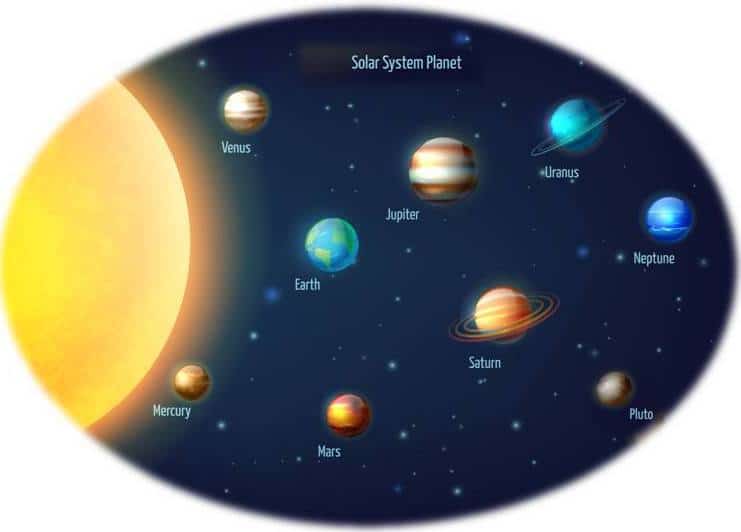
Gravity is also the force that keeps the Earth in orbit around the Sun as well as helps other planets remain in orbit. Did you know that weight is based on gravity? Weight is actually the measurement of the force of gravity pulling on an object.
For example, your weight on Earth is how hard gravity is pulling you towards Earth’s surface. If you traveled to other planets, you would weigh more or less depending on those planets’ gravity. Maybe, they have more or less gravity than Earth.
Since gravity is related to mass, did you know that you would weigh less on smaller planets and more on larger planets?
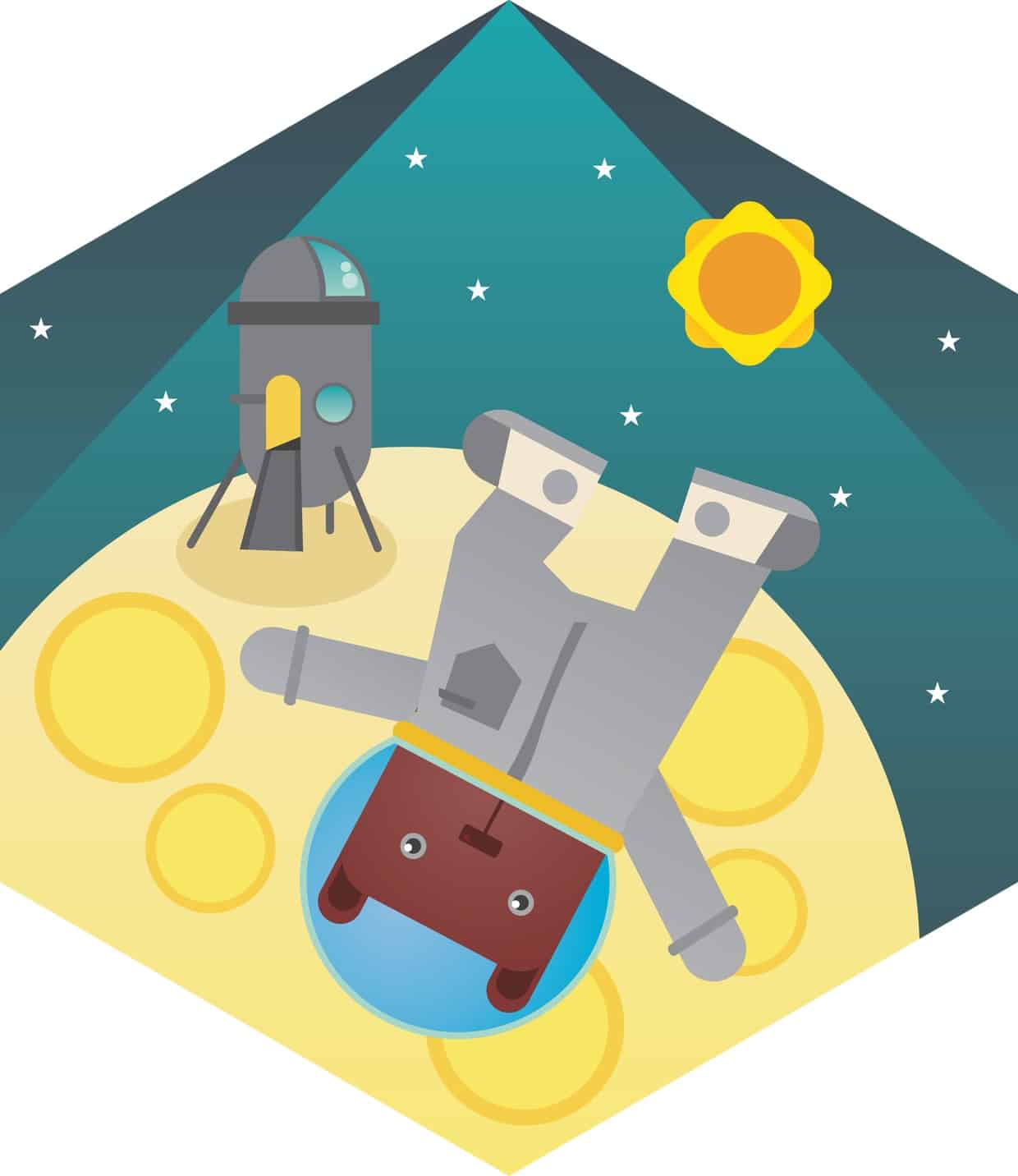
Gravity is experienced on the Moon. The acceleration due to gravity on the surface of the Moon is approximately 1.625 m/s2/. The Moon’s gravity is 1/6 of Earth’s gravity. So, objects on the Moon will weigh only 1/6 of their weight on Earth.
As the law of universal gravitational attraction states that if you weigh 80 pounds (36 kilograms) here on Earth, you would weigh about 13 pounds (six kilograms) on the Moon! It is one of the most important physical laws laid down by Isaac Newton.
It is a law regarding the motion of planets and celestial bodies in the solar system. Did you know that high and low tides in the ocean are caused by the Moon’s gravity? There is zero gravity in outer space. So, you would be weightless if you were floating out in space!
In physics, weight is described as a force and can also be measured in Newton’s. Guess who this unit of measurement is named after? That’s right—Isaac Newton, the scientist who discovered gravity.
Objects weigh a little bit more at sea level than they do on the top of a mountain. This is because the more distance you put between yourself and Earth’s mass, the less gravitational force Earth exerts on you.
So, the higher you go, the less gravity pulls on you, and the less you weigh. However, the difference is very small and barely noticeable. If you wanted to escape Earth’s gravitational pull, you would have to travel seven miles (about 11 kilometers) per second.
This number is called Earth’s “escape velocity.” To travel that fast, you would have to be a superhero! Even if two objects are different weights, the force of gravity will make them travel at the same speed.
For example, if you dropped balls that were the same size but different weights out of the same second-story window, they would both hit the ground at the same time.
Top fantastic 10 Facts about Gravity!
Do you want to learn more about gravity? Let us check out these 10 facts…
1. The Moon stays in place because of gravity.
If gravity didn’t exist, then the Moon would have probably floated away by now! It is kept in place by the gravitational force from Earth. Luckily the moon is traveling at the perfect speed. If the speed was any different, it would go off into another direction or come closer to Earth!
2. Isaac Newton discovered gravity.
Isaac Newton is the scientist who discovered gravity. This was in 1665 or 1666. As we have explained before.
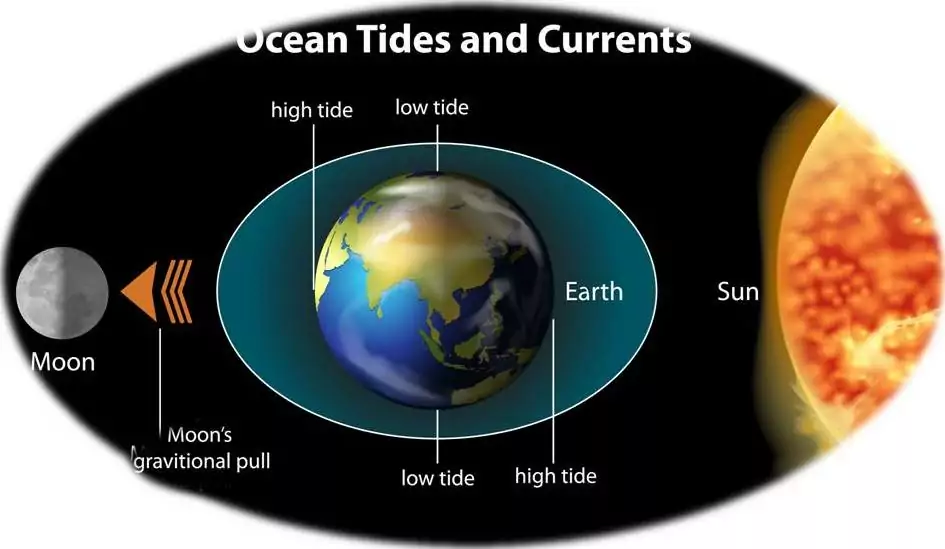
Did you know that gravity causes the tides in our seas and oceans? This is because gravity makes everything in the universe pull on each other. The Moon pulls on Earth and in turn, makes the water move! As Earth rotates, the water in our seas and oceans will build upon the side closest to the Moon. This is why we have high and low tides.
Gravity saves our lives! Gravity is very important; if we didn’t have gravity, then we wouldn’t even be her. We would take off and be floating in space! All thanks to gravity, we can stay grounded and go about our daily life!
The larger the mass of an object, the more gravity! Mass is different from weight. Mass is made up of how many atoms are in the object. Weight is different because if you weighed yourself on Earth and then weighed yourself in space, it would be completely different! The mass of an object never changes. The larger the mass of an object, the more gravity there will be on that object.
In the whole universe, black holes have the biggest gravitational pull. We need to stay away from black holes! They have the biggest gravitational pull in the whole universe. Don’t worry; Earth is very far away from one. Nothing can escape their gravitational pull and this even includes light!
Each planet has a different gravitational pull. Gravity varies on each planet. This is because each planet has a different gravitational pull as each planet has a different mass. An object that weighs 100 pounds on Earth, would weigh 38 pounds on Mercury!
Without gravity, Earth wouldn’t orbit the sun! If gravity didn’t exist, then Earth wouldn’t orbit the Sun. This time it’s the Sun’s gravity that keeps us orbiting it. We’re very lucky as it keeps Earth at the perfect temperature so it’s not too hot or cold!
Gravity isn’t evenly spread on Earth. That’s right! Gravity isn’t evenly spread on Earth. This is because Earth isn’t a perfect sphere. The mass of Earth also isn’t even. This means that gravity can vary slightly in different places.
Gravity is making you shrink! Did you know that you are taller first thing in the morning than when you go to bed at night? That’s because gravity is pushing you down all day and is causing your spine to shrink. When you go to bed at night, your spine has a chance to stretch back out!
Gravity is the natural phenomenon by which Physical bodies appear to attract each other with a force proportional to their masses. Gravity is the agent that gives weight to objects that have mass and causes them to drop to the ground when released.
Gravitation is an offshoot of a more Fundamental phenomenon defined by general relativity, which suggests that space-time is curved according to the presence of matter through a not yet discovered mechanism.
The force of gravity affects the world in many ways. Gravity keeps the moon in orbit around us. The moon also has a gravitational effect on us. The moon’s gravitational effect on us is rather weak, although it can be credited with the formation of tides in oceans all over the world.
The earth stays in orbit around the sun by the sun’s gravitational force, although gravity can actually curve space. The earth’s orbit is merely its movement through space predominantly curved by the sun’s intense gravity.
Every planetary body, including the Earth, is surrounded by its own gravitational field, which exerts an attractive force on all objects. Assuming a spherically symmetrical planet, the strength of this field at any given point is proportional to the planetary body’s mass and inversely proportional to the square of the distance from the center of the body.
Gravity affects Earth because gravity attracts everything and makes everything stable. That is why we cannot float because gravity is forcing us to stay down. A watermelon is pulled down by gravity.
A watermelon stays on a table because gravity pulls it down. If you drop a watermelon from a Roof, it will fall down to the ground.
Without gravity, people could just float away into space.
If there was no gravity, you wouldn’t be able to run on the ground, lay in your bed, or play games.
Light things are pulled down by gravity, too.
Feather and ping pong balls dropped off a roof also fall down to the ground. No matter how heavy or light an object is, gravity still pulls it back down to the ground.
Gravity is what keeps everything in place. Without gravity, people could just float away into space. If there was no gravity, you wouldn’t be able to run on the ground, lay in your bed, or play games like basketball. Light things are pulled down by gravity, too. Feather and ping pong balls dropped off a roof also fall down to the ground. No matter how heavy or light an object is, gravity still pulls it back down to the ground. Isaac Newton is a scientist that studied gravity. For hundreds of years, people didn’t think about Gravity. Then legend has it that a scientist named Isaac Newton saw an apple fall off a tree and started thinking about why it fell. He came up with the idea that a force was pulling things to the ground. Even if you throw something up, gravity still pulls it down.
We can throw something like an egg up into the air, but no matter how high you throw the egg, gravity will slow it down and then pull it back down to the ground. The force of gravity brings things down no matter what direction you throw them.
A summary of some facts and questions about gravity:
Do humans know how gravity works?
However, to be honest, we do not know what gravity “is” in any fundamental way – we only know how it behaves. Gravity is a force of attraction that exists between any two masses, any two bodies, and any two particles. Furthermore, we deduced that gravity forces exist between all objects.
What is gravity?
Gravity is an invisible force that pulls everything down.
What would happen without gravity?
People (and everything else on Earth) could just float away into space.
Who can name examples of objects that fall down if you drop them off a roof?
Heavy things like watermelons, bricks, jugs of juice, as well as light things, like ping pong balls fall down to the ground when dropped off a roof.
What happens if you throw an egg up into the air?
Gravity causes it to slow down and then fall back down towards the ground.
How does gravity affect things that are thrown in different directions?
Gravity pulls things down no matter what direction they are traveling.
Name some examples of things people could not do without the force of gravity.
People could not skydive, go down a slide, or play basketball without the force of gravity.
Explore the previous examples and facts, and you will find yourself getting the necessary knowledge and information to fully grasp the concept of Gravity. So, keep on visiting our Learning Mole to get more knowledge and information.
Environmental Protection - In the face of escalating environmental challenges, eco-warriors are rising to the occasion by leveraging statistics to drive their conservation efforts forward. These passionate individuals and groups...
Learning a new language involves navigating a labyrinth of grammar rules with verb tenses often posing as a significant hurdle. Your quest to communicate effectively in English is dependent on...
Engaging Presentation Openers - Captivating an audience right from the beginning is crucial in any presentation. Your opening moments set the stage for the entire session, making first impressions that...





Leave a Reply